An onboarding checklist is a stage-by-stage list of the tasks that have to happen before a new hire starts, on their first day, in their first week, and across their first 90 days, with one named owner for each task. The ten templates below cover all five stages, and each one downloads in Word, Excel, PDF, Google Sheets and Google Docs.
Free templates are practical, customizable, and ideal for managing onboarding tasks without a mistake. If you’re here, your priority is clear: finding an onboarding list you can actually use. That’s why we’ve compiled 10 onboarding checklist templates you can easily access and download for free in every single format: Excel, Word, and Editable PDF.
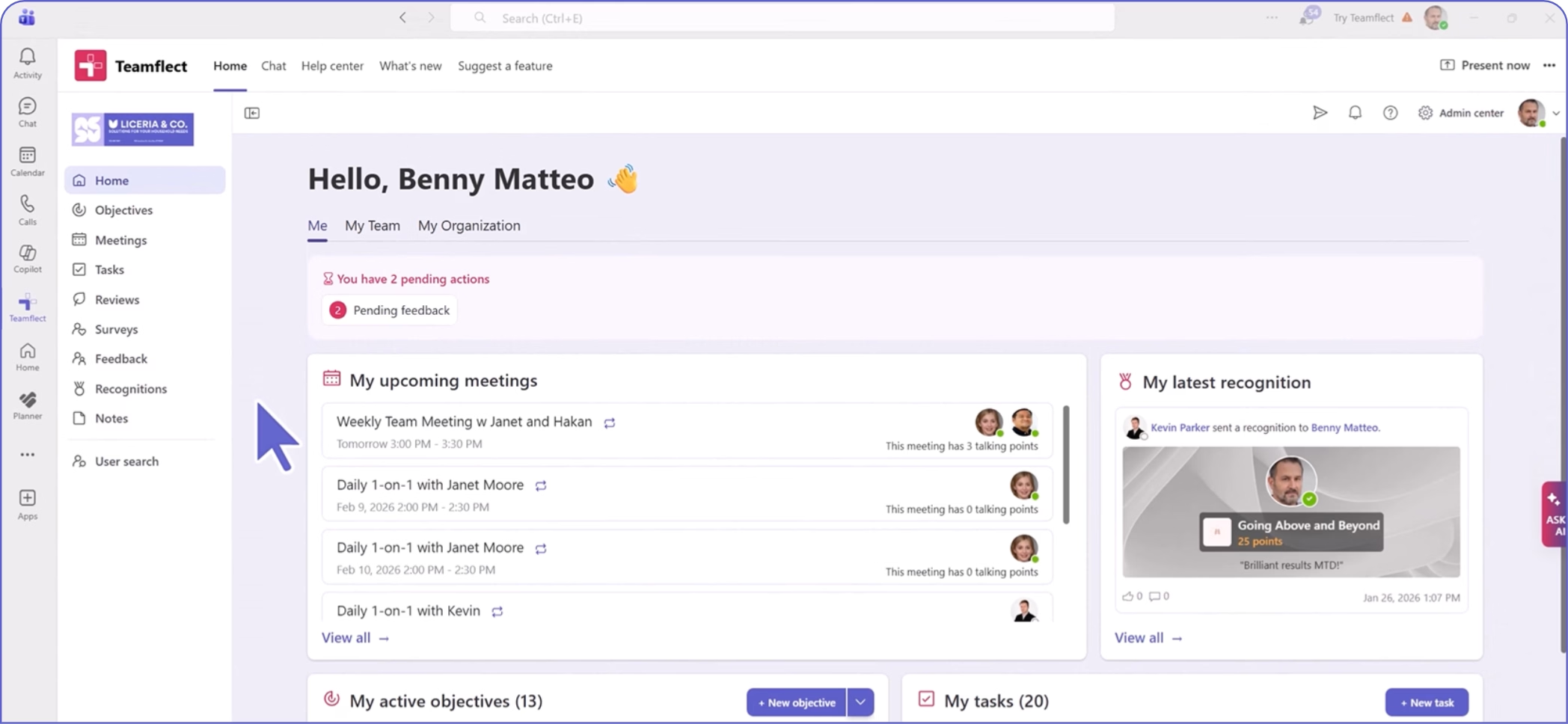
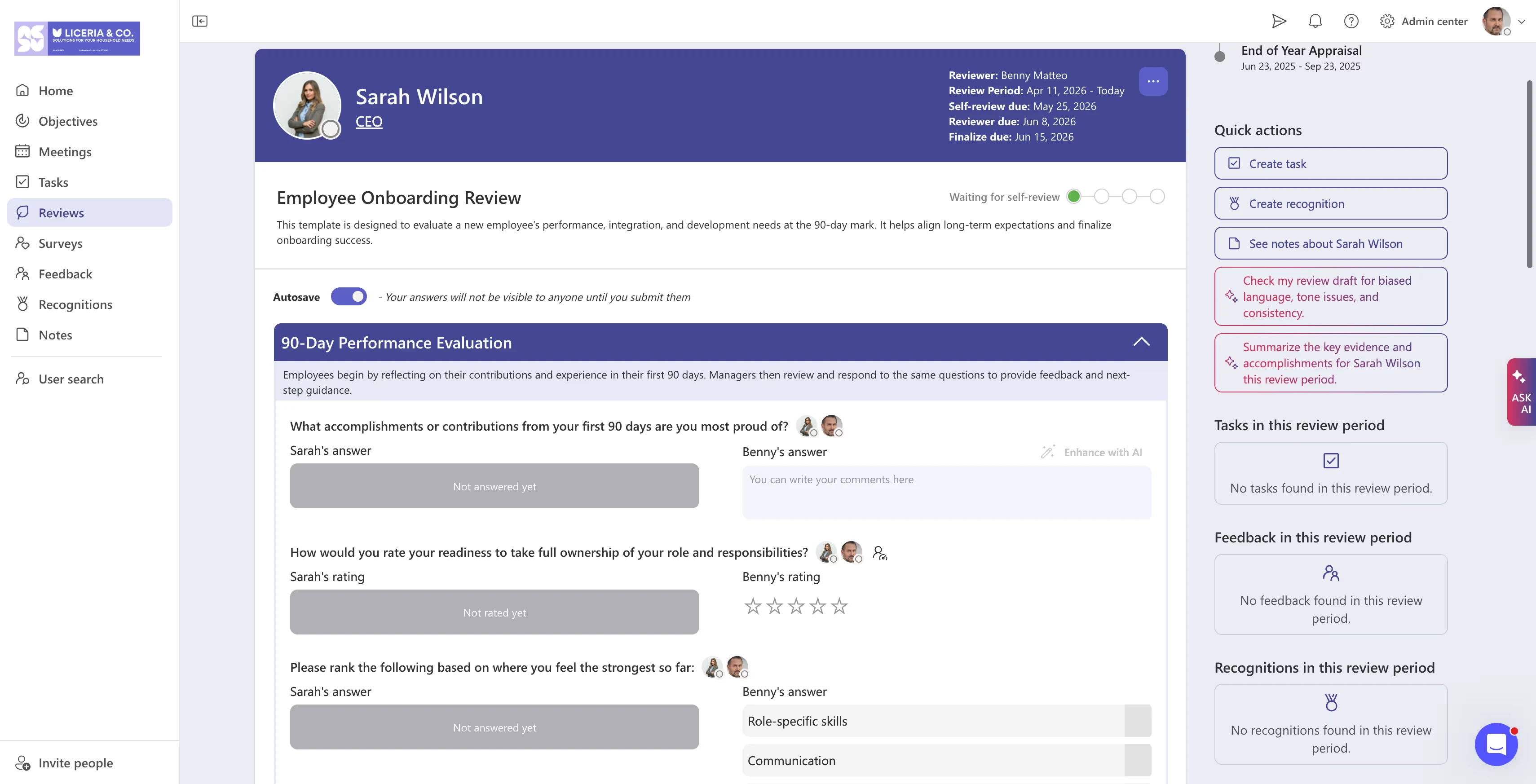
And if you want to take things further, Teamflect is the best employee onboarding software available in Microsoft Teams and Outlook. With Teamflect, you can create mentor-buddy programs, use 30-60-90-day review templates, collect onboarding feedback, and automate onboarding tasks directly in Teams. 👉 Get to the templates to find the one that fits your needs best.
TL;DR — Quick Summary
10 Free Templates: Word, Excel, PDF, editable preboarding, sales-specific, remote employee, HR department, and Teamflect's automated onboarding checklists—all ready to download.
Key Components: Pre-boarding tasks (offer letters, equipment setup), first-week essentials (orientation, tool training), and 30-60-90 day milestones for continued growth and feedback.
Core Benefits: Saves time with reusable templates, ensures consistency across departments, reduces errors, improves new hire experience, and supports compliance documentation.
[fs-toc-omit] What Bad Onboarding Actually Costs (And Why You Need Onboarding Checklists)
Onboarding lists help you manage the process efficiently
Most organizations spend months recruiting a candidate, then hand them a welcome email and a laptop and call it onboarding. The cost of that shortcut shows up six months later, when the new hire has either quietly left or stayed without ever reaching full productivity.
Here at Teamflect, our internal HR specialists see this pattern repeat across the companies that use our platform. The numbers behind weak onboarding consistently dwarf the numbers behind a structured one.
The state of onboarding today:
According to HBR, up to 20% of employee turnover happens within the first 45 days of employment, which shows just how critical it is to get the early stages of onboarding right.
Gallup research states only 12% of employees strongly agree their organization does a great job onboarding new hires
Teamflect HR Team: The investment required to build a structured onboarding process, as we discovered across countless users, is nothing compared to the money and time spent to counteract high turnover rates.
New hire retention improves by 82% with a strong onboarding process
New hire productivity climbs by more than 70%
This is what the templates above are built to fix. Pick the format that matches how your team already works: Word for managers running a formal review, Excel for HR teams that already track everything in spreadsheets, PDF for environments where Office license consistency is not guaranteed.
This is what the templates below are built to fix. Pick the format that matches how your team already works: Word for managers running a formal review, Excel for HR teams that already track everything in spreadsheets, editable PDF for cleaner printouts.
📚 Recommended Reading:Could you be making these common onboarding mistakes?
Onboarding runs in five stages, and each stage has a different owner: preboarding belongs to HR, day one belongs to the manager, the first week belongs to the team, days 30 to 90 belong to the new hire's goals, and the first year belongs to development.
Stage
When
Who Owns It
What Has to Happen
Which Template Covers It
Preboarding
Offer signed to day minus one
HR
Paperwork sent, laptop ordered, accounts created, workspace ready, team told
Role-specific training started, systems access confirmed, first small deliverable assigned, first 1-on-1 booked
Printable New Employee Onboarding Checklist
Days 30, 60 and 90
Month 1 to month 3
New hire plus manager
Goals written for each checkpoint, feedback collected at each one, probation decision documented
Stage-Based Onboarding Tracker
The first year
Month 4 to month 12
Manager and HR
Development plan set, role expanded, first full review cycle completed
Comprehensive Year-One Onboarding Plan
Most onboarding failures are handoff failures: the stage changes but nobody tells the next owner it is their turn. Write the owner into the checklist itself, not into a separate process document nobody opens. First week tasks are the easiest to lose this way, which is why routing new onboarding tasks inside Microsoft Teams keeps them attached to the same chat thread the team already uses.
The Owner column is the one most teams leave blank, and it is the one that decides whether a task actually happens.
Booking the first 1-on-1 while it is still on the calendar, rather than after the fact, is what keeps this row from becoming the one everyone skips.
Onboarding Checklist Templates
What a Filled-In Onboarding Checklist Looks Like
Below is the Stage-Based Onboarding Tracker filled in for one new hire, so you can see a completed version before you download a blank one.
Task
Stage
Owner
Due
Status
Send offer letter and contract
Preboarding
HR
Day -10
Done
Order laptop and monitor
Preboarding
IT
Day -7
Done
Create email and Teams account
Preboarding
IT
Day -3
Done
Assign onboarding buddy
Preboarding
Manager
Day -2
Done
Facility tour and team introductions
Day one
Manager
Day 1
Done
Verify new hire paperwork
Day one
HR
Day 1
Done
Walk through the week-one agenda
Day one
Manager
Day 1
Done
Grant access to CRM and project tools
First week
IT
Day 3
In progress
Book the first 1-on-1
First week
Manager
Day 4
In progress
Assign the first small deliverable
First week
Manager
Day 5
Not started
Write and agree 30-day goals
Day 30
Manager
Day 25
Not started
Collect 30-day feedback
Day 30
HR
Day 30
Not started
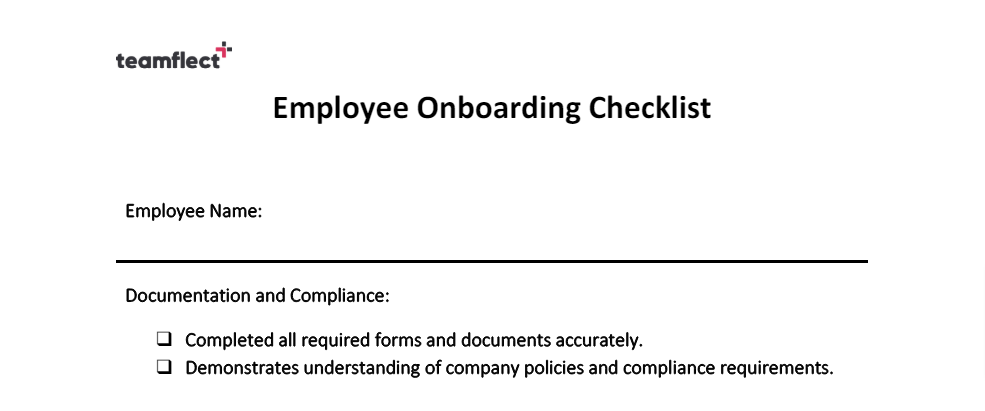
1. Simple Employee Onboarding Checklist
Word Employee onboarding checklist
What's inside: 6 review areas covering documentation, training, team integration, performance, feedback, and attendance, one or two evaluative statements per area, and space for employee name and review date.
This Word document is more of an integration assessment. It is built for a manager doing a structured review at the end of week one or month one, not for the HR coordinator chasing IT setup.
What's inside this onboarding template:
Six review areas: documentation and compliance, training and skill development, team integration, performance and goal achievement, feedback and communication, and attendance
One or two evaluative statements per area, like "Demonstrates understanding of company policies and compliance requirements" or "Successfully integrated into the team and established positive relationships"
A clean Word format that any manager can edit without needing specialist software
Space at the top for employee name and review date
Who is this onboarding template for:
Managers conducting a structured 30 or 90-day review
Teams that already have a task-based checklist and need an integration scorecard to sit alongside it
HR leaders who want to standardize how managers evaluate new hire adaptation, not just task completion
Why we chose this onboarding template:
Most onboarding checklists track whether tasks happened. This one tracks whether the new hire is actually adapting
Adaptation is the metric that predicts retention, not whether the laptop arrived on time
It works as a complement to a task-based template, which makes it easy to slot into an existing onboarding process
Download the simple onboarding assessment template for free:
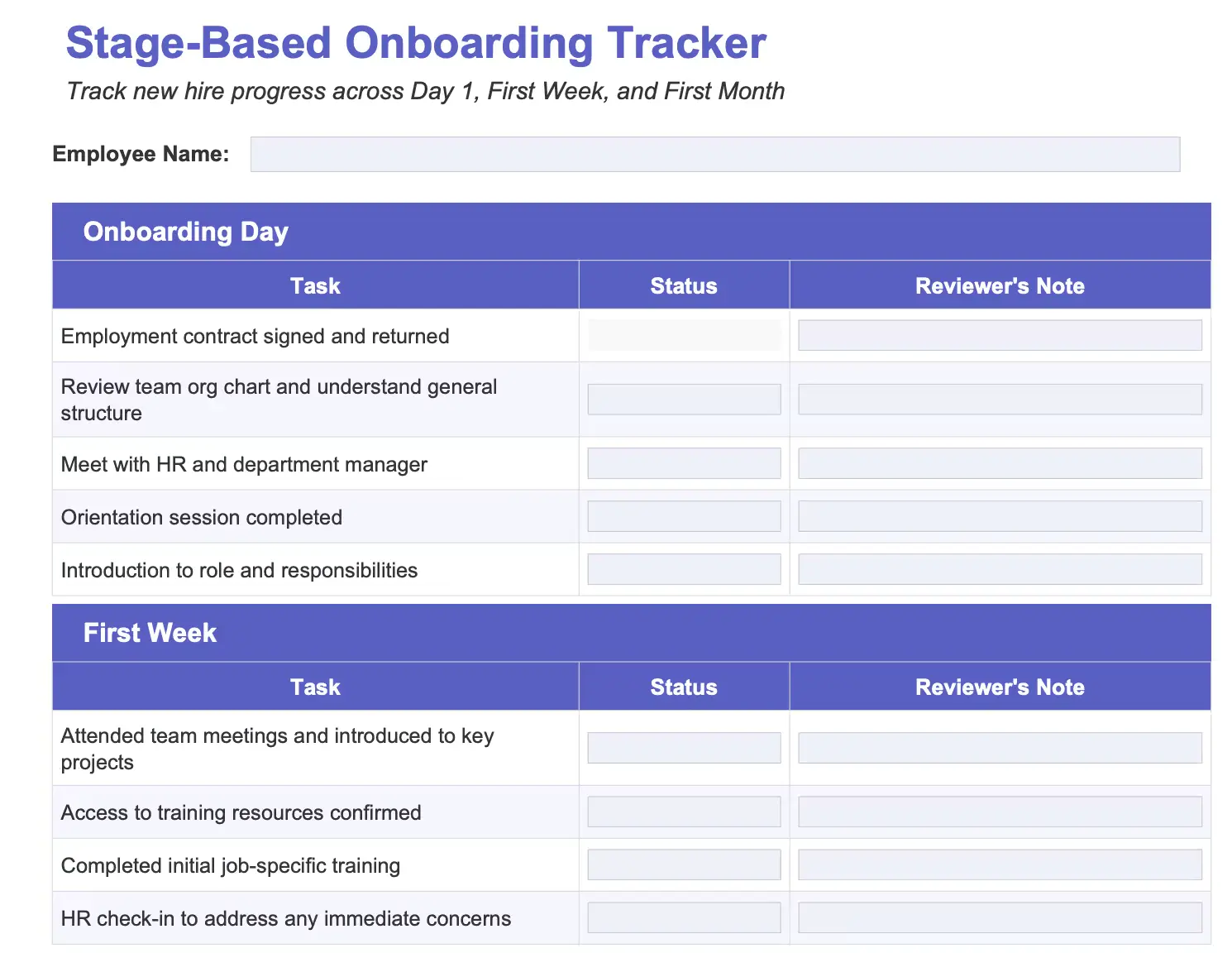
What's inside: 12 to 15 tasks across three stages, a Status column, and a Reviewer's Note column instead of a due-date column.
This template is built around three milestones with twelve to fifteen line items spread across them. The structure is deliberately lean.
What's inside this onboarding template:
Three stages: Onboarding Day, First Week, and First Month
Day 1 covers contract signing, org chart review, HR meeting, and orientation
Week 1 covers team meetings, training resources, and an HR check-in
Month 1 covers initial tasks, working relationships, and progress reviews
Two columns sit beside each task: Status and Reviewer's Note
Who is this onboarding template for:
HR teams that already track onboarding in Excel and want to keep it there
Managers who prefer a milestone view rather than a long task list
Teams running a steady volume of new hires through a standardized process
Why we chose this onboarding template:
The Reviewer's Note column is the differentiator. Most Excel checklists have a single Status field that gets clicked through without thought
Forcing a manager to write a sentence for each milestone surfaces soft signals you would otherwise miss: hesitation in team meetings, gaps in tool fluency, or quiet wins worth recognizing
It keeps the structure short enough to actually use, while still capturing meaningful feedback at each stage
Download the stage-based onboarding tracker template for free:
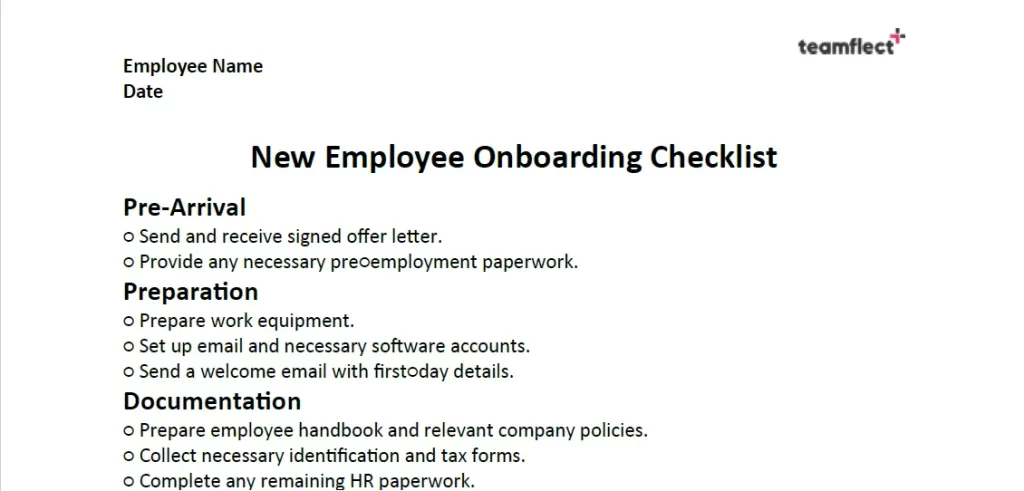
What's inside: eight phases from Pre-Arrival through Ongoing, a check-box per task, and no separate owner or due-date column since it is built to print and tick off by hand.
The PDF runs eight phases from Pre-Arrival through Ongoing development. It is the most portable template in the set.
What's inside this onboarding template:
Pre-Arrival, Preparation, and Documentation cover the basics: signed offer, work equipment, email setup, welcome message, employee handbook, and tax forms
Training and First Week move into role responsibilities, system access, and one-on-one meetings with key team members
First Month adds a formal performance review and a feedback collection point
Ongoing covers regular manager check-ins and a long-term career path conversation
Who is this onboarding template for:
Managers who want to print the checklist and tick items off with a pen
HR teams sharing the file with recipients across different software environments
Smaller organizations that do not need a complex spreadsheet or a digital tracking system
Why we chose this onboarding template:
It opens on any device and travels through email without anyone needing the right Office license
It is the only printable option in the set, which still matters for in-person onboarding
The Ongoing section keeps the door open past the first month, which lines up better with how retention actually works
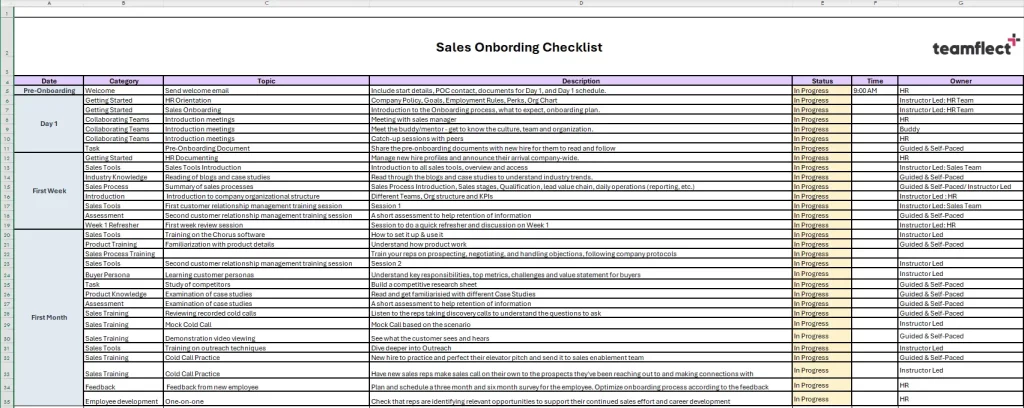
What's inside: around 30 tasks across four stages, an Owner column, a Time column instead of a due date, and a Status column, plus a second tab of training resources.
The sales template is the most detailed sales-specific plan in the collection. It treats sales onboarding as a ramp plan, not an HR task list.
What's inside this onboarding template:
Around thirty line items across Pre-Onboarding, Day 1, First Week, and First Month
Columns for Category, Topic, Description, Status, Time, and Owner
Sales-specific items: two CRM training sessions, Chorus software setup, prospecting and objection-handling drills, mock cold calls, recorded call review, demo video walkthroughs, buyer persona work, a competitor research sheet, and three- and six-month feedback surveys
A second tab listing additional sales training resources for product knowledge and CRM end-user guides
Who is this onboarding template for:
Sales managers onboarding their first SDRs or AEs and needing a full ramp plan
Sales enablement teams building a repeatable process across multiple new hires
Revenue leaders who want visibility into where each new rep is in their ramp
Why we chose this onboarding template:
Generic HR onboarding does not get a sales hire to quota. Sales onboarding is functionally a different process
The Owner column distinguishes Instructor-Led training from Guided and Self-Paced learning, which decides whether the manager needs to block calendar time or hand the rep an asynchronous module
It includes feedback checkpoints at three and six months, which is when sales reps usually decide whether they are going to stay
Simple and effective onboarding checklist to cover the basics
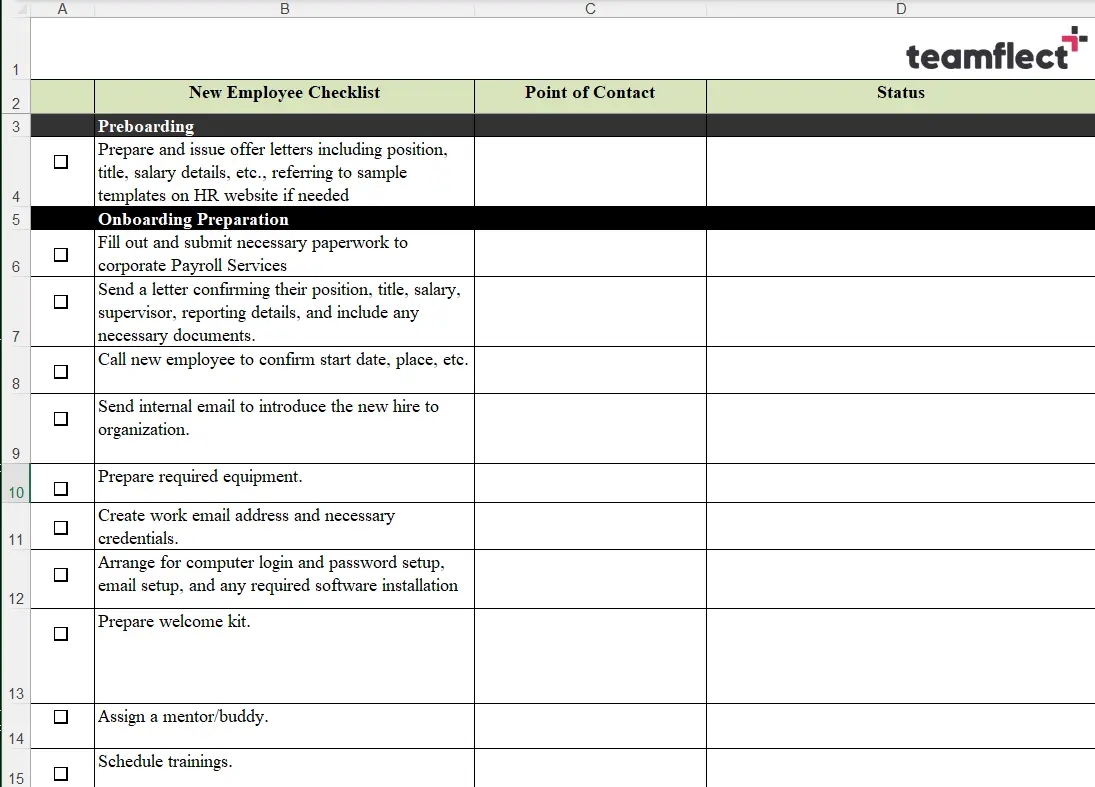
What's inside: more than 40 tasks across nine phases, an owner column, a date-completed column instead of a due date, and a description column for each action.
This is the most complete plan in the collection, with more than forty line items running from Pre-Offer Acceptance through the first annual performance review.
What's inside this onboarding template:
Nine phases: Pre-Offer Acceptance, Pre-Hire Preparation, First Day, First Week, First Month, Department Orientation across 30, 60, and 90 days, and Ongoing Onboarding through the first year
Three columns beside each action: description, owner, and date completed
Handoffs between HR, the supervisor, the orientation buddy, and IT mapped at each stage
Coverage of 120 day check-ins, mid-year reviews, and the annual performance evaluation
Who is this onboarding template for:
HR leaders building a foundational onboarding process from scratch
Teams that want one document covering everything between offer letter and the first anniversary
Organizations where onboarding ownership is unclear and needs explicit assignment
Why we chose this onboarding template:
It is the only template in this set that takes the full first year seriously
Most checklists end at the 90-day mark and assume integration is finished. The 90-day-to-12-month window is where most early attrition actually happens
Smaller teams should pare it down before using it, but it gives them a baseline to cut from rather than build up to
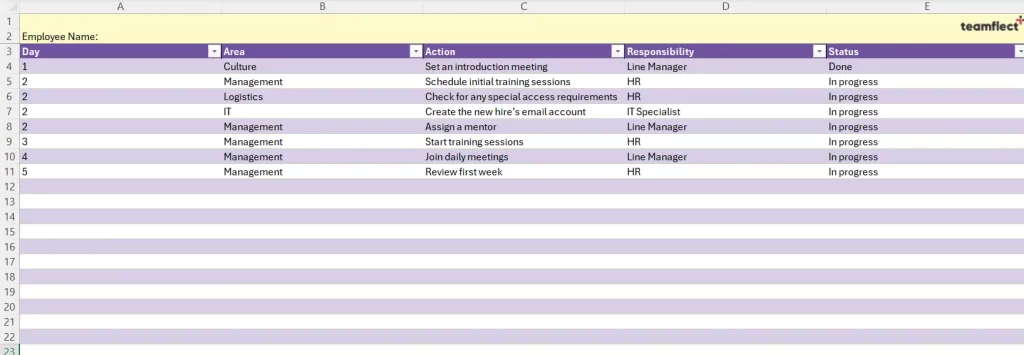
What's inside: 25 tasks across five stages (Preboarding, First Day, First Week, First Month, and Ongoing), an owner column, a due-date column, and a status column, now available as a download for the first time.
What's inside: department-specific workflows instead of a fixed task list, an owner assigned automatically per task, a due date driven by the review cycle, and a status dashboard instead of a static column.
Static templates work, but they live or die on whoever remembers to follow them. Teamflect's onboarding module is built for the moment a team outgrows the checklist and needs the process to run itself.
What's inside this onboarding template (And the built-in onboarding features that support it):
Department-specific onboarding workflows that fire automatically when a new hire's role and team are set. HR, sales, engineering, and customer-facing roles each get the checklist that fits their ramp
Custom automation scenarios for sending onboarding surveys at the points where feedback actually matters: day 7, day 30, day 60, day 90, and the six-month mark
A built-in mentor and buddy program with scheduled one-on-ones, and shared progress visibility between the new hire, their buddy, and their manager
Manager dashboards that surface which new hires are on track, behind on tasks, or showing early signals of disengagement
Native Microsoft Teams integration so onboarding tasks, surveys, and check-ins live where your team already works
Direct handoff from onboarding into the formal 30/60/90 performance review process, so the new hire's first evaluation is grounded in the goals set during their first month, not built from scratch
Use the best onboarding platform for Microsoft Teams!
[fs-toc-omit] The Four Metrics That Tell You If Onboarding Is Actually Working
Having access to onboarding checklists, is only the beginning. While building a structured onboarding process is a strong start, that process needs to be evaluated against core success metrics to make sure it is actually useful.
Here at Teamflect, our internal HR specialists ask every team we work with the same question: how do you know your onboarding is succeeding? Drawing from SHRM's onboarding measurement framework and our own observations, the answer almost always comes down to four numbers.
The four metrics worth tracking:
Metric
Detail
Time-to-productivity
The average new hire takes around eight months to reach full productivity (Harvard Business Review). Knowing your own number tells you where ramp time is leaking.
90-day and 1-year retention rates
The 90-day mark catches structural failures like missing equipment or vague expectations. The 1-year mark catches integration failures like weak peer bonds or unclear growth paths.
Onboarding completion rate
What percentage of new hires actually finish the checklist? 85% is the benchmark for a healthy process. Lower means people are skipping steps.
New hire eNPS at 30 and 90 days
“How likely are you to recommend this company as a place to work?” is the best leading indicator. A drop at 30 days flags onboarding problems. A drop at 90 days flags manager problems.
Teamflect HR Team: A checklist without a metric is a wish. A metric without a checklist is a guess. You need both, and most companies have neither.
The onboarding templates we've provided above have measurement points built in. Status columns track completion. The 30/60/90 milestones give natural checkpoints for retention and productivity reviews. The field rows let you tag each checklist to a specific employee so you can compare cohorts later.
Frequently Asked Questions
[fs-toc-omit]What Is an Onboarding Checklist?
An onboarding checklist is a list of every task that has to be completed for a new hire, grouped by stage and assigned to a named owner. It usually starts when the offer is signed and runs through the first ninety days.
[fs-toc-omit]How Do You Make an Onboarding Checklist?
Start from the five stages, write the tasks under each one, then assign an owner and a due date to every task. Anything without an owner is a wish, not a task. Download one of the templates below and replace the sample rows.
[fs-toc-omit]What Is the 30-60-90 Onboarding Rule?
The 30-60-90 rule sets one checkpoint at each of those three marks. At day 30 the new hire should understand the role, at day 60 they should be delivering with support, and at day 90 they should be delivering without it. A 30-day onboarding pulse survey at the first checkpoint is the easiest way to catch a role that was misunderstood before it costs another sixty days.
[fs-toc-omit]Can You Provide a Free Template for an Onboarding Checklist?
Yes. Ten free onboarding checklist templates are available on this page in Word, Excel, PDF, Google Sheets and Google Docs, with no email required.
[fs-toc-omit]How to Create an Onboarding Checklist for New Hires?
To create your own checklist, we recommend starting out by mapping out the new hire journey top to bottom. Start by defining the key stages; pre-onboarding, first-day, first week and 30/60/90 milestones. From there you can get started on listing the tasks of each stage.
Then, start assigning responsibilities to clarify who will work on each task whether it is HR, manager, IT, or other team members. Customize your checklist to reflect the unique needs of different departments or positions. Utilize your onboarding software and the checklist to stay on track. Don't forget to review and improve as you gather feedback in time.
[fs-toc-omit]How to Measure Onboarding Effectiveness?
You'll need to keep an eye on certain metrics like time-to-productivity, retention rates, employee engagement scores as well as onboarding task completion rates. Of course you can't forget about feedback, the most important part of any process to ensure its impact.
Ask for input on how well the new hire is integrating and performing. Conduct structured check-ins (e.g., after 30, 60, 90 days), and onboarding surveysto gather direct feedback on the onboarding experience. That way you can use this information to make data-driven and impactful decisions about your onboarding process.
Assess these metrics regularly and refine your process with time, that way you'll ensure the new hires get a great start and that they can perform their best, so your company performs its best.
[fs-toc-omit] Is an onboarding checklist different for small businesses vs. enterprises?
Yes. While the core onboarding steps are often similar, the structure and level of detail usually differ. Small businesses tend to use simpler onboarding checklists with fewer stakeholders and faster timelines. Enterprises typically require more detailed checklists that account for compliance, approvals, multiple systems, and cross-department coordination.
[fs-toc-omit] Who should own the onboarding checklist: HR, manager, or IT?
HR typically owns the onboarding process checklist, as they oversee the overall employee onboarding experience. That said, onboarding works best when ownership is shared. Managers contribute role-specific tasks and expectations, while IT handles system access, equipment, and technical setup. Clear ownership and collaboration ensure nothing is missed.
[fs-toc-omit] How often should onboarding checklists be updated?
Onboarding checklists should be reviewed regularly and updated whenever processes, tools, or compliance requirements change. As a best practice, most organizations review their onboarding checklists at least once or twice a year to ensure they remain relevant, accurate, and aligned with current business needs.
.svg)
.svg)


.svg)


.svg)
.avif)