.svg)
.svg)
Authoritarian Leadership Style: Is It Right For Your Workplace?

Updated on:
January 9, 2026


Prefer Teamflect as your HR source on Google
.svg)

In the world of leadership, the authoritarian style of leading is a formidable force that is often characterized as a top-down approach. This particular leadership style is one where the decision flow goes through the leader exclusively.
This commanding approach, as with anything has its upsides and downsides. Its natural structure can be subject to celebration and critique. Join us and see if the authoritarian leadership style is the right choice for you to implement in your workplace, the pitfalls and the advantages of having it, and if it can actually support you on your way to success.
First and foremost, let’s take a look at the definition of the authoritarian approach. The authoritarian leadership style is at its core a centralized decision-making process. The leader is directly giving instructions to their team and does not leave space for input or feedback in this approach as opposed to a democratic leadership style.
There is often strict control over any tasks, goals, or anything else related to the company’s business choices. In this case, the leader is highly independent and expects their team to follow suit on whatever their decisions are.
As you can already likely tell, the roots of this strict approach is a very hierarchical job architecture, one where decisions are usually quite efficient yet can also create an environment that lacks creativity and bears the risk of an uninspired community.
Let’s break down the characteristics of this formidable approach and make sure that you can spot it whenever wherever.
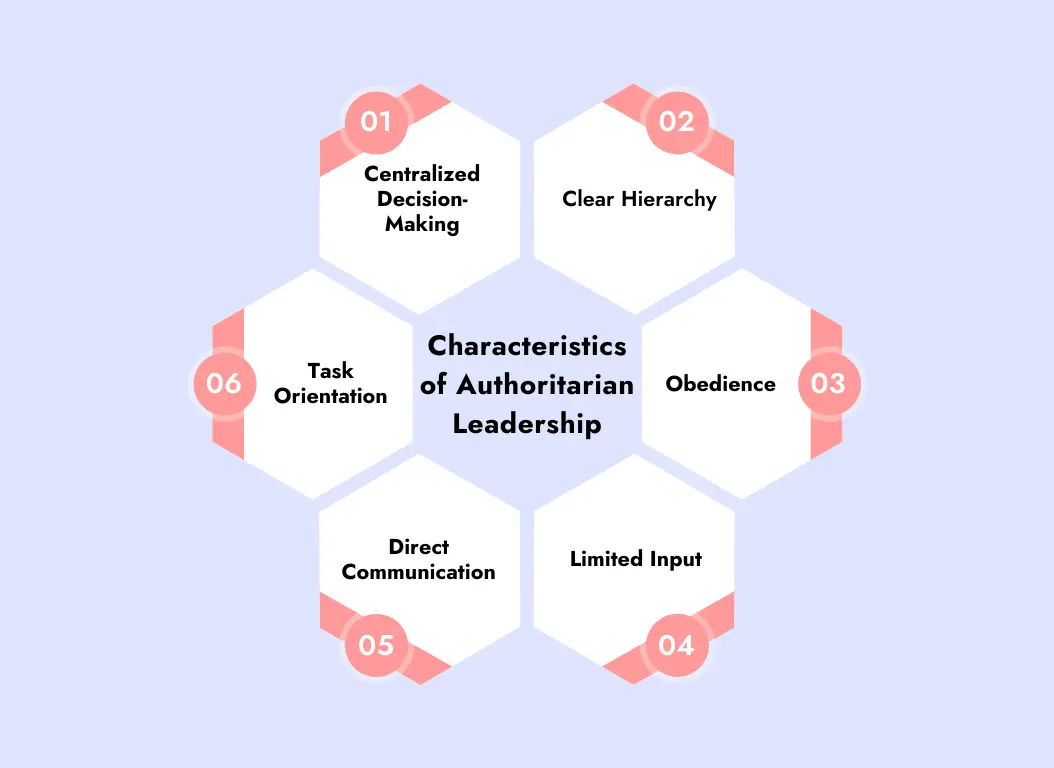
Overall, the authoritarian leadership style is one that holds sole control and delegates clearly any tasks or directives to their subordinates. While there is almost no feedback allowed, it can also be highly effective in an environment with a high demand in fast decisions.
Like the clearcut nature of this leadership approach, the advantages and disadvantages of authoritarian leadership can seem clear to you already just by looking at its characteristics. But just in case it isn’t, here is a comprehensive list of the good and the bad of the authoritarian leadership style.

Overall, it is up to you to see if their pros and cons are worth the implementation of this style into your workspace. Depending on your unique conditions within your market and industry, it can be a very beneficial thing to have an authoritarian leader on your team.
In the modern discourse of "servant leadership" and "flat hierarchies," the authoritarian leadership style is often unfairly dismissed as obsolete. However, professional management consultants and seasoned executives recognize that leadership is situational. There are specific, high-stakes scenarios where a centralized, commanding approach is not just beneficial; it is necessary for organizational survival.
According to the 2025 SHRM State of the Workplace Research Report, 51% of CHROs have identified leadership and manager development as their top priority for the year. This indicates that while many may adopt a top-down approach out of necessity, nearly half of those leaders may lack the essential management skills to prevent the "low motivation" and "high turnover" risks associated with authoritarianism.
High-Authority Use Cases for Authoritarian Leadership:
Before we end this post, here are our suggestions for tools that you can use if you are a democratic leader:
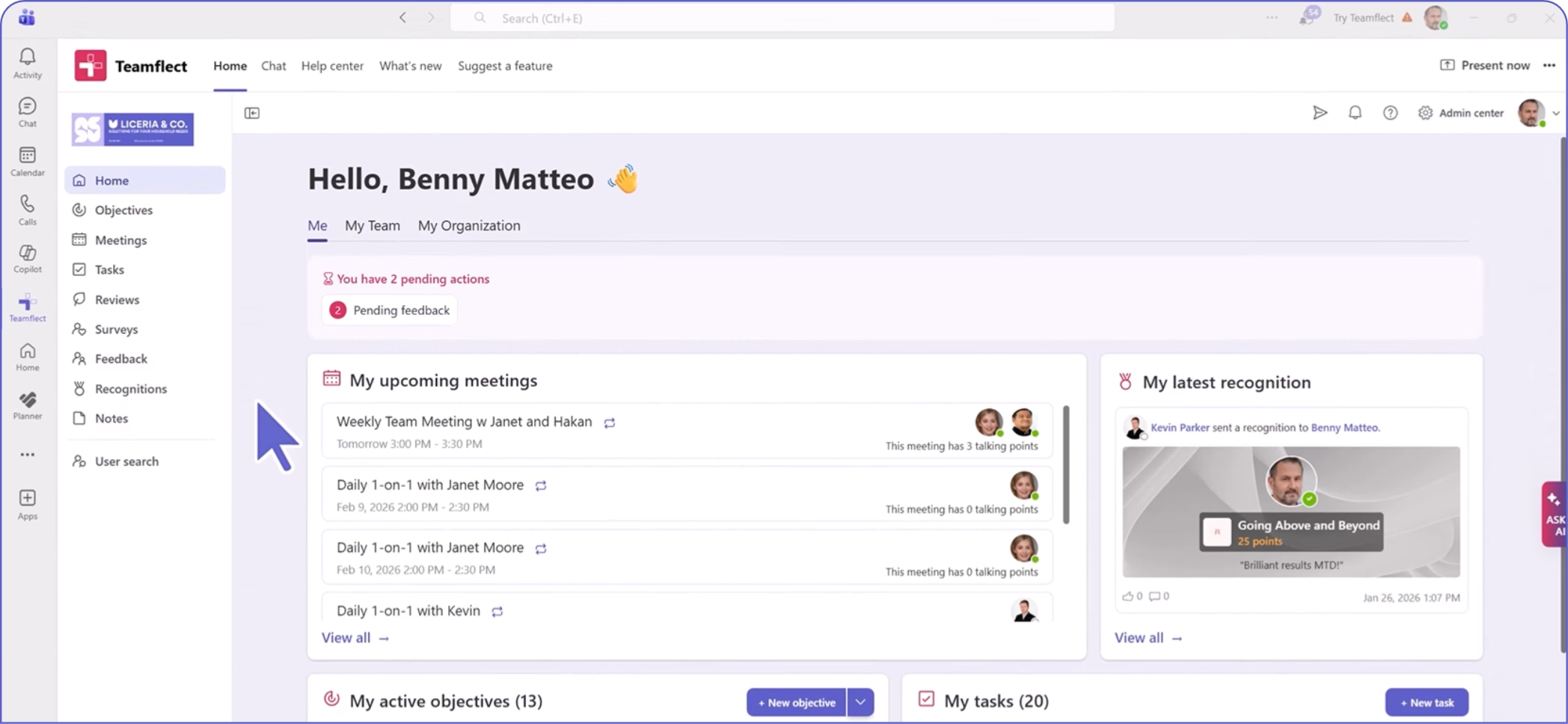
If you want to have a strong tool at work that can help you set clear tasks and goals for your team, Teamflect is the one!
Teamflect will assist you with goal setting, customized tasks and meetings, automated goal check-ins, detailed goal tracking reports, and so much more. It is an all-in-one performance management solution that will make sure you and your team thrive, on your direct way up!

Use Teamflect inside Microsoft Teams today and get after your goals effectively!

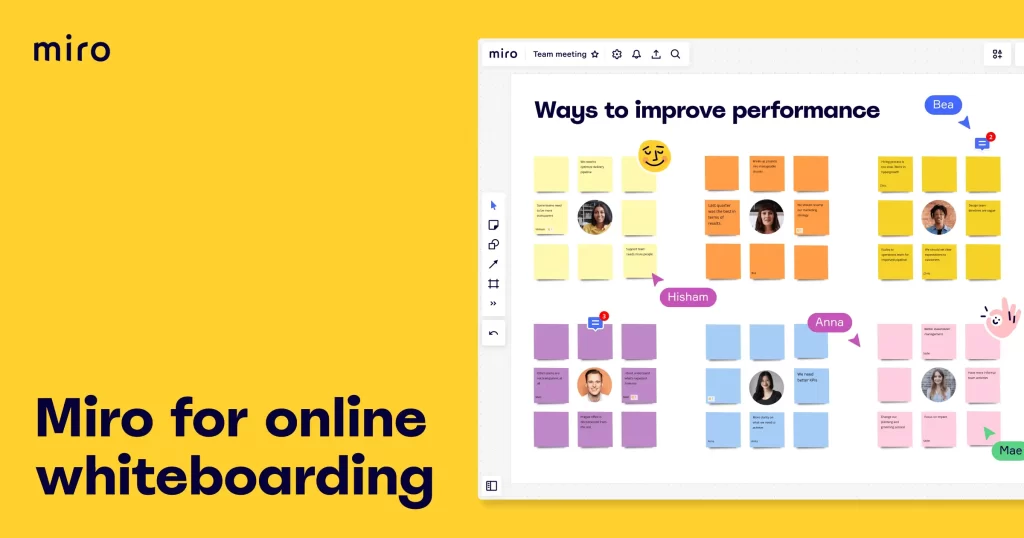
If you’re looking for a space to hold all of your planning in one spot then you can use Miro, an online whiteboard tool. Miro helps you organize your thoughts and gives you the sense of working on an actual whiteboard. This is especially helpful if you’re looking to find a tool to help plan wherever you go.
.avif)
Create high-performing and engaged teams - even when people are remote - with our easy-to-use toolkit built for Microsoft Teams
.svg)