Succession Planning Software
Know exactly who's ready to step up, before the seat is empty.

Know exactly who's ready to step up, before the seat is empty.


.avif)
With Teamflect, you’re paired with a dedicated Customer Success Manager who handles everything from setup to onboarding.
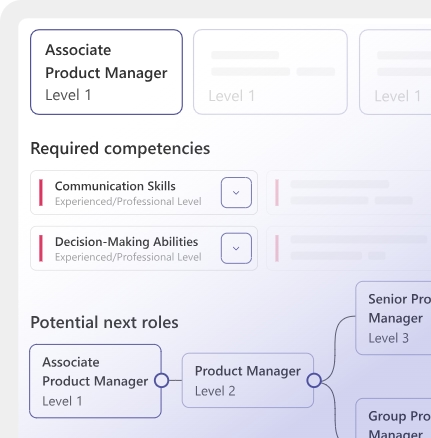
Your CSM helps you configure succession plans, build competency maps, train your managers, and optimize your succession planning process over time.


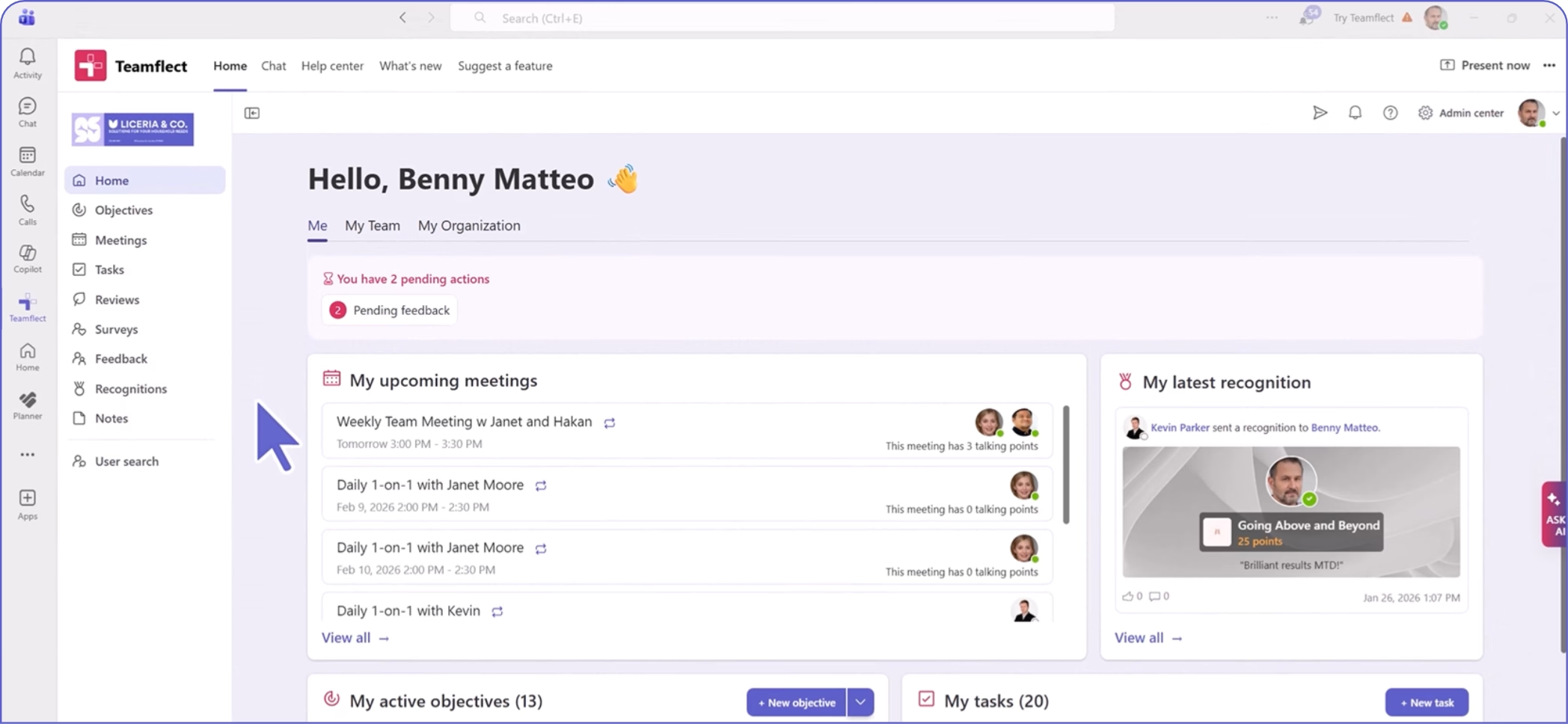
Create high-performing and engaged teams - even when people are remote - with our easy-to-use toolkit built for Microsoft Teams
Compare four things: whether the tool builds the 9-box from your existing review data or asks you to enter ratings again, how granular the permissions are, whether it syncs roles from your HRIS, and whether successors get development plans inside the same system. Reporting and dashboards are where vendors differentiate on paper and rarely where programs fail. Teamflect covers all four, and paid plans include a Customer Success Manager who sets the process up with you.
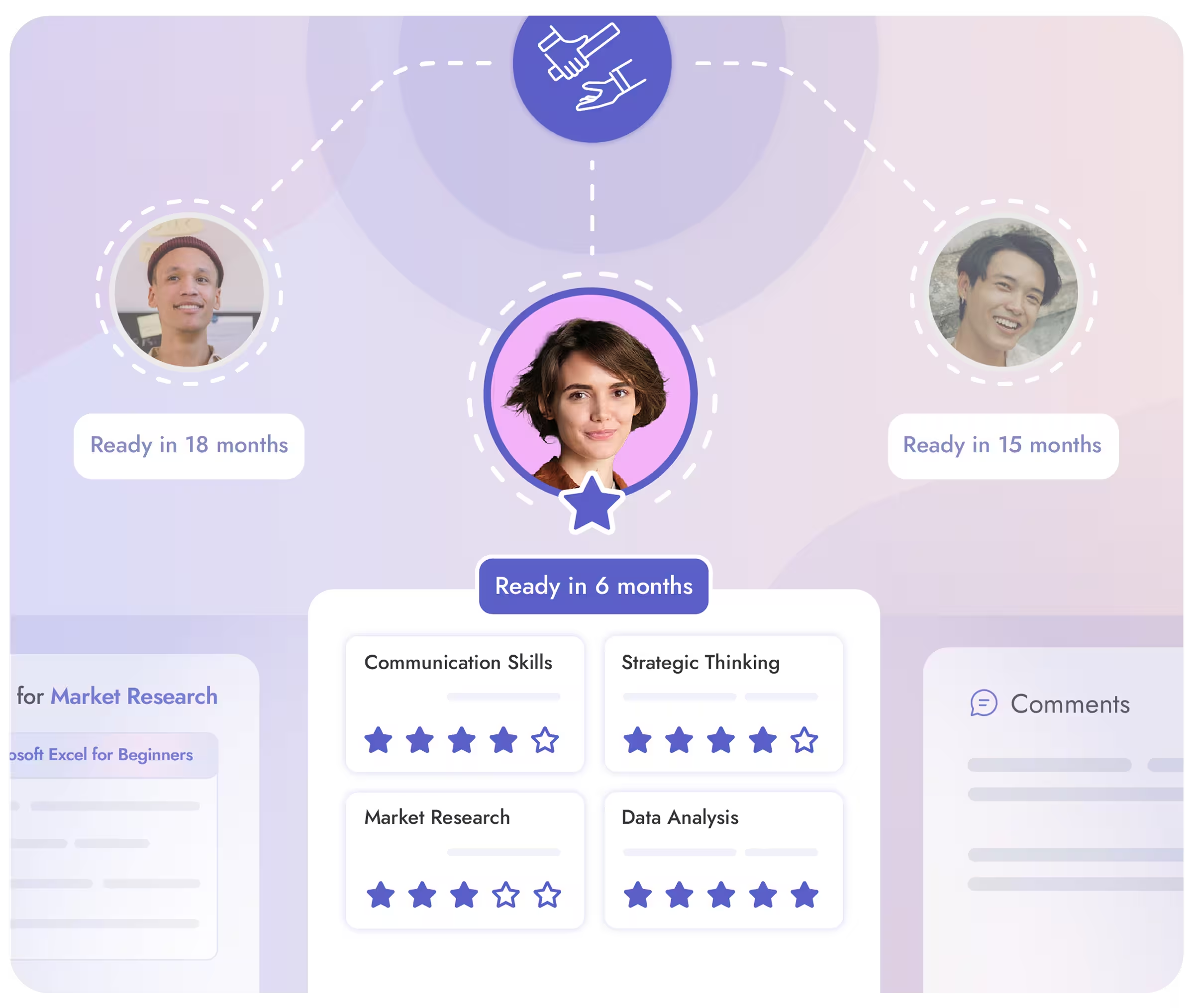
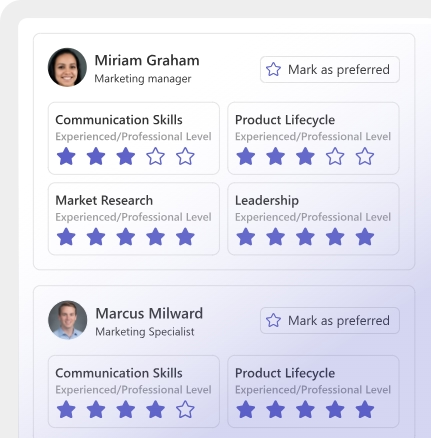
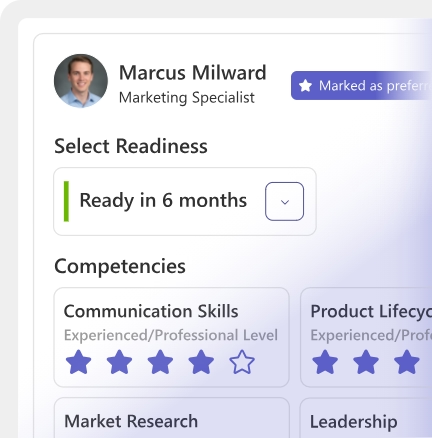
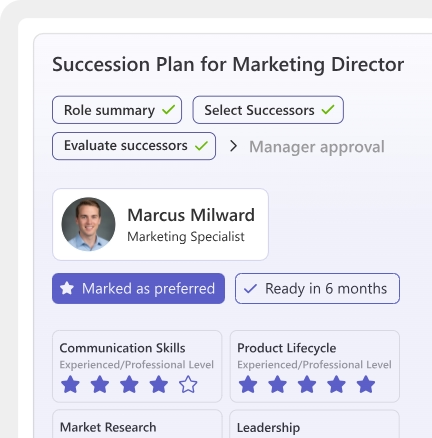
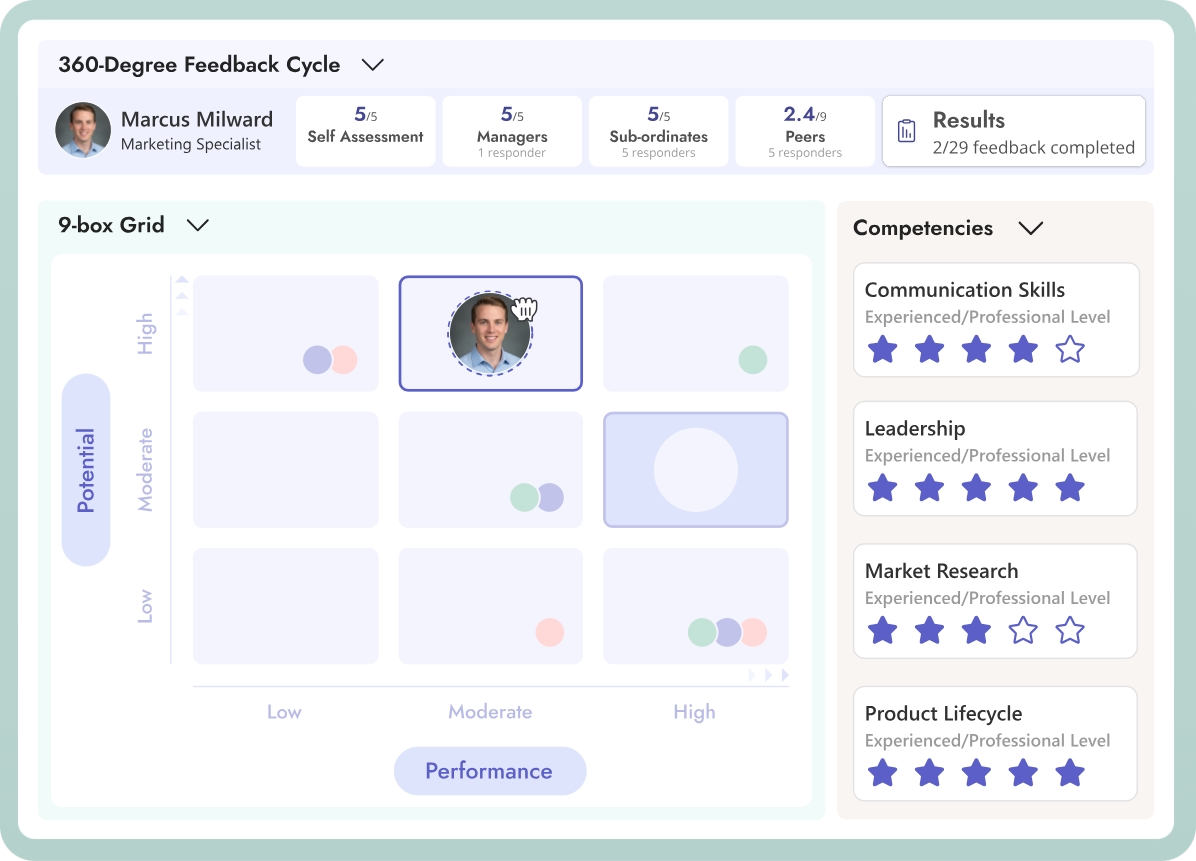
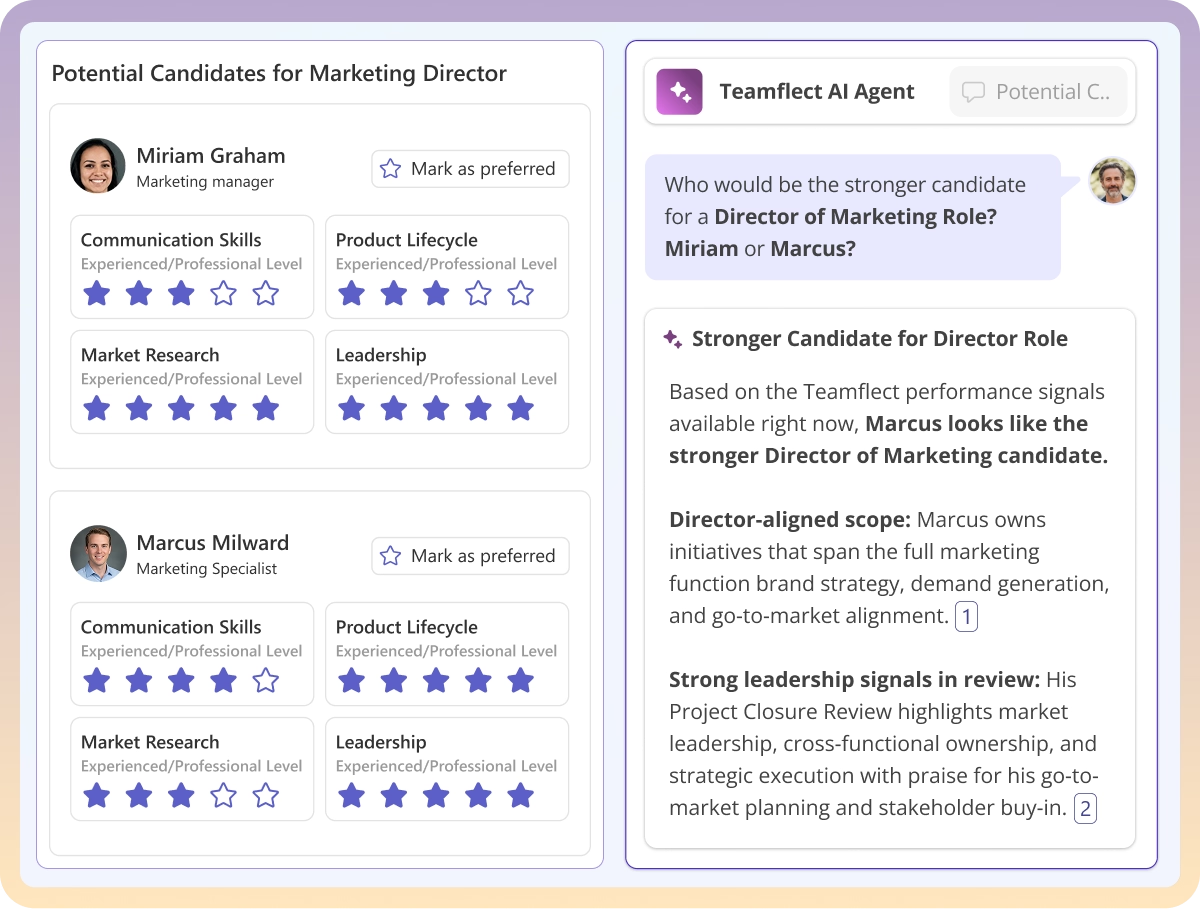
You identify successors by scoring employees on current performance and future potential, then mapping each critical role to two or three named candidates with a readiness estimate. Doing this from manager opinion alone is how succession plans end up reflecting visibility rather than capability. Teamflect draws on performance review results, goal completion and 360 feedback to populate the 9-box grid, so candidate identification starts from evidence collected across the year.
Yes, and it needs to: roles, managers and departments have to come from your HRIS or the plan is mapped against an org chart that no longer exists. Check whether the sync covers job titles and reporting lines, not just employee names. Teamflect connects to 200+ HRIS systems including Workday, UKG, ADP and BambooHR and also reads reporting lines from Microsoft 365, so critical-role mapping stays accurate through reorgs.
A 9-box grid plots each employee on performance against potential, producing nine cells that indicate who is ready to progress, who needs development and who is at risk. Built by hand in a spreadsheet it is out of date the moment a review cycle closes. Teamflect generates the 9-box talent grid from your existing performance review and goal data, so the grid updates as cycles complete instead of being rebuilt each year.
You measure it with three numbers: the share of critical roles with at least two ready successors, the proportion of senior vacancies filled internally, and how long successors stay after promotion. A pipeline that looks healthy on a grid but fills every senior vacancy externally is not working. Teamflect reports succession coverage alongside performance and engagement data in Power BI, so bench strength can be tracked over time rather than assessed once a year.
Confidentiality is handled with role-based visibility: each plan should be visible only to named HR staff and the specific leaders involved, not to every manager with a login. Ask whether permissions are set per plan or only per module, because module-level permissions are usually too coarse for succession. Teamflect applies granular permissions down to specific modules and user groups, with all access logged, so a succession plan is not visible to a manager simply because they can see performance reviews.
At 50+ people, succession planning is usually better handled as a module of your performance platform than as a dedicated product, because the talent data it needs already lives there. Standalone succession tools and HCM suites are built for organisations several times that size. Teamflect includes succession planning, a 9-box talent grid and development plans in the same platform as reviews and goals, so the ratings feeding your succession decisions come from cycles you already run.
Succession data is the most sensitive content in HR, because it names who is expected to replace whom. The controls to insist on are SOC 2, GDPR compliance, encryption in transit and at rest, role-based visibility per plan, and data residency you can choose. Teamflect is SOC 2 certified and GDPR compliant, keeps data inside Microsoft Azure, and offers enterprise controls including customer-managed encryption keys, selectable Azure data residency and audit logs streamed to SIEM.
Yes, but only if it comes with the performance data rather than as a separate system to populate by hand. At 50+ people the value is in knowing who could cover the eight or ten roles that would genuinely hurt to lose, not in modelling the whole org. Teamflect is free for up to 10 users and includes succession planning with reviews and goals, so a 200-person company can run it without buying a dedicated succession product.
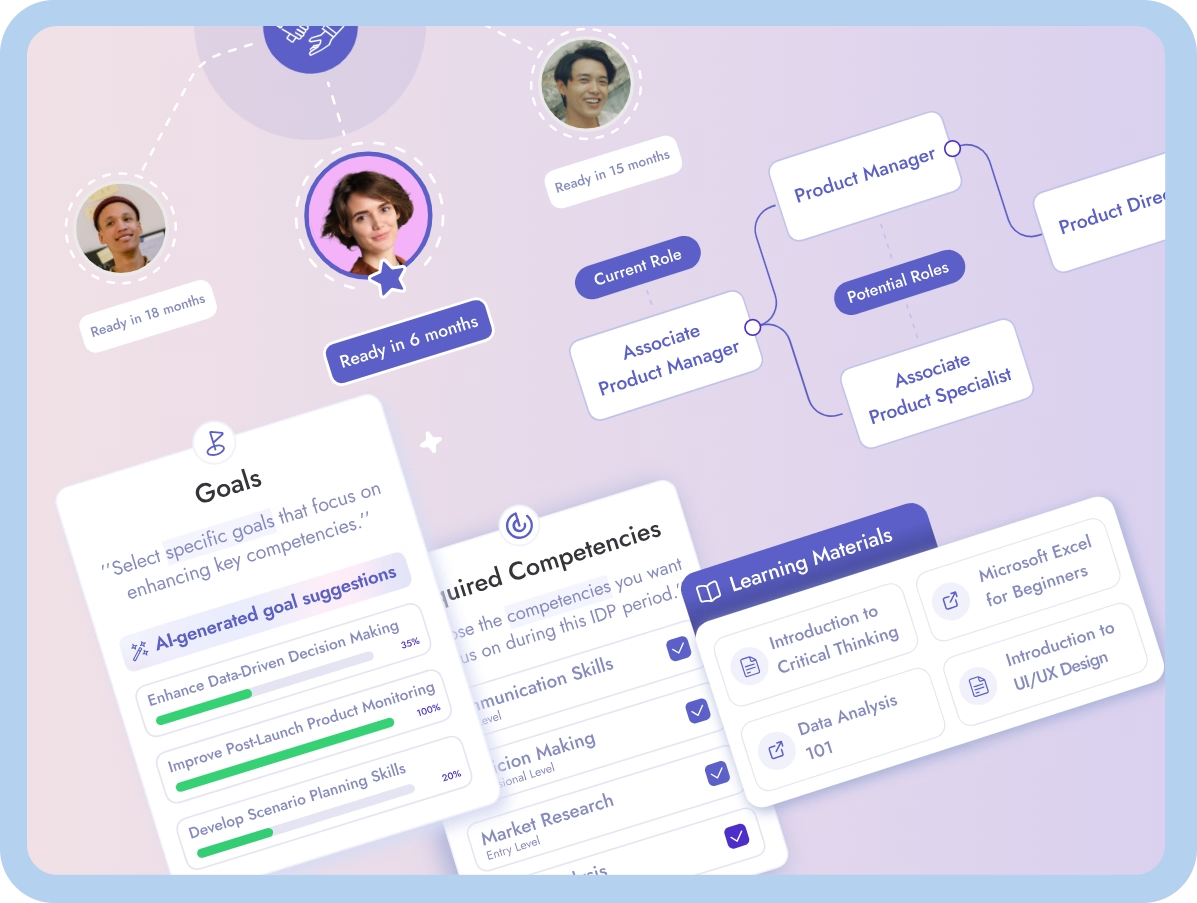
Readiness comes from a development plan per successor that closes the specific gap between their current role and the target one, reviewed each quarter. A named successor with no development plan is a note, not a plan. Teamflect links each successor on the 9-box grid to an individual development plan and tracks progress inside the same Microsoft Teams workflow as reviews and 1-on-1s.