Individual development plans that advance careers and deliver success
.webp)

.webp)


.webp)
.webp)
.webp)


"Implementing Teamflect as our new performance appraisal technology has truly transformed our workflow. Not only has it streamlined our goal-setting and review processes, but it is also enabling a culture of continuous feedback and improvement."
Fella Sharp, Sr. Global Head of People, Lovisa
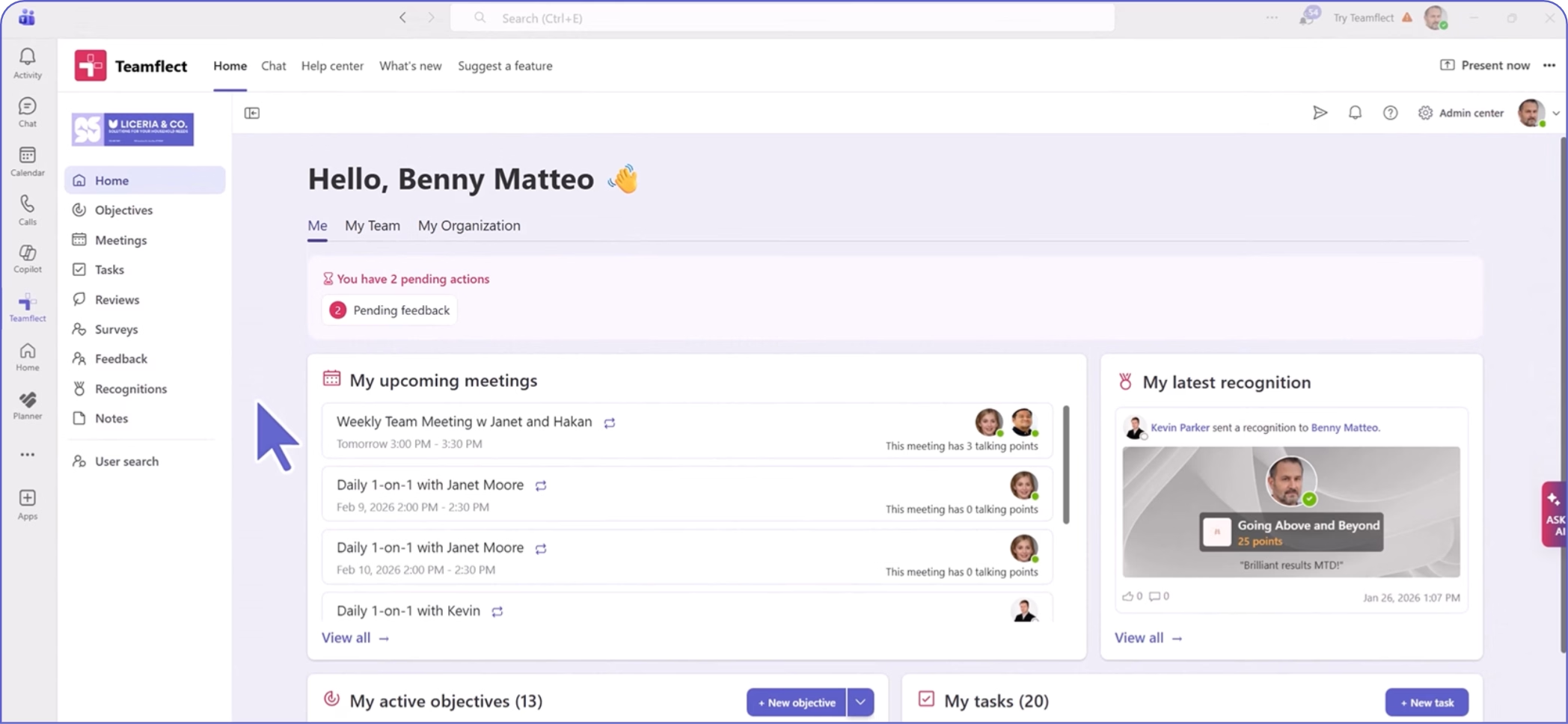
Create high-performing and engaged teams - even when people are remote - with our easy-to-use toolkit built for Microsoft Teams
A performance review assesses what happened, a development plan sets what the employee will build next, and a career path maps the roles that growth leads to. They fail when kept in separate systems, because the review surfaces a gap that the plan never picks up. Teamflect keeps reviews, development plans and succession or career data in one platform, so a gap identified in a review becomes a development goal without being re-entered.
Yes, AI-assisted development planning can propose goals based on an employee's review results, goal history and feedback, which is far more useful than a generic skills library. The quality depends entirely on whether the tool can see the employee's performance data or only their job title. Teamflect's AI Agent analyses review results, goal completion and engagement data to suggest personalised development goals a manager can assign immediately.
A development plan needs three or four specific growth goals, the skills each one builds, a concrete action for each (training, mentoring, a stretch project) and a review date. Vague aspirations without an action and a date are what make development plans feel like paperwork. Teamflect structures plans this way and links each development goal to the employee's performance data, so the plan reflects the gaps the last review actually surfaced.
Individual development plan software gives managers a template for growth goals, links each goal to a skill or competency, and tracks progress through check-ins rather than a document that ages in a shared drive. The category is normally part of a performance platform rather than a standalone product. Teamflect handles development plans inside Microsoft Teams, so goals, feedback and progress updates happen where employees already work.
Development planning is rarely sold on its own; it is normally a module inside a performance platform priced per user per month. Buying a standalone development tool usually means paying twice for employee data you already sync elsewhere. Teamflect includes development plans alongside reviews, goals, 1-on-1s and succession planning, is free for up to 10 users, and quotes larger teams by size and modules.
Using software to manage IDPs streamlines the entire process, making it easier to set, update, and track goals over time. It ensures alignment between employee development and company objectives while offering real-time insights into progress. Software solutions like Teamflect also enhance collaboration between employees and managers, making the process more engaging and effective.
High-potential development plans should be built from the same competency data used in succession planning, so the plan closes the specific gaps between the employee's current role and the one they are being prepared for. Generic leadership training given to a 'hipo' cohort is the version that does not work. Teamflect connects development plans to its 9-box talent grid and succession data, so each successor's plan targets their actual readiness gaps.
Quarterly is the useful cadence: often enough that actions stay live, rarely enough that it does not become admin. Annual-only updates turn the plan into a document written to satisfy a process. Teamflect ties development plan check-ins to existing 1-on-1 and review cycles, so updates happen inside meetings that are already scheduled rather than as a separate task.
Yes, development plans can live inside Microsoft Teams so employees see them next to their goals and 1-on-1s rather than in a separate HR portal. Development plans stored outside daily workflow are the ones nobody opens between annual reviews. Teamflect keeps development goals, progress and manager feedback inside Teams and Outlook, and can suggest skill and career development actions based on the employee's own review and goal data.
Development plans get used when they are reviewed in the regular 1-on-1 rather than revisited once a year. The plan needs to appear in a conversation that is already happening, with one action due before the next meeting. Teamflect surfaces development goals inside the 1-on-1 agenda in Microsoft Teams, so progress is discussed every cycle instead of at review time.
You turn a review into a plan by carrying the two or three lowest-rated competencies straight into development goals while the review is still open. Doing it weeks later means the specifics are gone and the plan reverts to generalities. In Teamflect, review results and 360 feedback feed directly into development goals, and the AI Agent can draft suggested goals from the completed review for the manager to approve.
You start from a template per role or competency and then personalise two or three goals per person, rather than authoring every plan individually. For a team of ten this is the difference between an afternoon and a fortnight. Teamflect provides development plan templates and pulls each employee's own goals, review results and feedback into the plan, so personalisation starts from real data instead of a blank form.