Traditional annual reviews often fail employees. According to SHRM, early half of companies conduct only annual or semiannual reviews, leaving employees unclear about feedback and development. Managers and employees frequently find reviews ineffective, with only around one-quarter saying their systems are working well.
Meanwhile, many companies find keeping OKRs and performance management separate causes confusion, while fully merging them can compromise safety and lead employees to "game" their goals.
But the question of including OKRs in performance reviews depends on managing how goals and performance intersect.
Use OKRs to guide review discussions, not as the sole evaluation metric. Focus OKRs on team or company goals, not individual ratings, and discuss progress regularly in one-on-ones. Keep compensation talks separate from performance discussions to maintain clarity.
This article covers how to integrate OKRs and performance management successfully, when to keep them separate, and practical frameworks for alignment.
OKR performance management refers to the practice of integrating objectives and key results with employee evaluation systems. Done correctly, it creates alignment between organizational goals and individual performance tracking without compromising either framework.
OKRs (Objectives and Key Results) are a goal-setting framework that helps teams focus on measurable outcomes. An Objective is a clear, qualitative goal. Key Results are specific, time-bound metrics that show progress toward that Objective.
Performance management is the continuous process of planning, monitoring, reviewing, and developing employee performance. It ensures individual contributions align with business objectives while supporting professional growth.
The cycle typically includes four stages:

OKRs and performance management complement each other when structured correctly. OKRs provide the "what" and "why" behind team efforts. Performance management provides the "how well" someone contributed to those efforts.
Here's how they connect:
The key is treating OKRs as input for performance conversations, not as a direct substitute for evaluation criteria. This distinction protects the integrity of both systems.
While both frameworks deal with goals and outcomes, they serve distinct purposes. Understanding these differences prevents common integration mistakes.
This table shows why blindly merging OKRs with performance reviews creates problems. The frameworks measure different things at different scales.
This is one of the most debated questions in HR strategy. The answer isn't black and white. It depends on how you define "mixing."
The difference comes down to maintaining psychological safety. When employees know their performance rating depends on hitting OKRs, they'll set safer goals. This defeats the entire purpose of stretch goals.
When organizations tie OKR achievement directly to performance ratings, three things typically happen:
This doesn't mean OKRs should never appear in reviews. It means OKR achievement shouldn't be the primary or automatic factor in determining someone's performance rating.
Yes, but with careful design. Individual OKRs work best when they're directly tied to specific key results from team OKRs rather than standalone personal goals.
Here's why team OKRs generally work better:
If you do use individual OKRs, treat them as development goals rather than evaluation criteria. For example, an individual OKR might be "Learn Python and automate three recurring reports." This is about growth, not performance rating.
No, not directly. Linking OKRs to salary increases or bonuses creates the same sandbagging problem mentioned earlier.
However, you can still recognize OKR contributions through:
The distinction is that compensation decisions should consider OKR contributions as one data point among many, including behaviors, values alignment, and overall impact.
The most effective approach treats OKRs and performance management as parallel systems that inform each other. This framework shows how to connect them across each stage of the performance management cycle.
The planning phase is where goal alignment begins. This is when you establish how organizational goals will cascade down to teams and individuals.
Start by setting company-level OKRs at the beginning of each quarter. These should reflect strategic priorities and business objectives for the period. Then, work with department heads to create team OKRs that support these top-level goals.
During individual planning conversations, managers should:
This creates a clear line of sight from individual work to company priorities. An employee knows exactly how their daily tasks connect to team OKRs and broader business goals.
Performance tracking should reference OKRs regularly without treating them as the only measure of success. Weekly or bi-weekly check-ins should cover both OKR progress and broader performance factors.
During monitoring:
This approach keeps OKRs visible throughout the quarter while maintaining focus on how someone works, not just what they achieve. It also allows for course correction when circumstances change.
The right OKR software and performance review software make integration significantly easier. Look for platforms that connect goal-setting with performance tracking in a single system.
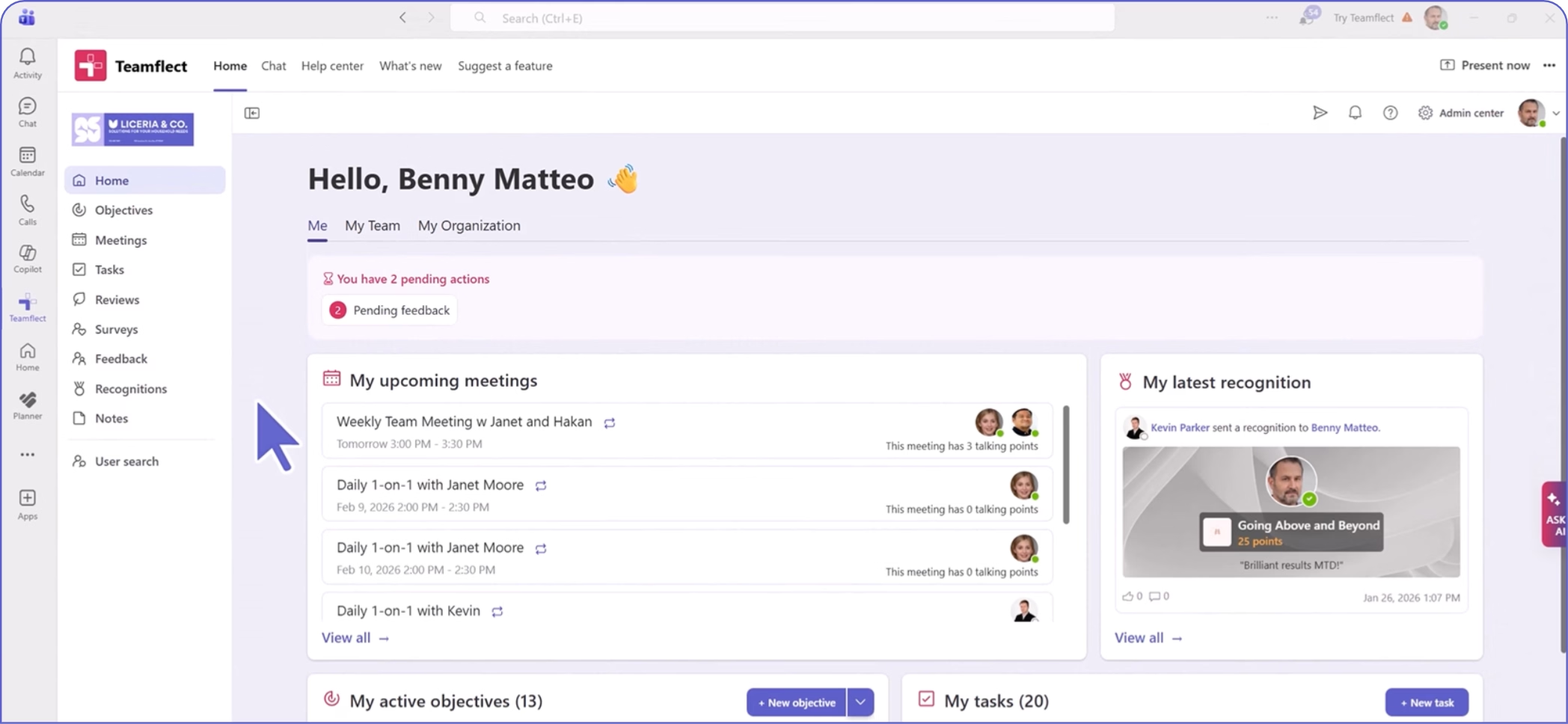
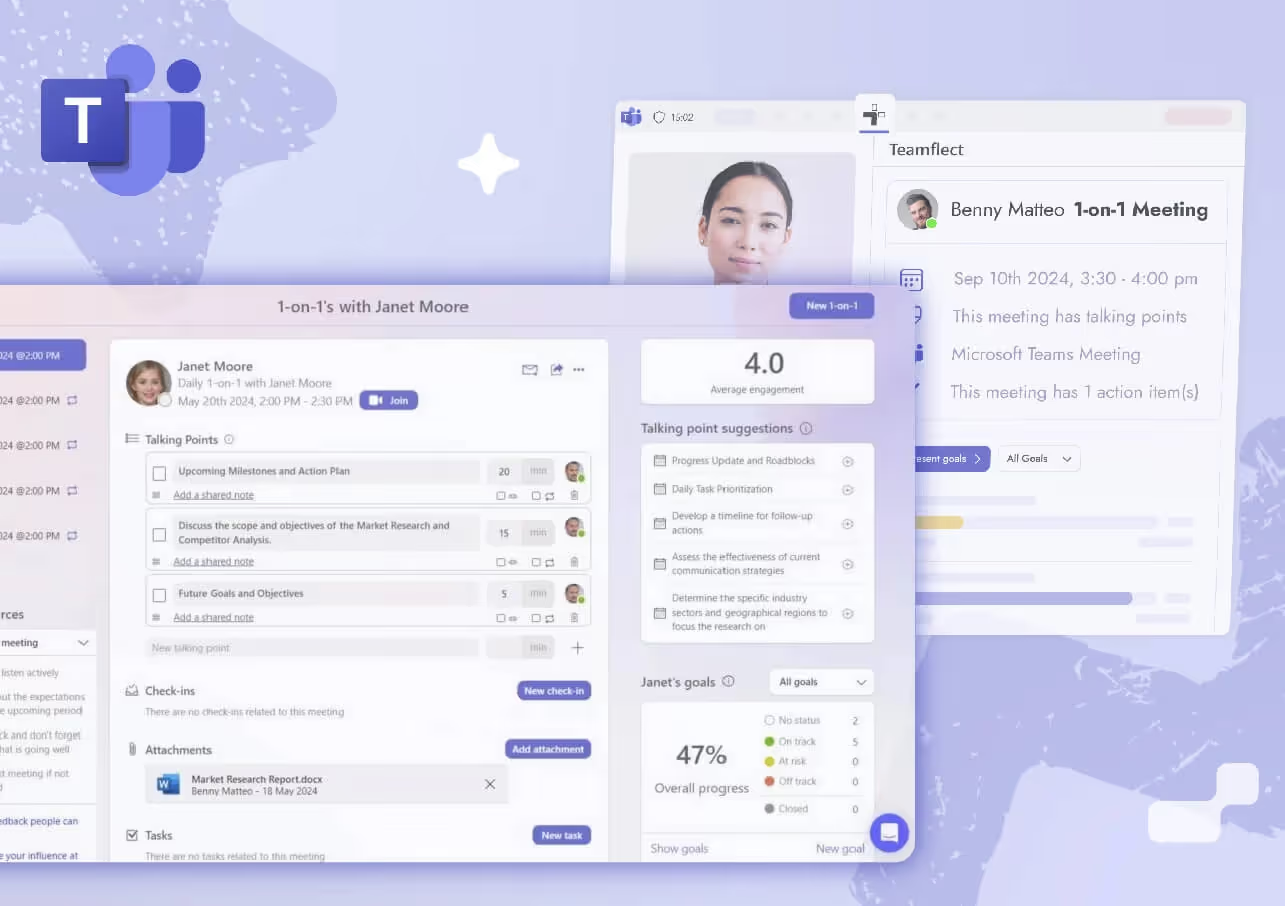
Teamflect is a performance management software that helps companies connect goals directly to performance review templates. As OKR software built for Microsoft Teams, Teamflect allows managers to reference quarterly OKRs during review conversations while keeping evaluation criteria separate.
Key features that support integration:
The platform solves a common problem: having goals in one system and reviews in another. When everything lives in one place, it's easier to build a performance review process that considers OKR contributions without over-weighting them.
As mentioned earlier, direct linkage between OKRs and compensation undermines the framework. But that doesn't mean OKRs should be completely invisible during compensation decisions.
Here's a balanced approach:
Do consider:
Don't use:
Think of OKRs as evidence of impact, not as automatic compensation triggers. A software engineer who moves the needle on a critical infrastructure OKR deserves recognition. But that recognition should consider the full picture, including how they got results and what they learned.
Successfully connecting OKRs with performance management requires clear policies and thoughtful design. These practices help organizations maintain the benefits of both frameworks.
Transparency prevents confusion and builds trust. Create a written policy that explains exactly how OKRs will and won't influence performance reviews.
Your policy should address:
Share this policy when you introduce OKRs and reference it during review training. When employees understand the rules, they're more likely to set ambitious goals.
Team OKRs create collective accountability and reduce the pressure on individuals to hit aggressive targets alone. This structure works better for most organizations than assigning everyone individual OKRs.
Instead of giving each person their own set of OKRs, try this:
For example, if a Product team has a key result to "Increase feature adoption by 40%," individual team members might own specific tasks like user research, feature improvements, or onboarding flow optimization.
Their performance is evaluated on how well they executed their part, not on the team-level 40% target.
Well-designed key results make it easier to assess contributions fairly. When key results are vague or input-focused, it becomes harder to separate effort from impact during reviews.
Good key results:
Poor key results:
The good examples show clear outcomes. The poor examples measure activity or lack specificity. When you use performance rating scales during reviews, outcome-focused key results make it easier to assess someone's impact objectively.
Too many OKRs dilute attention and make performance assessment more complicated. Most high-performing teams stick to 3 to 5 Objectives with 2 to 4 Key Results each.
This constraint has several benefits:
When you limit OKRs, you can have more substantive discussions about each one during reviews. Managers can ask meaningful questions about obstacles, learnings, and contributions rather than rushing through a long checklist.
Most organizations struggle to align OKRs with performance management because they're using disconnected tools and unclear processes. Teamflect solves both problems.
As the highest-rated performance management software for Microsoft Teams, Teamflect brings OKR tracking and performance reviews into a single platform. You can set cascading goals, track progress in real-time, and conduct reviews that reference OKRs without making them the only evaluation factor.
The result? Teams that set ambitious goals without fear. Managers who can assess performance fairly. HR leaders who finally have an integrated system that works.
OKR performance management is the practice of integrating objectives and key results with employee evaluation systems. It involves using OKRs to inform performance conversations while keeping goal achievement separate from performance ratings.
OKRs should be discussed during performance reviews as context, but not used as the primary rating criteria. The best approach treats OKRs as input for understanding what someone worked on and how they contributed, while evaluation focuses on behaviors, impact, and growth.
Not directly. Linking OKR achievement to salary increases encourages sandbagging and discourages stretch goals. Instead, consider OKR contributions as one factor among many when making compensation decisions, including collaboration, values alignment, and overall impact.
OKRs are a goal-setting framework focused on ambitious, team-level outcomes measured quarterly. Performance management is a continuous evaluation process that assesses individual contributions, behaviors, and development needs over longer periods.
An all-in-one performance management tool for Microsoft Teams