.svg)
.svg)
Reducing Manager Burnout With AI-Driven Continuous Coaching Support

Updated on:
December 23, 2025

Prefer Teamflect as your HR source on Google
.svg)

Modern management requires balancing performance expectations, communication demands, and emotional labor, tasks that are often done simultaneously. As organizations become more distributed and digital, managers assume responsibilities that once belonged to several different roles, including team development, conflict navigation, performance support, goal alignment, culture shaping, and ongoing skill coaching.
These expanded employee expectations create an environment where employee burnout becomes increasingly common, especially when managers must sustain productivity across varied time zones and evolving workplace structures.
Manager burnout does not arise solely from workload volume; it stems from the complexity and emotional intensity of supporting others. Repeated context-switching, difficult conversations, performance alignment, and the constant need to interpret team dynamics can collectively lead to cognitive overload. Many managers report that their days are fragmented by back-to-back meetings, leaving little time for reflection, strategic planning, or meaningful coaching. Even well-equipped leaders may struggle to maintain consistency and clarity in environments where expectations shift rapidly.
With these pressures in mind, organizations are exploring structured systems that help managers maintain sustainable practices. Continuous coaching support—especially when enhanced with digital tools—can lighten administrative burdens, surface insights efficiently, and guide managers toward more grounded decision-making.
Coaching is most effective when it happens consistently rather than sporadically. When managers receive ongoing guidance—through prompts, structured feedback frameworks, or reflective practices—they gain clarity in their leadership approach. Continuous coaching supports managers in several ways:
However, providing continuous coaching at scale can challenge organizations, especially when traditional coaching models rely heavily on human labor. Digital systems can help close this gap by delivering timely nudges, leadership reflections, and structured guidance that strengthen managerial resilience.
The integration of AI into coaching structures presents an opportunity to support leadership development in real-time. Intelligent systems can analyze communication patterns, identify stress indicators, evaluate feedback quality, and recommend improved strategies. Rather than replacing human guidance, AI enhances accessibility and consistency by offering managers reliable support whenever needed.
AI-driven coaching can:
By integrating these capabilities into regular managerial workflows, organizations create a buffer that helps prevent burnout, though a quick AI readiness assessment is worth doing first so you know whether your managers and systems can support it.
According to a McKinsey study, participants report use-case-level cost and revenue benefits, with 64% stating that AI helps them innovate. AI tools can also help identify areas for improvement in team dynamics and communication strategies, ultimately leading to more effective collaboration and higher productivity levels. Additionally, by leveraging AI for data analysis and decision-making processes, organizations can streamline operations and drive innovation at a faster pace.
Several recurring pressures increase the likelihood of burnout among managers. AI-driven coaching tools become particularly useful in these high-stress contexts, where timely support can preserve cognitive and emotional bandwidth.
Common contributors include:
These pressures can be reduced when managers receive ongoing guidance that lightens their cognitive load and supports skillful navigation of workplace challenges.
Decision-making is a central component of management, yet it is often influenced by emotional fatigue or time pressure. Structured digital coaching can help managers approach decisions with more clarity and consistency.
Coaching systems can offer:
AI-generated insights reinforce steady leadership habits and reduce the stress associated with constant decision-making. It helps build employee empowerment and trust by providing managers with tools to navigate difficult situations effectively. By incorporating digital coaching into their routine, managers can enhance their leadership skills and create a more positive work environment for their team.
Burnout often results from emotional overload rather than workload volume alone. Managers absorb team stress, mediate interpersonal issues, and provide reassurance in uncertain environments. Over time, these responsibilities can lead to emotional exhaustion.
AI-driven coaching can support emotional well-being by:
These ongoing supports cultivate greater emotional balance and help managers sustain effective leadership practices.
One of the most demanding responsibilities for managers is delivering feedback in a way that is clear, constructive, and psychologically safe. This task requires emotional sensitivity, strategic communication choices, and awareness of each team member’s context.
AI-driven systems contribute by:
Effective feedback reduces misunderstandings and prevents issues that might contribute to managerial stress over time. Getting the voices of the employees and providing the necessary feedback will ultimately lead to a more cohesive and productive team dynamic. It also fosters a culture of open communication and continuous improvement within the organization.
Leadership development is strengthened when coaching aligns with organizational frameworks for team performance management. Integrated systems enable managers to identify connections between coaching insights, team data, progress toward goals, and engagement trends.
This integration helps managers:
When performance management is supported through synchronized coaching, managers experience less administrative overload and clearer direction.
When managers receive consistent support, teams often experience improved clarity, communication, and engagement. AI-driven coaching enhances management skills that directly influence team cohesion.
Positive impacts include:
Stronger team dynamics also reduce stress for managers, creating a reinforcing cycle of stability and well-being.
Many organizations encourage managers to pursue structured learning pathways to strengthen their leadership skills. Those who explore training programs—such as courses that address coaching models, communication frameworks, or analytical approaches—often gain additional insight into managing workplace complexity.
Some learners choose to study topics related to AI-assisted decision-making or analytical modeling through AI trainer pay–related continuing education pathways, where they explore the skills required to guide or train intelligent systems. Others engage in leadership development courses that incorporate digital tools and structured reflection. Together, these learning experiences help managers understand how intelligent systems can enhance rather than replace their leadership abilities.
These learning pathways mirror the tools that support managers in day-to-day operations, reinforcing habits of reflection, analysis, and adaptive decision-making.
Administrative responsibilities often consume a significant portion of a manager’s week. This includes tasks such as meeting documentation, follow-up scheduling, gathering performance notes, and tracking development goals. AI tools can automate many of these responsibilities, allowing managers to focus more on human-centered leadership.
Examples include:
Reducing administrative load directly supports burnout prevention.
Sustainable leadership requires ongoing learning and consistent support. Managers who practice reflective thinking, understand team patterns, and use tools that reduce cognitive load tend to demonstrate greater resilience over time.
AI-driven coaching contributes to sustainable leadership by:
These long-term supports help managers stay grounded even during periods of organizational change.
As organizations integrate intelligent systems into coaching processes, they must uphold ethical standards. Managers should understand how insights are generated and what limitations AI may have. Transparent practices build trust and support psychological safety.
Key ethical considerations include:
Responsible use of AI strengthens both manager trust and organizational integrity.
Burnout among managers is a growing concern across modern workplaces, where responsibilities continue to expand and evolve. AI-driven coaching support presents an opportunity to alleviate this burden by providing timely insights, facilitating emotional regulation, and enhancing decision-making. While human leadership remains central, intelligent systems help managers maintain clarity, balance, and consistency. Through continuous coaching supported by AI, organizations can cultivate strong leadership ecosystems that benefit both managers and the teams they guide.

.svg)
.avif)
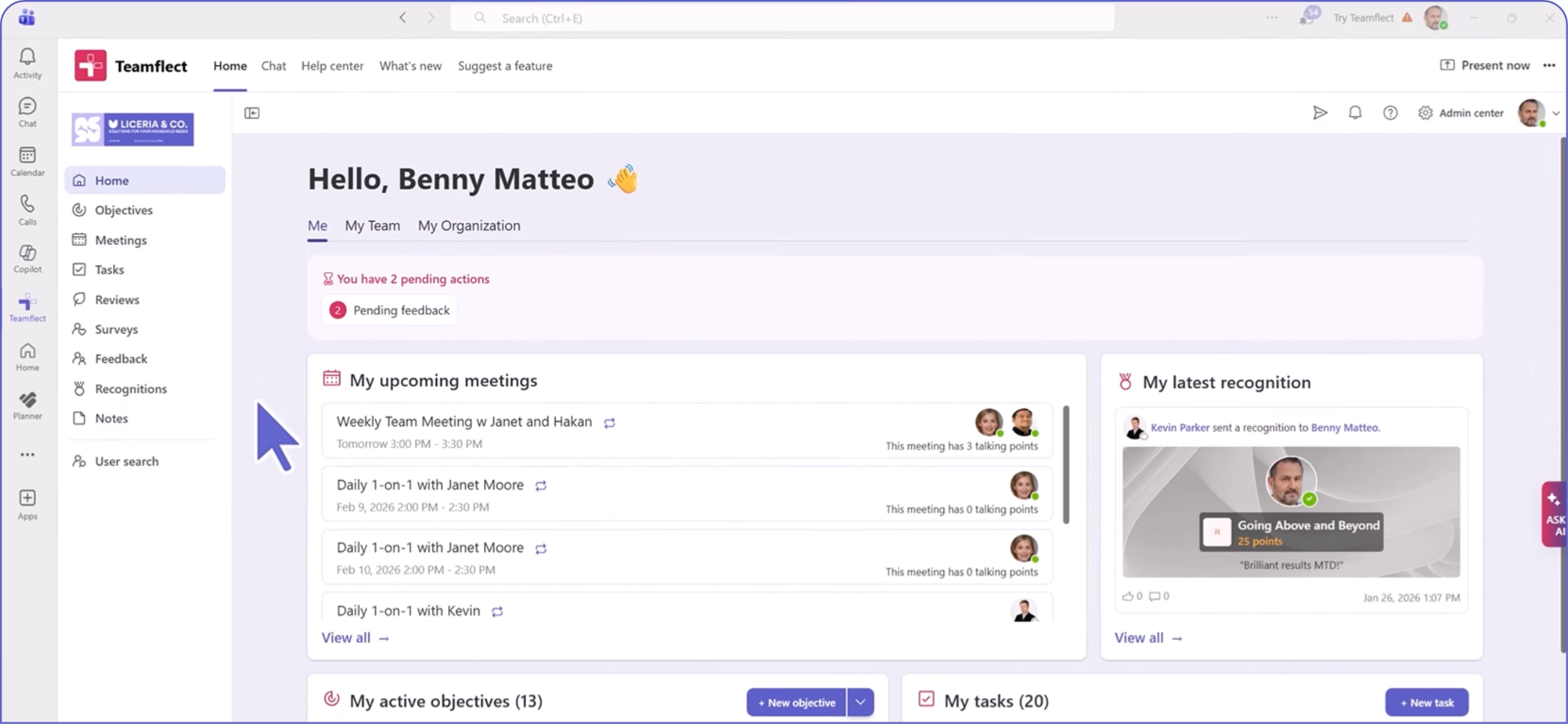
Create high-performing and engaged teams - even when people are remote - with our easy-to-use toolkit built for Microsoft Teams