.svg)
.svg)
How to Give Feedback in Microsoft Teams?

Updated on:
July 29, 2026

Prefer Teamflect as your HR source on Google
.svg)

You give feedback in Microsoft Teams by using a dedicated feedback app that adds structure on top of chat and calls. Teams handles the conversation through chat, video, and screen sharing, but plain messages lose tone and get buried. A feedback tool like Teamflect adds templates, guiding questions, AI assistance, and stored records, so feedback stays clear and connects to performance reviews.
This matters more than ever, and the problem starts with managers. In its 2026 State of the Global Workplace report, Gallup found global engagement fell to 20%, its lowest level since 2020. Manager engagement drove most of that drop, sliding from 27% to 22% in a single year. Feedback is one of the most direct tools a manager has to reverse it.
The rest of this guide shows how to give feedback in Teams step by step: choosing the right tool, delivering feedback with templates, analyzing it with AI, and building a feedback culture that sticks.
Let’s talk about why a different approach is needed when it comes to giving feedback in remote settings. When you’re working in an office, it’s easy to pop into someone’s cubicle or office and have a face-to-face conversation. However, in remote settings, you’re likely relying on digital communication platforms like Microsoft Teams to collaborate with your team members.
While it may be tempting to simply type out your feedback in a chat window, it’s important to keep in mind that this approach may not be as effective as you’d like. A wall of text can be overwhelming and difficult to digest, especially if you’re trying to give constructive feedback or critique. Your message may not come across as clearly as you intended, and the person receiving the feedback may have trouble understanding your point of view.
That’s where Teamflect comes in. Teamflect is an excellent 360 feedback software for Microsoft Teams that allows you to exchange feedback at the highest level. With Teamflect, you can select a feedback template from the feedback template gallery and receive guiding questions to help you give clear and concise feedback.
For example, if you want to give feedback on presentation skills, simply select the presentation skills template and answer the provided questions. You can even customize the questions to fit your specific needs. Once you’ve completed the feedback, it’s stored in a central location where it can be accessed for performance reviews, meaning your feedback won’t disappear into a chat window and will be taken into consideration during performance evaluations.
You can view the feedback you’ve received on your user page and see the last five completed feedback and pending feedback on the left side of the page. On the right side, you can see the description of the feedback template, the request date, the submission date, and the visibility of the feedback.
If you are looking for Microsoft Teams feedback software, then you can’t go wrong with Teamflect!
Tanu Gurung
"If you're already on Microsoft 365, with platforms like Teams or Copilot, Teamflect just fits into the flow of your daily work. I don't have to switch platforms to get things done. When a tool is exactly where work is already happening, the behavior you actually want, giving feedback, recognizing someone, updating goals, it just happens more consistently. And that consistency is what sustains our culture."
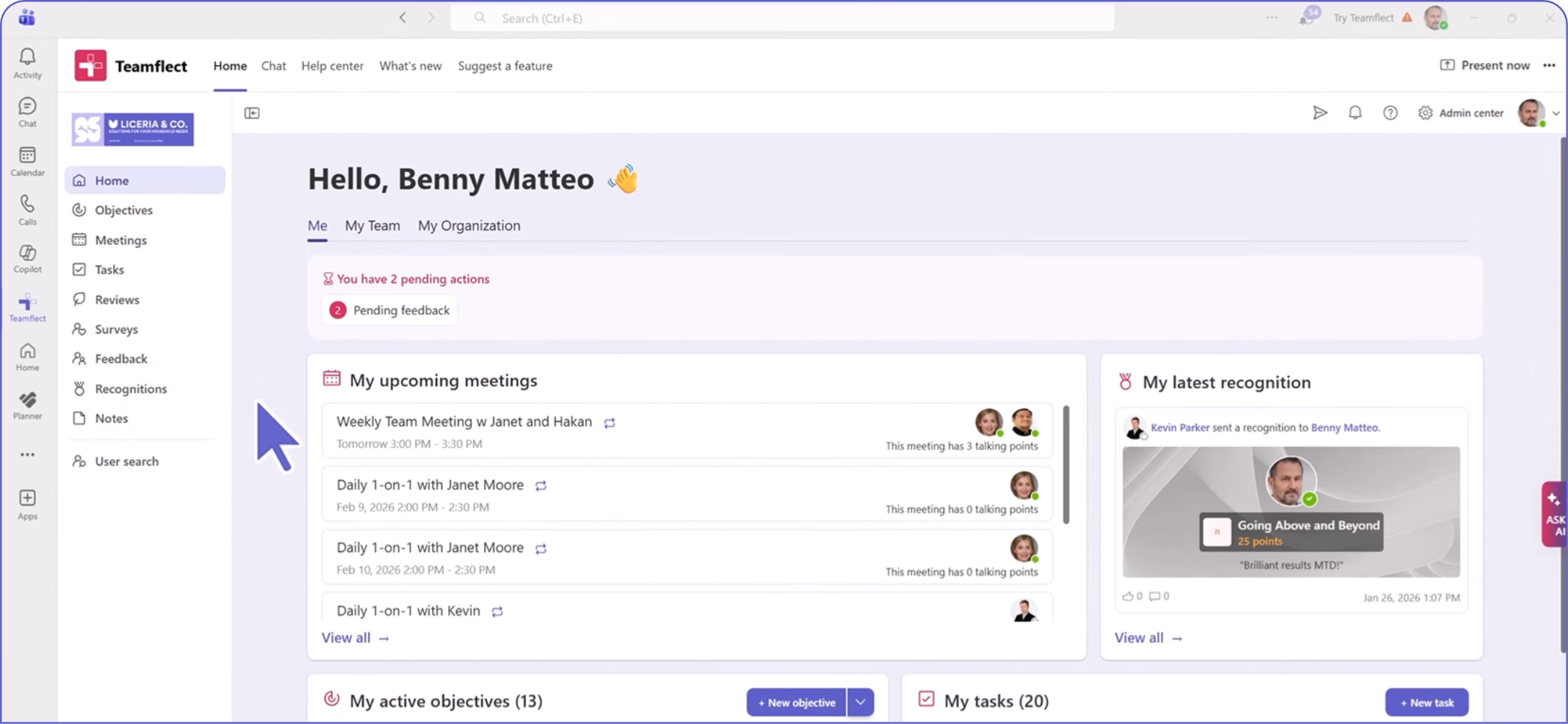
Now let's take a step-by-step approach to how you can use Teamflect to submit, ask for, and analyze feedback right inside Microsoft Teams! The best part here is that you don't have to make any commitments to Teamflect to try what we're about to show you. It is fully free with full functionality for up to 10 users and all you need to do to log in is use your Microsoft Account! Let's get started!

As the highest-rated feedback software in the Microsoft Teams App Store with over 1900 reviews, Teamflect can be added to your Microsoft Teams with ease. To top this off, it doesn't require you to create a separate account or put in any payment details to be used.
With complete Entra ID integration, users don't have to add their organizational charts and employee data to Teamflect manually to set things up. Simply add Teamflect, and start using it right away.

Teamflect's "Feedback" module serves as a hub for all the feedback exchanged within your team, related to you. Based on customizable permissions and visibility settings, you can view the feedback you've given or received through the feedback module. Once here, all you need to do is select the option for "New Feedback".

Once you've done so, you can take your pick out of an extensive library of customizable feedback templates in order to deliver the feedback that fits the scenario you are currently in. You also have the option to enhance your feedback with AI. This feature allows you to put your feedback through the following processes in seconds.
The feedback you send using Teamflect will appear to the receiver as seen below. This structure allows for a clear feedback process that lets no context slip through the cracks.

You can also use Teamflect's built-in AI assistant to summarize all the feedback you've received!

This allows recipients to analyze all the feedback they've received, identify patterns and trends, as well as gain actionable insights while saving them time and effort!
Mastering the exchange of professional insights requires a high level of emotional intelligence and the right framework. Use this checklist to ensure your team is practicing feedback effectively:
Want to see a feedback culture built by an expert? Watch our on-demand webinar, How to Implement 360 Degree Feedback, with Anna Wildman, creator of the CEDAR feedback model and founder of Oil in the Engine.
Anna runs a practical workshop on building a culture where feedback flows up, down, and sideways, then structuring tough conversations so they land well. Carlos from Teamflect follows with a live demo of the same 360 process running inside Microsoft Teams, from anonymous templates through to follow-up.
A few things you will take away:
And there you have it! By using Teamflect, you can revolutionize the way you give and receive feedback within Microsoft Teams. With its user-friendly interface and powerful features, Teamflect makes it easy to provide feedback in a structured and thoughtful way, and track progress over time.
Not only does using Teamflect make it easier to give feedback, but it also helps to create a more professional and organized feedback process. You can customize the Microsoft Teams feedback app to fit your team’s specific needs, and ensure that everyone is on the same page when it comes to goals and expectations.
But don’t just take our word for it! We encourage you to schedule a free demo and see for yourself how Teamflect can benefit your team. You’ll be able to explore all the features and functionality of the software, and get a better sense of how it can improve your team’s collaboration and performance.
And remember, continuous improvement is key to success, so don’t hesitate to try new tools and strategies to help your team grow. We’re here to help, and we hope that this blog post has provided you with some valuable insights and ideas.
Thanks for reading, and make sure to subscribe to our blog for more helpful tips and tricks to improve your remote team’s collaboration.

.svg)
.avif)
You give feedback in Microsoft Teams by using a dedicated feedback app that adds structure on top of chat and calls. Teams handles the conversation through chat, video, and screen sharing, but plain messages lose tone and get buried. A feedback tool like Teamflect adds templates, guiding questions, AI assistance, and stored records, so feedback stays clear and connects to performance reviews.
This matters more than ever, and the problem starts with managers. In its 2026 State of the Global Workplace report, Gallup found global engagement fell to 20%, its lowest level since 2020. Manager engagement drove most of that drop, sliding from 27% to 22% in a single year. Feedback is one of the most direct tools a manager has to reverse it.
The rest of this guide shows how to give feedback in Teams step by step: choosing the right tool, delivering feedback with templates, analyzing it with AI, and building a feedback culture that sticks.
Let’s talk about why a different approach is needed when it comes to giving feedback in remote settings. When you’re working in an office, it’s easy to pop into someone’s cubicle or office and have a face-to-face conversation. However, in remote settings, you’re likely relying on digital communication platforms like Microsoft Teams to collaborate with your team members.
While it may be tempting to simply type out your feedback in a chat window, it’s important to keep in mind that this approach may not be as effective as you’d like. A wall of text can be overwhelming and difficult to digest, especially if you’re trying to give constructive feedback or critique. Your message may not come across as clearly as you intended, and the person receiving the feedback may have trouble understanding your point of view.
That’s where Teamflect comes in. Teamflect is an excellent 360 feedback software for Microsoft Teams that allows you to exchange feedback at the highest level. With Teamflect, you can select a feedback template from the feedback template gallery and receive guiding questions to help you give clear and concise feedback.
For example, if you want to give feedback on presentation skills, simply select the presentation skills template and answer the provided questions. You can even customize the questions to fit your specific needs. Once you’ve completed the feedback, it’s stored in a central location where it can be accessed for performance reviews, meaning your feedback won’t disappear into a chat window and will be taken into consideration during performance evaluations.
You can view the feedback you’ve received on your user page and see the last five completed feedback and pending feedback on the left side of the page. On the right side, you can see the description of the feedback template, the request date, the submission date, and the visibility of the feedback.
If you are looking for Microsoft Teams feedback software, then you can’t go wrong with Teamflect!
Tanu Gurung
"If you're already on Microsoft 365, with platforms like Teams or Copilot, Teamflect just fits into the flow of your daily work. I don't have to switch platforms to get things done. When a tool is exactly where work is already happening, the behavior you actually want, giving feedback, recognizing someone, updating goals, it just happens more consistently. And that consistency is what sustains our culture."
Now let's take a step-by-step approach to how you can use Teamflect to submit, ask for, and analyze feedback right inside Microsoft Teams! The best part here is that you don't have to make any commitments to Teamflect to try what we're about to show you. It is fully free with full functionality for up to 10 users and all you need to do to log in is use your Microsoft Account! Let's get started!
As the highest-rated feedback software in the Microsoft Teams App Store with over 1900 reviews, Teamflect can be added to your Microsoft Teams with ease. To top this off, it doesn't require you to create a separate account or put in any payment details to be used.
With complete Entra ID integration, users don't have to add their organizational charts and employee data to Teamflect manually to set things up. Simply add Teamflect, and start using it right away.
Teamflect's "Feedback" module serves as a hub for all the feedback exchanged within your team, related to you. Based on customizable permissions and visibility settings, you can view the feedback you've given or received through the feedback module. Once here, all you need to do is select the option for "New Feedback".
Once you've done so, you can take your pick out of an extensive library of customizable feedback templates in order to deliver the feedback that fits the scenario you are currently in. You also have the option to enhance your feedback with AI. This feature allows you to put your feedback through the following processes in seconds.
The feedback you send using Teamflect will appear to the receiver as seen below. This structure allows for a clear feedback process that lets no context slip through the cracks.
You can also use Teamflect's built-in AI assistant to summarize all the feedback you've received!
This allows recipients to analyze all the feedback they've received, identify patterns and trends, as well as gain actionable insights while saving them time and effort!
Mastering the exchange of professional insights requires a high level of emotional intelligence and the right framework. Use this checklist to ensure your team is practicing feedback effectively:
Want to see a feedback culture built by an expert? Watch our on-demand webinar, How to Implement 360 Degree Feedback, with Anna Wildman, creator of the CEDAR feedback model and founder of Oil in the Engine.
Anna runs a practical workshop on building a culture where feedback flows up, down, and sideways, then structuring tough conversations so they land well. Carlos from Teamflect follows with a live demo of the same 360 process running inside Microsoft Teams, from anonymous templates through to follow-up.
A few things you will take away:
And there you have it! By using Teamflect, you can revolutionize the way you give and receive feedback within Microsoft Teams. With its user-friendly interface and powerful features, Teamflect makes it easy to provide feedback in a structured and thoughtful way, and track progress over time.
Not only does using Teamflect make it easier to give feedback, but it also helps to create a more professional and organized feedback process. You can customize the Microsoft Teams feedback app to fit your team’s specific needs, and ensure that everyone is on the same page when it comes to goals and expectations.
But don’t just take our word for it! We encourage you to schedule a free demo and see for yourself how Teamflect can benefit your team. You’ll be able to explore all the features and functionality of the software, and get a better sense of how it can improve your team’s collaboration and performance.
And remember, continuous improvement is key to success, so don’t hesitate to try new tools and strategies to help your team grow. We’re here to help, and we hope that this blog post has provided you with some valuable insights and ideas.
Thanks for reading, and make sure to subscribe to our blog for more helpful tips and tricks to improve your remote team’s collaboration.
You give feedback in Microsoft Teams by using a dedicated feedback app that adds structure on top of chat and calls. Teams handles the conversation through chat, video, and screen sharing, but plain messages lose tone and get buried. A feedback tool like Teamflect adds templates, guiding questions, AI assistance, and stored records, so feedback stays clear and connects to performance reviews.
This matters more than ever, and the problem starts with managers. In its 2026 State of the Global Workplace report, Gallup found global engagement fell to 20%, its lowest level since 2020. Manager engagement drove most of that drop, sliding from 27% to 22% in a single year. Feedback is one of the most direct tools a manager has to reverse it.
The rest of this guide shows how to give feedback in Teams step by step: choosing the right tool, delivering feedback with templates, analyzing it with AI, and building a feedback culture that sticks.
Let’s talk about why a different approach is needed when it comes to giving feedback in remote settings. When you’re working in an office, it’s easy to pop into someone’s cubicle or office and have a face-to-face conversation. However, in remote settings, you’re likely relying on digital communication platforms like Microsoft Teams to collaborate with your team members.
While it may be tempting to simply type out your feedback in a chat window, it’s important to keep in mind that this approach may not be as effective as you’d like. A wall of text can be overwhelming and difficult to digest, especially if you’re trying to give constructive feedback or critique. Your message may not come across as clearly as you intended, and the person receiving the feedback may have trouble understanding your point of view.
That’s where Teamflect comes in. Teamflect is an excellent 360 feedback software for Microsoft Teams that allows you to exchange feedback at the highest level. With Teamflect, you can select a feedback template from the feedback template gallery and receive guiding questions to help you give clear and concise feedback.
For example, if you want to give feedback on presentation skills, simply select the presentation skills template and answer the provided questions. You can even customize the questions to fit your specific needs. Once you’ve completed the feedback, it’s stored in a central location where it can be accessed for performance reviews, meaning your feedback won’t disappear into a chat window and will be taken into consideration during performance evaluations.
You can view the feedback you’ve received on your user page and see the last five completed feedback and pending feedback on the left side of the page. On the right side, you can see the description of the feedback template, the request date, the submission date, and the visibility of the feedback.
If you are looking for Microsoft Teams feedback software, then you can’t go wrong with Teamflect!
Tanu Gurung
"If you're already on Microsoft 365, with platforms like Teams or Copilot, Teamflect just fits into the flow of your daily work. I don't have to switch platforms to get things done. When a tool is exactly where work is already happening, the behavior you actually want, giving feedback, recognizing someone, updating goals, it just happens more consistently. And that consistency is what sustains our culture."
Now let's take a step-by-step approach to how you can use Teamflect to submit, ask for, and analyze feedback right inside Microsoft Teams! The best part here is that you don't have to make any commitments to Teamflect to try what we're about to show you. It is fully free with full functionality for up to 10 users and all you need to do to log in is use your Microsoft Account! Let's get started!
As the highest-rated feedback software in the Microsoft Teams App Store with over 1900 reviews, Teamflect can be added to your Microsoft Teams with ease. To top this off, it doesn't require you to create a separate account or put in any payment details to be used.
With complete Entra ID integration, users don't have to add their organizational charts and employee data to Teamflect manually to set things up. Simply add Teamflect, and start using it right away.
Teamflect's "Feedback" module serves as a hub for all the feedback exchanged within your team, related to you. Based on customizable permissions and visibility settings, you can view the feedback you've given or received through the feedback module. Once here, all you need to do is select the option for "New Feedback".
Once you've done so, you can take your pick out of an extensive library of customizable feedback templates in order to deliver the feedback that fits the scenario you are currently in. You also have the option to enhance your feedback with AI. This feature allows you to put your feedback through the following processes in seconds.
The feedback you send using Teamflect will appear to the receiver as seen below. This structure allows for a clear feedback process that lets no context slip through the cracks.
You can also use Teamflect's built-in AI assistant to summarize all the feedback you've received!
This allows recipients to analyze all the feedback they've received, identify patterns and trends, as well as gain actionable insights while saving them time and effort!
Mastering the exchange of professional insights requires a high level of emotional intelligence and the right framework. Use this checklist to ensure your team is practicing feedback effectively:
Want to see a feedback culture built by an expert? Watch our on-demand webinar, How to Implement 360 Degree Feedback, with Anna Wildman, creator of the CEDAR feedback model and founder of Oil in the Engine.
Anna runs a practical workshop on building a culture where feedback flows up, down, and sideways, then structuring tough conversations so they land well. Carlos from Teamflect follows with a live demo of the same 360 process running inside Microsoft Teams, from anonymous templates through to follow-up.
A few things you will take away:
And there you have it! By using Teamflect, you can revolutionize the way you give and receive feedback within Microsoft Teams. With its user-friendly interface and powerful features, Teamflect makes it easy to provide feedback in a structured and thoughtful way, and track progress over time.
Not only does using Teamflect make it easier to give feedback, but it also helps to create a more professional and organized feedback process. You can customize the Microsoft Teams feedback app to fit your team’s specific needs, and ensure that everyone is on the same page when it comes to goals and expectations.
But don’t just take our word for it! We encourage you to schedule a free demo and see for yourself how Teamflect can benefit your team. You’ll be able to explore all the features and functionality of the software, and get a better sense of how it can improve your team’s collaboration and performance.
And remember, continuous improvement is key to success, so don’t hesitate to try new tools and strategies to help your team grow. We’re here to help, and we hope that this blog post has provided you with some valuable insights and ideas.
Thanks for reading, and make sure to subscribe to our blog for more helpful tips and tricks to improve your remote team’s collaboration.
Create high-performing and engaged teams - even when people are remote - with our easy-to-use toolkit built for Microsoft Teams