.svg)
.svg)
360 Feedback & Performance Reviews: How They Work Together

Updated on:
January 30, 2026

Prefer Teamflect as your HR source on Google
.svg)

Traditional performance reviews miss critical information about how employees actually work.
According to a SHRM article, many organizations struggle with traditional reviews; multi‑rater approaches are recommended as a way to get a fuller picture of employee capabilities instead of relying on a single manager’s view.
A 360 performance review closes this gap by collecting multi-source feedback from peers, direct reports, and managers to create a complete picture of performance.
A 360 employee review assesses observable behaviors and impact rather than abstract qualities. Here's what effective 360-degree performance evaluation actually captures:
360 performance review tools capture these signals through structured questions tied to specific competencies rather than vague personality assessments. When done well, 360‑degree feedback can illuminate the combination of results and engagement behaviors that distinguish top leaders. In one large analysis of 360 data from more than 60,000 leaders, those rated highly on both results and engagement ranked in the 91st percentile overall.
📚 Recommended Reading: Discover Teamflect's 360 Feedback Templates for Microsoft Teams
Not every situation benefits from 360-degree performance reviews. The table below shows when this approach works and when it wastes time.
| Performance Input | Talent Outcome |
|---|---|
| Consistent goal achievement | Promotion readiness assessment |
| Feedback trends showing growth | Development program nomination |
| Review history across multiple roles | Succession pipeline placement |
| Competency ratings in leadership skills | High-potential identification |
| Performance during stretch assignments | Career pathing recommendations |
| Peer feedback on collaboration | Cross-functional leadership opportunities |
A360-degree feedback system, which gathers input from supervisors, peers, and direct reports, is a significant undertaking. When the timing is right, it acts as a catalyst for professional growth; when forced into a resistant culture, it can create friction and distrust.
📊90% of Fortune 500 companies use some form of 360-degree feedback in their leadership development processes.
The following sections provide a more detailed look at the specific conditions that determine whether a multi-rater assessment will succeed or fail.
Implementation is most effective when the primary goal is development. It works best in organizations with:
There are environments where the risks of this process outweigh the benefits. If the foundation of the company culture is unstable, introducing anonymous feedback can exacerbate existing tensions or lead to data manipulation.
📚 Recommended Reading: We Tested 10 360-Degree Feedback Software So You Don't Have To!
Effective 360 review templates match specific assessment goals. Below are five frameworks designed for different organizational needs.
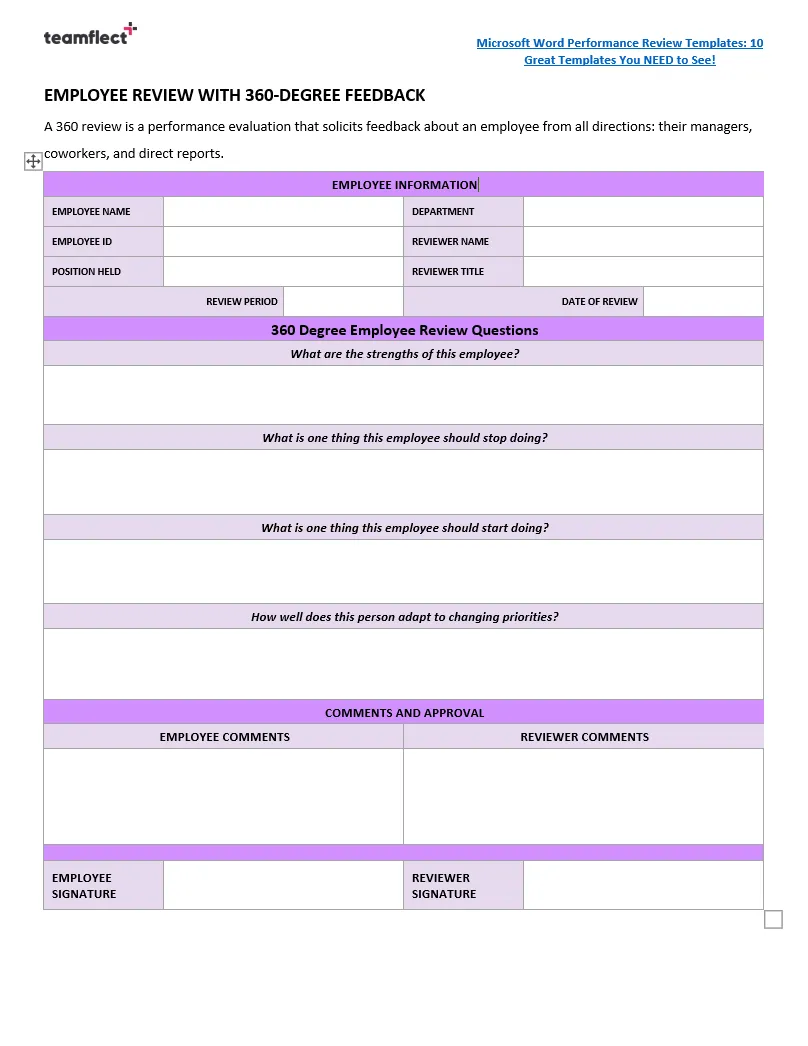
This general-purpose 360 employee review template works for most roles requiring collaboration and communication.
Competency areas assessed:
Sample questions:
Best for: Individual contributors in collaborative environments, team leads, and project managers.
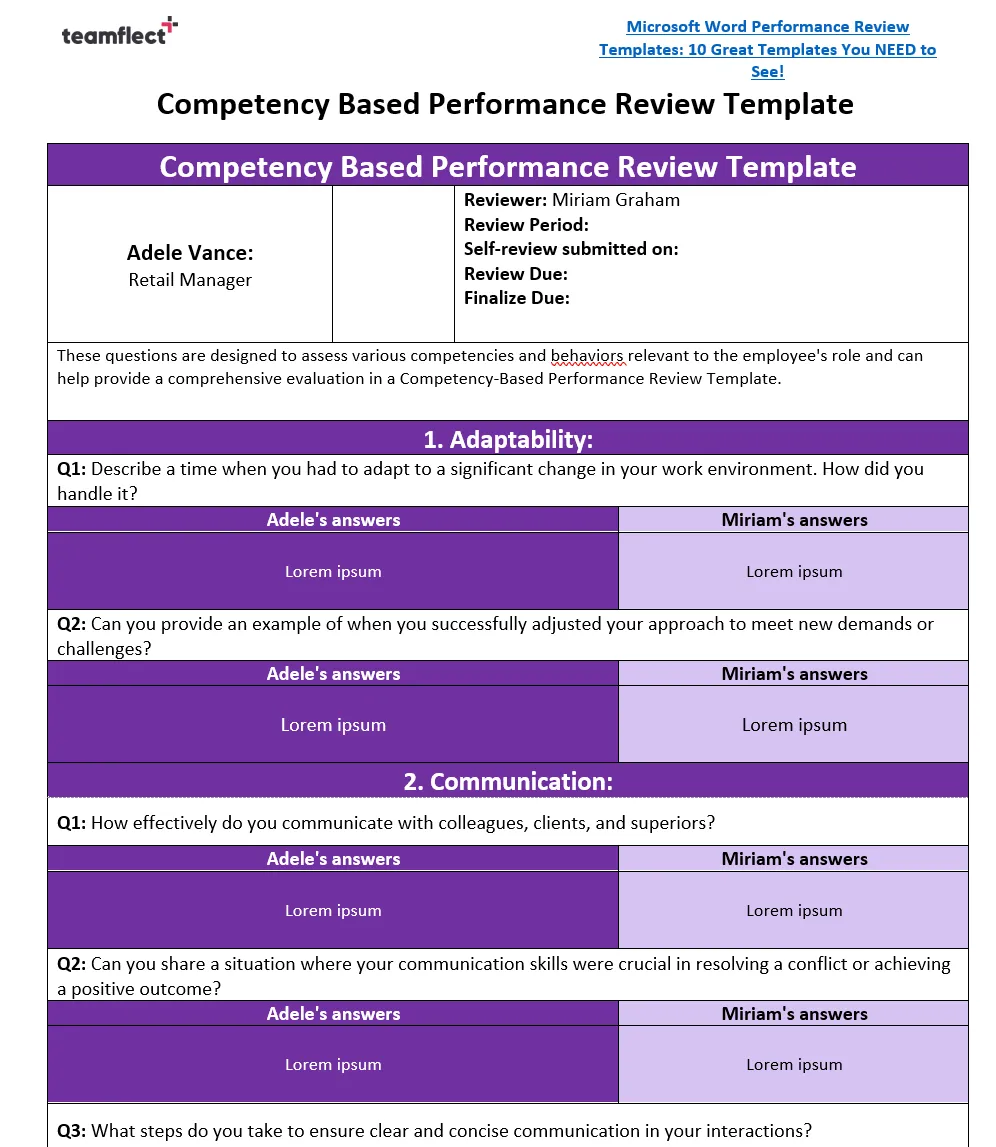
This 360 performance review template links directly to organizational competency frameworks and behavioral indicators.
Structure:
Sample competency breakdown:
Strategic Thinking
Best for: Senior individual contributors, managers, and leadership roles where competency development drives promotion decisions.
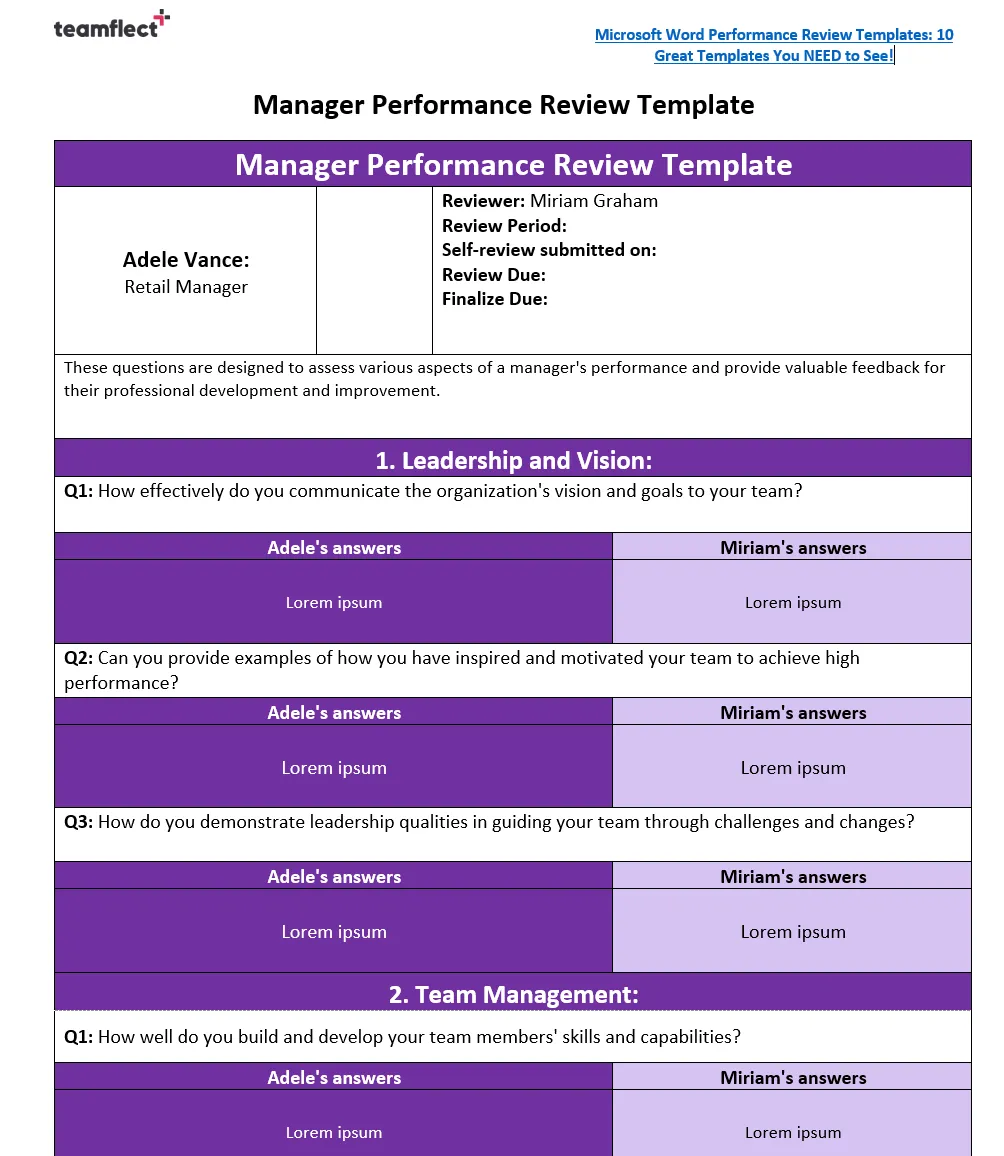
This 360-degree review template focuses on upward feedback and peer assessment of leadership behaviors.
Key assessment areas:
Sample questions for direct reports:
Best for: First-time managers, department heads, and executives requiring upward feedback on their leadership impact.
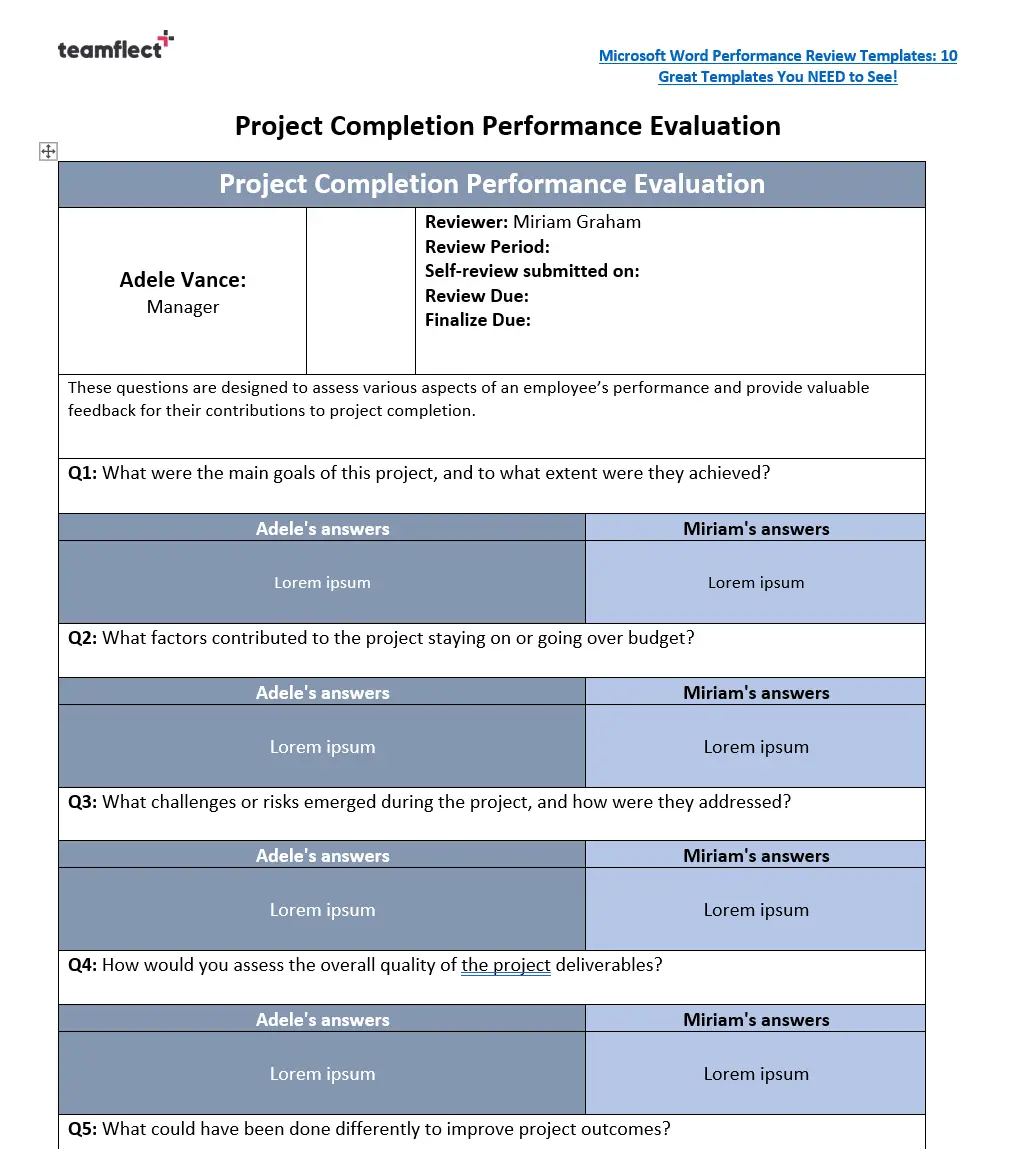
This template assesses performance within specific project contexts rather than general job performance.
Focus areas:
Timing: Conduct reviews at project completion when examples remain fresh and feedback calibration reflects recent collaboration.
Best for: Organizations running project-based work, consulting firms, and agencies where team composition changes frequently.
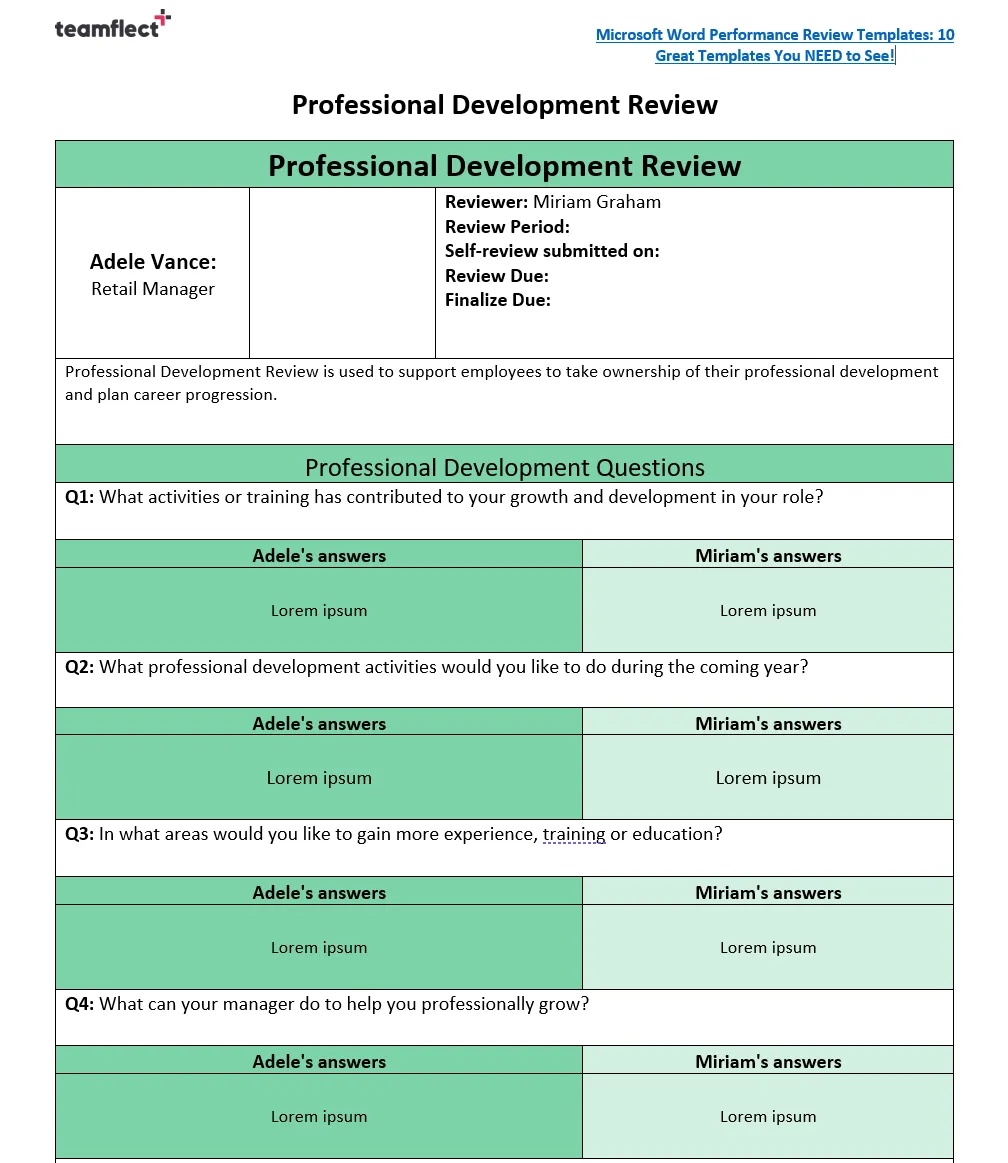
This 360 performance evaluation template prioritizes growth planning over performance judgment.
Question design:
Sample questions:
Best for: High-potential employees, succession planning candidates, and individual development programparticipants.
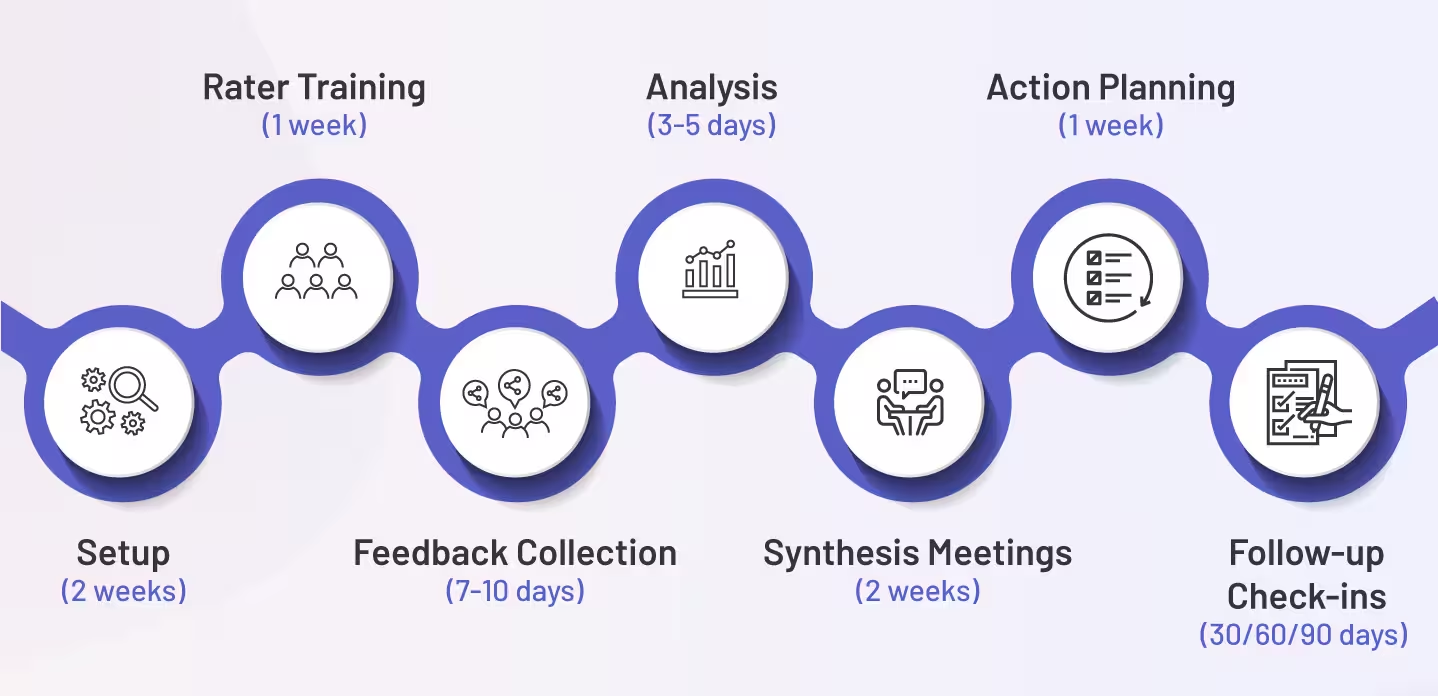
Running effective 360-degree performance reviews to be structured workflow from planning through action. Follow these six phases:
Identify 5 to 7 specific competencies tied to observable behaviors rather than abstract qualities. Choose 4 to 6 raters per employee who regularly observes their work. Avoid asking people to evaluate colleagues they rarely interact with.
Rater selection criteria:
Timeline: Complete 2 weeks before feedback collection begins.
Conduct 30-minute calibration sessions before launching reviews. Show examples of behavior-based feedback versus personality judgments. Explain anonymity safeguards and how feedback will be synthesized.
Training content:
Timeline: Schedule 1 week before feedback collection opens.
Launch the 360 performance review software with clear deadlines. Set surveys to 12 to 15 questions maximum to prevent reviewer fatigue. Include both rating scales and open-ended prompts for behavioral examples.
Survey design requirements:
Timeline: Keep feedback window open for 7 to 10 days with reminder notifications.
Review patterns across multiple raters before sharing results. Look for rating consistency and flag outlier responses for context. Organize feedback by competency to identify themes.
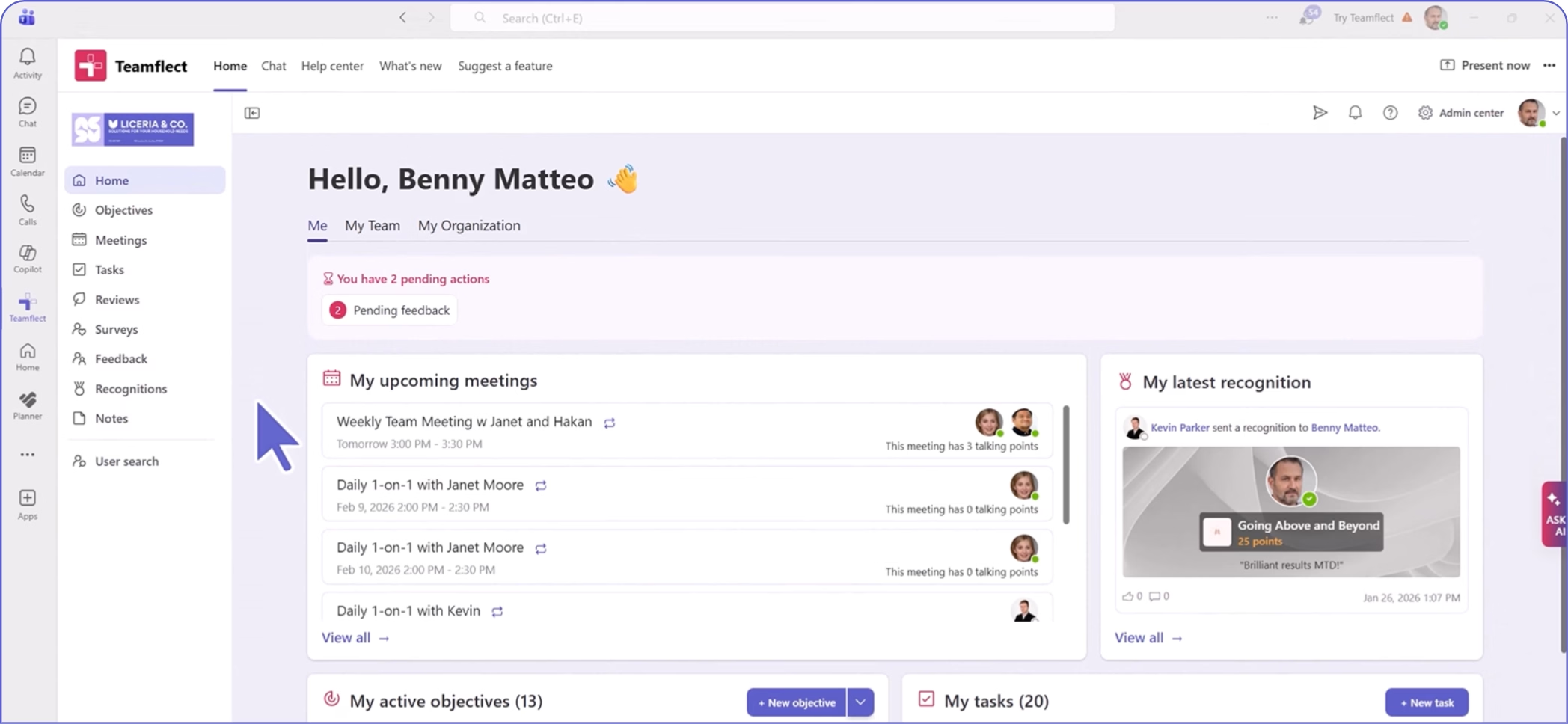
A performance review softwarebuilt natively for Microsoft Teams like Teamflect automates this synthesis. It aggregates multi-source feedback into competency-based reports that highlight agreement and divergence across rater groups.
Analysis checklist:
Timeline: Complete within 3 to 5 days of feedback collection closing.
Schedule 60 to 90 minute one-on-one meetings to discuss results. Start with strengths, then address development areas supported by specific examples. Avoid overwhelming employees with every comment from every rater.
Meeting structure:
Manager preparation: Read all feedback, identify themes, and prepare to discuss patterns rather than individual comments.
Timeline: Schedule within 2 weeks of receiving aggregated results.
Translate feedback into 30-60-90 day development plans tied to specific behaviors. Assign concrete activities like skill training, job shadowing, or adjusted work assignments.
Action plan components:
Timeline: Finalize plans within 1 week of feedback discussion. Schedule first check-in for 30 days out.
Choosing the right 360 performance review platform determines whether your process scales or becomes a spreadsheet nightmare. Below are leading solutions with their key advantages.
| Tool | Best For | Key Advantage |
|---|---|---|
| Teamflect | Microsoft Teams users | Native integration with existing workflow |
| Lattice | Mid-market companies | Combined performance and engagement features |
| Culture Amp | Data-driven organizations | Advanced analytics and benchmarking |
| 15Five | Continuous feedback models | Weekly check-ins with periodic 360 reviews |
| Workday Peakon | Enterprises using Workday | Unified HCM and employee feedback platform |
Teamflect solves the operational challenges that make 360-degree performance reviews fail in most organizations. Here's how the platform handles complexity.
Teamflect's 360-degree feedback software accessible to organizations that lack dedicated HR operations teams.
See how Teamflect's helps you handle multi-source feedback collection, synthesis, and action planning inside Microsoft Teams. Schedule a demo to build scalable 360 performance reviews that drive real development.
Tanu Gurung
"If you're already on Microsoft 365, with platforms like Teams or Copilot, Teamflect just fits into the flow of your daily work. I don't have to switch platforms to get things done. When a tool is exactly where work is already happening, the behavior you actually want, giving feedback, recognizing someone, updating goals, it just happens more consistently. And that consistency is what sustains our culture."
A 360-degree performance review collects feedback from multiple sources including peers, direct reports, and managers rather than relying solely on supervisor assessment. Standard reviews capture one perspective while 360 reviews aggregate input from everyone who observes the employee's work. This multi-source feedback reveals collaboration patterns, communication gaps, and leadership behaviors that single-rater reviews miss entirely.
Small teams can run 360 reviews if they have sufficient rater groups and psychological safety. Teams under 8 to 10 people struggle because limited raters make responses identifiable even with anonymity safeguards. However, small leadership teams benefit from upward feedback when direct reports feel safe providing honest input. Start with manager effectiveness reviews before expanding to peer evaluation if team size raises anonymity concerns.
No. Use 360-degree performance evaluation exclusively for development and coaching rather than salary or bonus determinations. Multi-source feedback reveals growth opportunities but lacks the objectivity required for pay decisions. Compensation should tie to measurable outcomes and manager assessment. Organizations that link 360 results to pay create incentive for inflated ratings and reduce feedback honesty.
Most organizations benefit from annual or semi-annual 360 performance review cycles rather than quarterly frequency. More frequent cycles create reviewer fatigue and reduce feedback quality. However, project-based teams might run brief pulse reviews at project completion when collaboration examples remain fresh. Balance feedback value against the time burden placed on rater groups.
Leadership roles, managers, and cross-functional positions gain the most value from 360 employee reviews. These roles involve collaboration patterns that supervisors rarely observe directly. Individual contributors in highly collaborative environments also benefit when peer feedback reveals teamwork strengths and gaps. Entry-level roles with limited collaboration see less value because supervisor observation captures most relevant performance signals.

.svg)
.avif)
Create high-performing and engaged teams - even when people are remote - with our easy-to-use toolkit built for Microsoft Teams