.svg)
.svg)
OKRs and Performance Management: How to Connect Them Effectively

Updated on:
March 10, 2026

Prefer Teamflect as your HR source on Google
.svg)

Traditional productivity metrics are reaching their limits; 74% of leaders in a Deloitte studysay it is critical to find better ways to measure worker value beyond simple output. Yet, only 17% believe their organizations are effective at evaluating the actual impact individuals create.
This guide outlines how to align these frameworks to capture true value while maintaining the integrity of each.
Organizations often mistake OKRs for performance reviews, yet these systems serve different functions. OKRs align strategy and focus to help teams prioritize high-impact work. Performance management instead handles individual growth, coaching, and compensation.
Confusing the two leads to practical issues. Most experts advise against linking OKRs directly to pay. If bonuses depend on hitting every target, employees often set easy goals. Such habits ruin the intent of ambitious planning.
Successful companies run these systems in parallel but maintain clear boundaries.
This separation protects the motivation behind bold goals. It also ensures a fair evaluation of each employee. Many modern firms combine OKRs with real-time recognition for better results than traditional appraisals.
OKRs consist of two components: Objectives and Key Results. Objectives are qualitative, inspiring goals that describe what you want to achieve. Key Results are quantitative, measurable outcomes that prove you've reached your Objective.
Here's a simple example:
Objective: "Become the preferred vendor for mid-market SaaS companies."
The corresponding Key Results:
Performance management is the ongoing process of setting expectations, assessing employee work, and supporting professional development. This system typically includes regular reviews, continuous feedback, coaching conversations, and compensation decisions. Performance management answers the question: How well is this employee fulfilling their role and growing within the organization?
OKRs and performance management operate at different levels of organizational focus. This distinction is crucial when designing your approach to employee goal alignment, team alignment, and overall performance management models.
Objectives and Key Results (OKRs) focus on collective achievement. They track what teams and departments accomplish at a high level.
Performance management focuses on individual execution. Reviews assess how an employee handles specific roles and responsibilities.
OKRs are often public within the organization to promote accountability and coordination across teams. Anyone can see what Sales, Engineering, or Customer Success is working toward this quarter.
Performance reviews, by contrast, remain private between manager and employee. This privacy protects sensitive discussions about development needs, compensation, and career progression.
OKRs operate on shorter cycles, often quarterly, to allow teams to adapt to changing priorities and market conditions. Traditional performance management follows longer annual performance review cycles, though many organizations now shift toward continuous performance management with more frequent touchpoints.
This cycle difference reflects each system's purpose: OKRs drive short-term strategic execution while performance reviews assess longer-term growth and contribution.
OKRs encourage cross-functional collaboration toward shared outcomes. Multiple teams might contribute to the same Objective, breaking down silos and promoting coordination. Performance reviews assess individual contributions, behaviors, and competencies. They answer whether a specific employee met expectations, demonstrated company values, and developed professionally.
Many organizations make the mistake of tying OKR completion directly to performance ratings or compensation. This approach undermines both systems and creates unintended consequences that hurt organizational performance.
OKRs are designed to be stretch goals. Teams should aim high, and partial progress represents success. Google pioneered this approach, expecting teams to achieve 60% to 70% of their Key Results. If you penalize incomplete OKRs, employees will only set safe, easily achievable targets. This defeats the purpose of the OKR framework entirely.
Linking bonuses to OKRs leads to conservative goal-setting, as employees prioritize safe targets over innovation. This disconnect is clear in the data: only 14% of employees strongly agree that their performance reviews inspire them to improve.
When pay is tied to specific metrics, people focus on hitting numbers rather than growth. To maintain ambition, use performance management software to track OKRs separately from compensation.
OKR tracking captures measurable results, but performance reviews evaluate how work is completed through collaboration and leadership. This distinction is vital, as only 25% of U.S. employeesstrongly agree they can apply company values to their daily work.
By using reviews to define these values in practice, leaders support the workers who struggle to believe in them, ensuring the "how" matters as much as the "what."
Continuous performance management represents a shift from annual appraisals to ongoing conversations about performance, development, and goal alignment. This approach better serves modern organizations that need agility and responsiveness.
The contrast between traditional and continuous approaches affects how employees experience performance management:
OKRs and continuous performance management share core principles that make them natural partners. Both emphasize regular check-ins, transparency, and the ability to adjust course when circumstances change.
The quarterly OKR cycle creates built-in checkpoints for performance conversations. Managers can discuss OKR progress during weekly or bi-weekly one-on-one meetings, providing the continuous feedback that drives employee development.
When implemented correctly, OKRs and performance management create a complete system for driving and evaluating employee performance. Each system strengthens the other without crossing boundaries.
OKR progress gives managers and employees concrete data to discuss during check-ins and reviews. Instead of vague conversations about "doing good work," you can point to specific Key Results and discuss what's working and what needs adjustment. This objective setting process creates clarity and reduces subjective bias in performance conversations.
Meeting your Key Results matters, but so does how you achieved them. Performance reviews evaluate the behaviors, competencies, and collaboration that drove results. Did the employee mentor junior team members while hitting their targets? Did they break down silos to achieve cross-functional objectives? Did they demonstrate resilience when Key Results needed adjustment mid-quarter? These qualitative factors belong in performance reviews, not OKR scores.
Regular feedback throughout the OKR cycle ensures no surprises at review time. When managers provide ongoing coaching on both OKR progress and behavioral expectations, employees know where they stand. Performance management platforms that integrate feedback tools with OKR tracking make this continuous dialogue easier to maintain.
Organizations need practical steps to implement OKR based performance management successfully. This process requires coordination between goal-setting and evaluation systems.
Start each quarter or cycle by setting organizational objectives that cascade down to team and individual OKRs. With 20% of talent management executivesstill finding cascading those goals a challenge, the planning stage is crucial for ensuring alignment across the organization. A performance management software with goal cascading features, like Teamflect, makes this alignment visible and trackable.
Schedule weekly or bi-weekly check-ins to discuss Key Result progress, blockers, and needed adjustments. Consistent performance tracking keeps OKRs active rather than letting them gather dust in a forgotten document. Managers can provide real-time coaching and support. OKR software with check-in automation sends reminders and prompts to maintain consistency.
When review time arrives, OKR progress provides valuable context but should not be the only factor in ratings. Following performance review best practices, discuss what the employee achieved, how they approached challenges, and what they learned. Reference specific Key Results as evidence of contribution, but also evaluate competencies, values alignment, and professional growth. The best performance review software integrates OKR data directly into review forms while maintaining space for qualitative assessment.
Make it explicitly clear that OKR scores do not automatically translate to ratings or bonuses. Use OKRs to inform the conversation, but base compensation on overall performance including behaviors, development, and role fulfillment. This separation encourages ambitious goal-setting while maintaining fair evaluation practices.
Successful organizations do not choose between OKRs and performance management. They implement both systems with clear boundaries and strong connections. OKRs drive strategic alignment and team outcomes while performance management evaluates individual growth and contribution.
The right tools make it easier to connect goal setting with performance evaluation. Organizations shopping for performance management software should prioritize OKRs integration as a core capability.
Look for these essential capabilities when evaluating systems:
Choosing tools that support both systems avoids creating an administrative burden. Organizations using Teamflect benefit from the link between goal setting and performance reviews within Microsoft Teams.
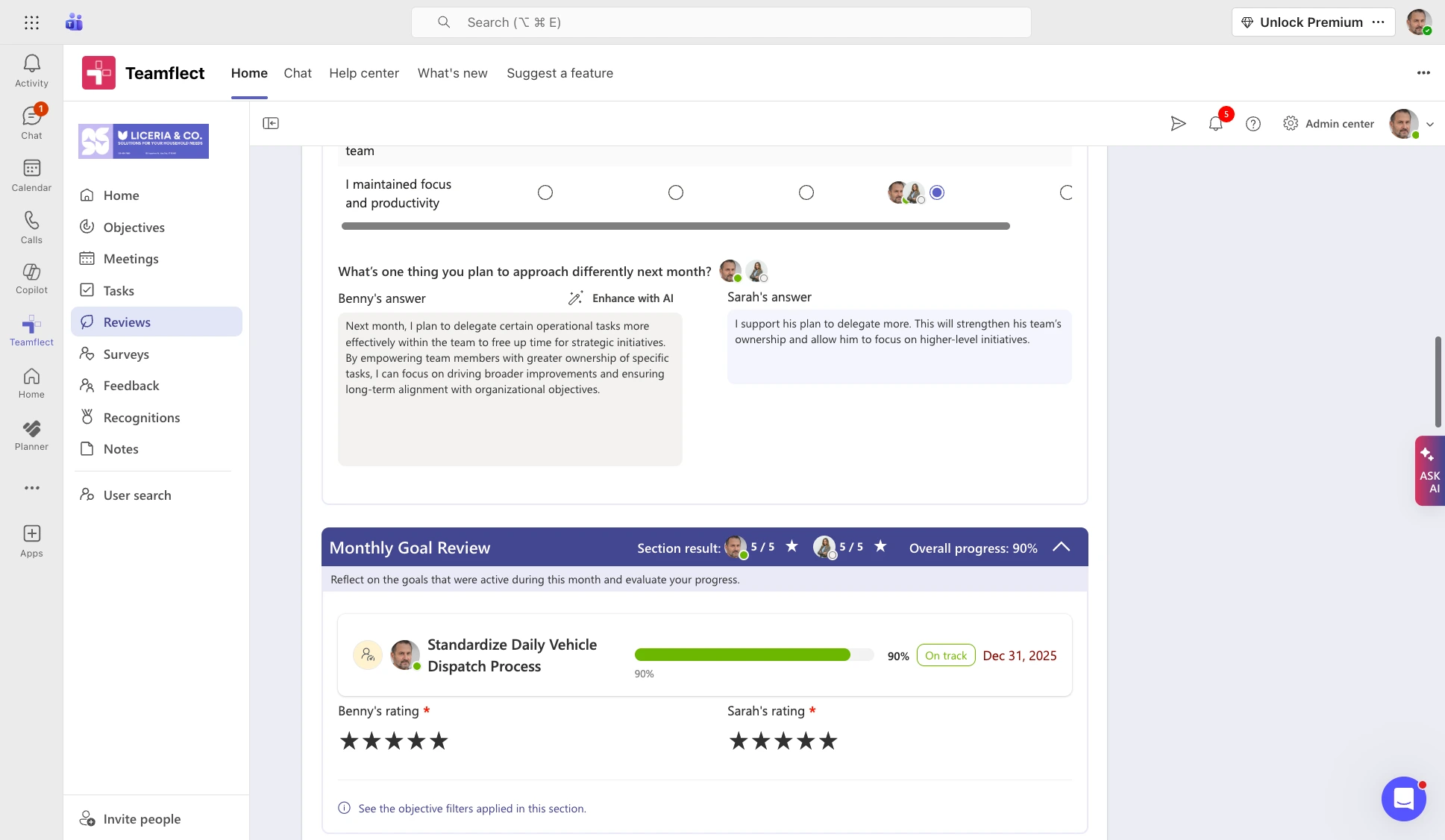
An integrated approach delivers advantages that separate tools cannot match:
Teamflect's seamlessMicrosoft Teams integrationthat brings OKR tracking and performance reviews directly into the platform where work already happens. This integration eliminates context switching and increases engagement with both systems.
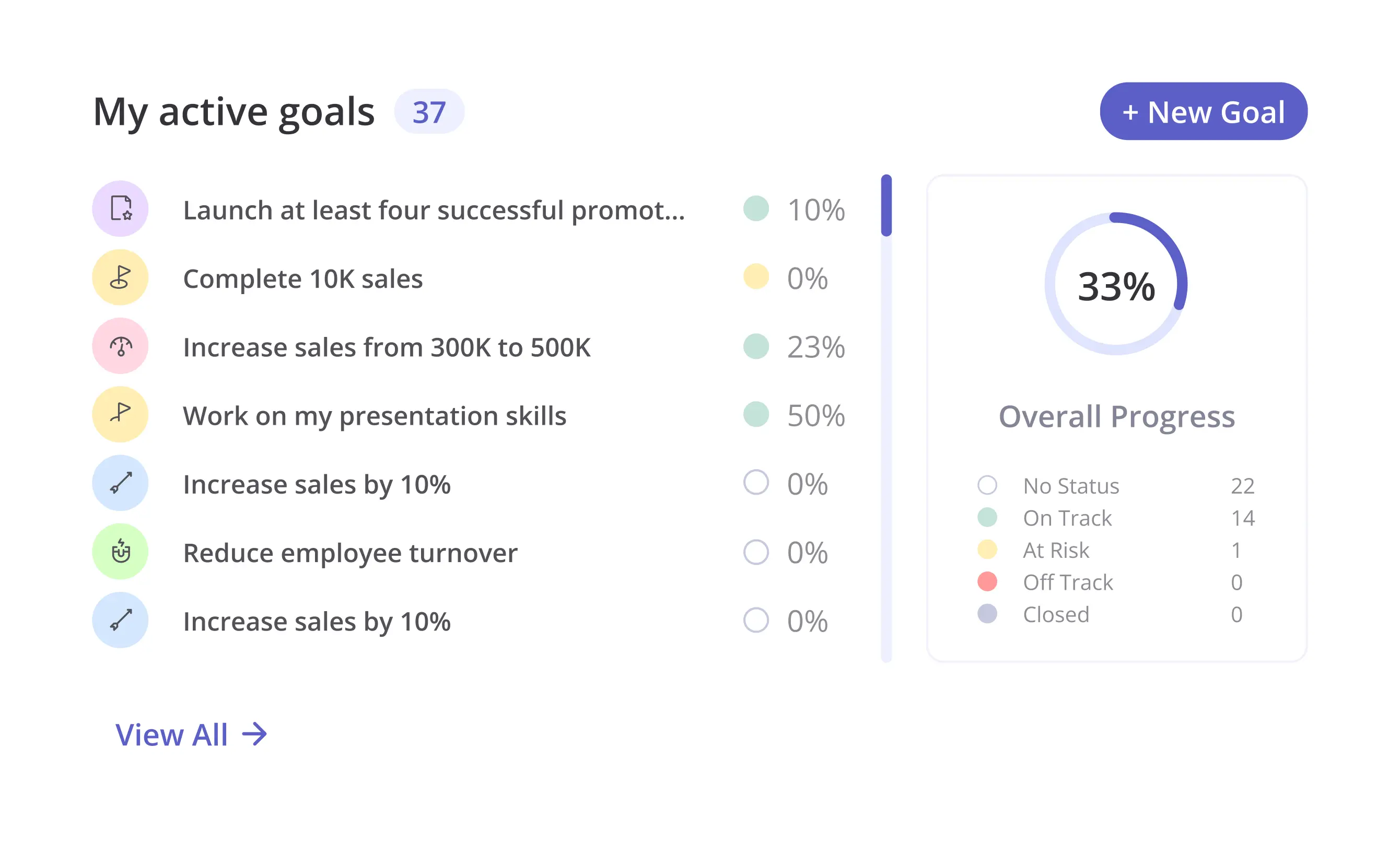
Tools alone won't create successful integration of OKRs and performance management. Organizations need deliberate culture-building efforts to make this approach stick.
Implementation succeeds when you follow these best practices:
The five elements of OKR include: Objectives (qualitative goals), Key Results (measurable outcomes), Initiatives (projects to achieve Key Results), Check-ins (regular progress updates), and Scoring (end-of-cycle evaluation). Some frameworks also emphasize ownership, ensuring each OKR has a clear owner responsible for driving progress.
The five C's of performance management are: Clarity (clear expectations and goals), Communication (ongoing dialogue between managers and employees), Consistency (fair application of standards), Consequences (recognition and accountability), and Coaching (support for development and growth). These principles create effective performance cycles.
Yes, managers should discuss OKR progress during performance reviews, but scores should not be the sole factor in ratings. Use OKR achievement as one data point among many, including behaviors, collaboration, and competency development. Focus the conversation on what the employee learned, how they adapted, and where they can grow rather than treating OKR scores as pass-fail grades.
OKRs should be reviewed weekly or bi-weekly through check-ins, with formal evaluations at the end of each quarter. Performance evaluations traditionally happen annually or semi-annually, though continuous performance management encourages more frequent formal reviews. The key is maintaining regular progress tracking on OKRs while conducting comprehensive performance reviews at longer intervals.
Individual OKRs can inform performance reviews more directly than team OKRs because they reflect personal contribution. However, even individual OKRs should not be the only factor in ratings. Consider how the employee pursued their goals, what obstacles they overcame, and how they collaborated with others. Individual OKRs work best when they connect clearly to both team objectives and personal development areas.

.svg)
.avif)
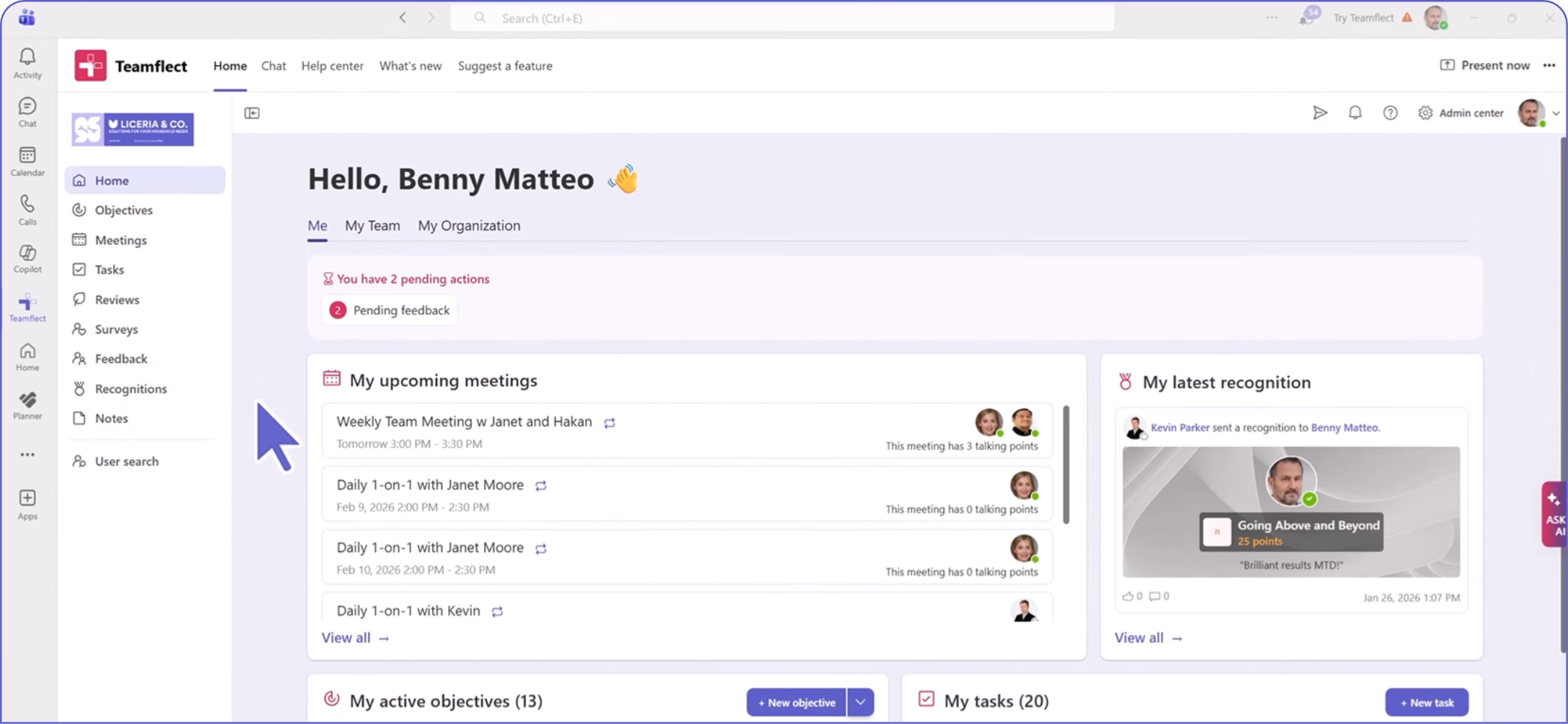
Create high-performing and engaged teams - even when people are remote - with our easy-to-use toolkit built for Microsoft Teams