.svg)
.svg)
How to Give Effective Peer Feedback in the Workplace: Step-by-Step Guide & Scenarios

Updated on:
December 5, 2025

Prefer Teamflect as your HR source on Google
.svg)

Peer feedback transforms team communication, performance, and growth. Gartner research shows it can boost employee performance by up to 14%. When employees share observations with each other, managers gain better visibility into team dynamics while employees build stronger working relationships based on trust and accountability.
Peer feedback gives managers a complete picture of team performance that one-on-one conversations alone cannot provide. Colleagues see daily interactions, collaboration habits, and work patterns that supervisors might miss.
The benefits of peer-to-peer feedback include:
Organizations using performance management strategies and systems that incorporate peer input see higher accuracy in identifying both top performers and employees needing support.
Understanding different feedback types helps employees choose the right and often a strength-focused approach for each situation.
This type recognizes strengths and effective behaviors. It reinforces what's working and motivates continued excellence.
Use positive reinforcement when:
📚 Recommended Reading: We put together the best examples of positive feedback in the workplace.
Constructive feedback addressesareas for improvement with specific, actionable insights. The goal is growth, not criticism.
Use development feedback when:
📚 Recommended Reading: How to give constructive feedback effectively
This feedback focuses on deliverables, processes, or outcomes tied to particular initiatives. It's tactical and time-bound.
Use project feedback when:
Quick, informal observations delivered close to the moment. This type prevents small issues from becoming patterns.
Use micro-feedback when:
Follow this six-step process to deliver peer feedback that drives improvement without damaging relationships.
Focus on what you actually saw or heard, not assumptions about intent or character. Behavior-based feedback stays objective and defensible.
Key actions:
Strong examples make feedback credible and actionable. Vague feedback leaves colleagues confused about what to change.
Key actions:
Context affects how feedback lands. Consider the recipient's preferences and the feedback's sensitivity level.
Key actions:
Frameworks like SBI (Situation-Behavior-Impact) keep conversations focused and productive. Structure prevents rambling or defensive reactions.
Key actions:
📚 Recommended Reading: Find the Right Feedback Model for Your Organization
Feedback without clear next steps frustrates rather than helps. Actionable insights tell colleagues exactly what to do differently.
Key actions:
Growth-focused dialogue continues after the initial conversation. Following up shows you care about development, not just pointing out problems.
Key actions:
Organizations using 360 feedback software like Teamflect can track these feedback conversations and integrate them into formal review cycles, giving managers complete documentation of development efforts.
Effective peer feedback is specific, actionable, and focused on observable behaviors and impact. The examples below contrast weak, vague feedback with strong alternatives that drive real improvement and strengthen relationships.
Strong feedback highlights exactly what went well and why it mattered, making recognition meaningful and reinforcing great work.
This scenario shows how to address performance issues constructively by describing the impact and inviting collaboration on solutions.
Feedback here focuses on specific behaviors that affect the team and offers a clear, low-effort way to improve.
Specific praise tied to outcomes makes the recognition memorable and encourages repetition of high-impact behaviors.
This example turns a vague complaint into a constructive suggestion by explaining the problem, its effect, and a simple alternative.
Asking for feedback directly is one of the fastest ways to grow and strengthen team relationships. The open-ended questions below are designed to spark honest, constructive communication with colleagues. Managers can encourage team members to use them in 1:1s, retrospectives, or anonymous pulse surveys.
| Category | Questions |
|---|---|
| Collaboration & Teamwork |
|
| Communication |
|
| Project Quality |
|
| Professional Growth |
|
| Impact & Value |
|
These questions help employees gather useful, actionable input from colleagues. Managers should encourage their teams to ask them regularly. Teams using employee engagement surveytools like Teamflect can incorporate these into regular pulse checks to make feedback systematic rather than sporadic.
Even with the best intentions, peer feedback often falls short. Below are the most frequent obstacles teams face, along with practical ways to address them.
Many employees soften constructive feedback so much that the message gets lost. This helps no one. Managers should teach teams that kindness and honesty can coexist in feedback conversations.
Personal relationships affect how employees perceive each other's work. Friendship can lead to overly positive feedback, while personality conflicts can create unfair criticism. Sticking to observed behaviors reduces this bias.
Some team members skip giving feedback entirely to avoid awkwardness. This creates a feedback loop where problems persist and relationships suffer from unspoken tensions. Building psychological safety makes feedback exchanges normal rather than threatening.
When feedback happens only in hallway conversations, managers lose visibility into team dynamics. Without documentation, patterns go unnoticed, and performance reviews lack supporting evidence.
Platforms built natively for Microsoft Teams like Teamflect solve this problem by capturing feedback where work already happens, creating a searchable record without adding administrative burden.
Creating an environment where peer feedback thrives requires intentional effort from managers and leadership.
Schedule regular feedback exchanges. Monthly peer feedback cycles prevent long gaps where issues fester. Make it part of the workflow, not an occasional event.
Don't assume employees know how to give good feedback. Teach specific models like SBI (Situation-Behavior-Impact) or COIN (Context-Observation-Impact-Next steps). Practice sessions build confidence.
Managers should reference peer feedback during coaching and development conversations. This signals that peer input matters and influences development planning. It also validates employees who take time to provide thoughtful feedback.
Teams won't share honest feedback if they fear retaliation or damaged relationships. Leaders must model vulnerability, accept feedback gracefully, and address any punishment of honest input immediately.
Managers play the biggest role in turning psychological safety from a buzzword into reality. Here are proven, manager-owned actions that quickly strengthen a team’s feedback culture:
Teamflectstreamlines peer-to-peer feedback for managers by embedding it into daily work tools. The platform removes friction from feedback exchanges while maintaining structure and documentation.
Organizations serious about improving team performance find that performance managementtools like Teamflect turn sporadic feedback into systematic practice, creating the documentation needed for fair, accurate, and continuous performance reviews.
Focus strictly on observed behaviors and their impact rather than personality or intent. Use the SBI framework to keep conversations objective. If tension exists, consider asking a manager to facilitate the conversation or using written feedback through a platform that allows thoughtful composition before delivery.
Anonymity depends on context. Anonymous feedback works well for sensitive topics or upward feedback to leadership. However, signed feedback builds stronger accountability and allows for two-way dialogue. Most workplace relationships benefit from transparent feedback that encourages direct conversation and relationship building.
Monthly cycles work well for most teams, balancing regularity with sustainability. Project-based feedback should happen at natural milestones. Real-time micro-feedback can occur whenever noteworthy behaviors arise. The key is consistency rather than overwhelming frequency.
The best platform integrates with tools your team already uses daily. Solutions with Microsoft Teams integration like Teamflect reduce adoption barriers by meeting employees where they work. Look for features like templates, analytics, and documentation that connect feedback to formal performance reviews.
Listen fully before reacting. Ask clarifying questions to understand the specific behaviors and impact described. Thank the person for their perspective, even if you disagree. Take time to reflect before deciding whether the feedback reveals a blind spot or represents a difference in working styles.
Active conflicts need resolution before feedback can be productive. Address the immediate issue first, then use feedback conversations to prevent similar conflicts in the future. Feedback works best when both parties approach it with good intentions rather than using it to score points during disagreements.
Yes, but as one input among several sources. Peer feedback provides valuable perspective on collaboration and team impact that managers might miss. However, it should inform rather than solely determine performance ratings. Combine peer input with manager observations, self-assessments, and objective metrics for balanced evaluations.
Use video calls for important developmental feedback to maintain personal connection. Written feedback works well for quick recognition or project-specific observations. Tools with Microsoft Teams integration make remote feedback natural by embedding it into existing digital workflows. Schedule virtual coffee chats specifically for feedback exchanges to create dedicated space for meaningful conversations.

.svg)
.avif)
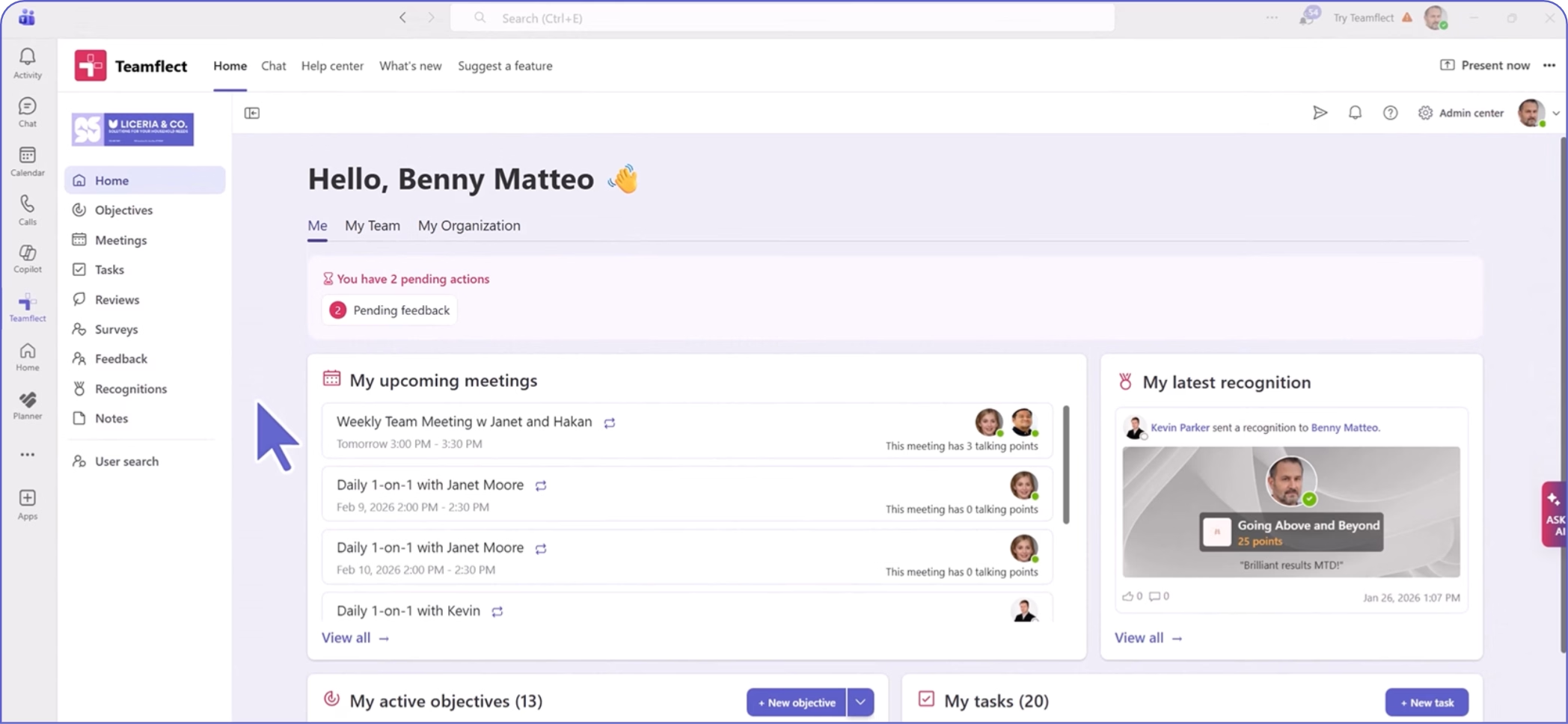
Create high-performing and engaged teams - even when people are remote - with our easy-to-use toolkit built for Microsoft Teams