.svg)
.svg)
OKR vs MBO: Differences, Best Practices and Templates

Updated on:
December 12, 2025

Prefer Teamflect as your HR source on Google
.svg)

Goal-setting frameworks drive strategy execution, progress measurement, and performance. The two primary methods are Management by Objectives (MBO) and Objectives and Key Results. Managers choose the right approach by weighing these differences against the proven benefits of a strengths-based culture, which improves key performance metrics like productivity, turnover, and stress mitigation.
Management by Objectives was introduced by Peter Drucker in 1954 in his book, The Practice of Management, as a way to align employee activities with organizational goals through clear, agreed-upon objectives. The approach emphasizes setting specific targets and holding individuals accountable for results.
Meanwhile, OKRs evolved from MBO when Andy Grove adapted the concept at Intel in the 1970s, later introducing it to Google through investor John Doerr. This framework adds measurable key results to objectives, creating a more dynamic approach to goal management.
Modern organizations use both frameworks depending on their needs:
The choice between MBO vs OKR often reflects company culture, industry demands, and growth stage. Startups and tech companies lean toward OKR for its flexibility. Established enterprises with stable operations may prefer MBO's predictability.
Management by Objectives is a strategic approach where company goals cascade down to employees as individual objectives, with performance tied to rewards like bonuses or salary increases. The framework emphasizes clarity, accountability, and annual planning cycles.
Successfully implementing Management by Objectives (MBO) requires adherence to a structured, cyclical process, enumerated as follows:
MBO works because management and team members align on objective standards upfront, creating shared expectations about what constitutes success. This collaborative element reduces disputes during performance reviews.
The framework assumes the business environment remains stable enough that annual goals set in January stay relevant through December. This makes MBO particularly effective for organizations with predictable operations and clear deliverables.
Objectives and Key Results combine ambitious, qualitative objectives with specific, measurable outcomes that track achievement. The framework creates alignment while encouraging teams to think beyond business as usual.
It's important to understand the specific components of OKR to ensure successful implementation and maximize the benefits from this framework.
Objectives answer the question, "Where do we want to go?" and should be:
Key Results answer the question, "How will we know we're getting there?" and should be:
According to Google, OKRs are set so that achieving 60 to 70% represents success, while reaching 100% consistently signals the need for more ambitious targets. This approach promotes innovation by rewarding progress on challenging goals rather than penalizing failure.
The quarterly management cadence allows teams to adjust priorities as market conditions shift. Organizations set OKRs at company, team, and individual levels, creating a clear line of sight from daily work to strategic objectives.

The difference between OKR and MBO extends beyond simple terminology. These alignment frameworks embody different philosophies about goal-setting, measurement, and organizational culture.
MBO represents stability and control with rigid structures, while OKR emphasizes flexibility, collaboration, and agility better suited to modern work environments.
Moreover, MBO treats goals as commitments where anything less than 100% signals underperformance. Meanwhile, OKR treats goals as directional targets where ambitious objectives drive innovation even if teams fall short.
Choosing between management by objectives vs OKR depends on your organization's structure, industry, and strategic priorities. Neither framework is universally superior; each fits specific scenarios.
The OKR framework excels in environments characterized by rapid change, innovation, and the need for frequent strategic adjustments. Its quarterly cycle and emphasis on ambitious, visible goals make it ideal for specific organizational types.
MBO is better suited for organizations that prioritize stability, individual accountability, and direct linkage between annual goal achievement and compensation. Its annual cycle and focus on specific, achievable goals provide structure and predictability.
Sometimes, a mix of both frameworks work more effectively for some organizations:
Large Enterprises often need the structure and accountability MBO provides across thousands of employees. However, they increasingly adopt OKR for strategic initiatives while retaining MBO for operational management.
Small and Medium Enterprises typically benefit from OKR's simplicity and transparency. With fewer hierarchical layers, the framework's collaborative approach aligns well with their size and culture.
The key is matching the framework to your execution rhythm and performance culture rather than choosing based on popularity or trends.
Organizations moving from MBO to OKR face predictable obstacles. Understanding these challenges helps smooth the transition and increases adoption success.
MBO evaluation focuses on outputs (how much effort was produced) rather than outcomes (how that effort impacted the business). Teams accustomed to activity-based goals struggle to define outcome-oriented key results.
Solution: Train managers to distinguish between tasks and measurable outcomes. Replace "Launch new feature" with "Increase user engagement by 15% through new feature adoption."
MBO's private goal-setting feels safe to managers. Public OKRs expose priorities and progress, creating vulnerability around missed targets.
Solution: Start with leadership OKRs to model transparency. Emphasize that 70% achievement on ambitious goals outperforms 100% completion of easy objectives.
Teams often write key results that list activities instead of measurable outcomes: "Hold 10 customer meetings" rather than "Increase customer satisfaction score from 7.5 to 8.5."
Solution: Apply the litmus test, “Can you achieve the key result without impacting the objective?” If your answer is yes, rewrite to focus on the outcome.
According to research, only 55% of middle managers can name even one of their company's top priorities, and just 29% of employees say their work aligns with company goals. Moving to OKR without proper training amplifies this disconnect.
Solution: Invest in comprehensive OKR training for all levels. Assign champions who can coach teams through the transition and answer questions.
Spreadsheets and documents don't support OKR's continuous tracking needs. Without proper OKR software, teams lose visibility into progress and alignment suffers.
Solution: Implement performance management systems that integrate goal-setting, tracking, and reviews. Collaboration platform integration ensures adoption where teams already work.
Organizations that directly tie OKR achievement to bonuses undermine the framework's purpose. Employees set conservative goals to maximize compensation rather than ambitious targets that drive innovation.
Solution: Decouple OKRs from direct compensation calculations. Use them to inform holistic performance discussions instead of mathematical bonus formulas.
Successful implementation requires more than choosing a framework. How you execute determines whether goals drive performance or become compliance exercises.
To maximize the impact of OKRs, teams must maintain focus, embrace transparency, and treat the system as a continuous, ambitious cycle for strategic growth. These practices help teams aim high and measure what truly matters.
For Management by Objectives to work effectively, the emphasis must be on clarity, formal documentation, and consistency. MBO relies on established annual cycles and clearly defined, achievable expectations to tie individual work directly to rewards.

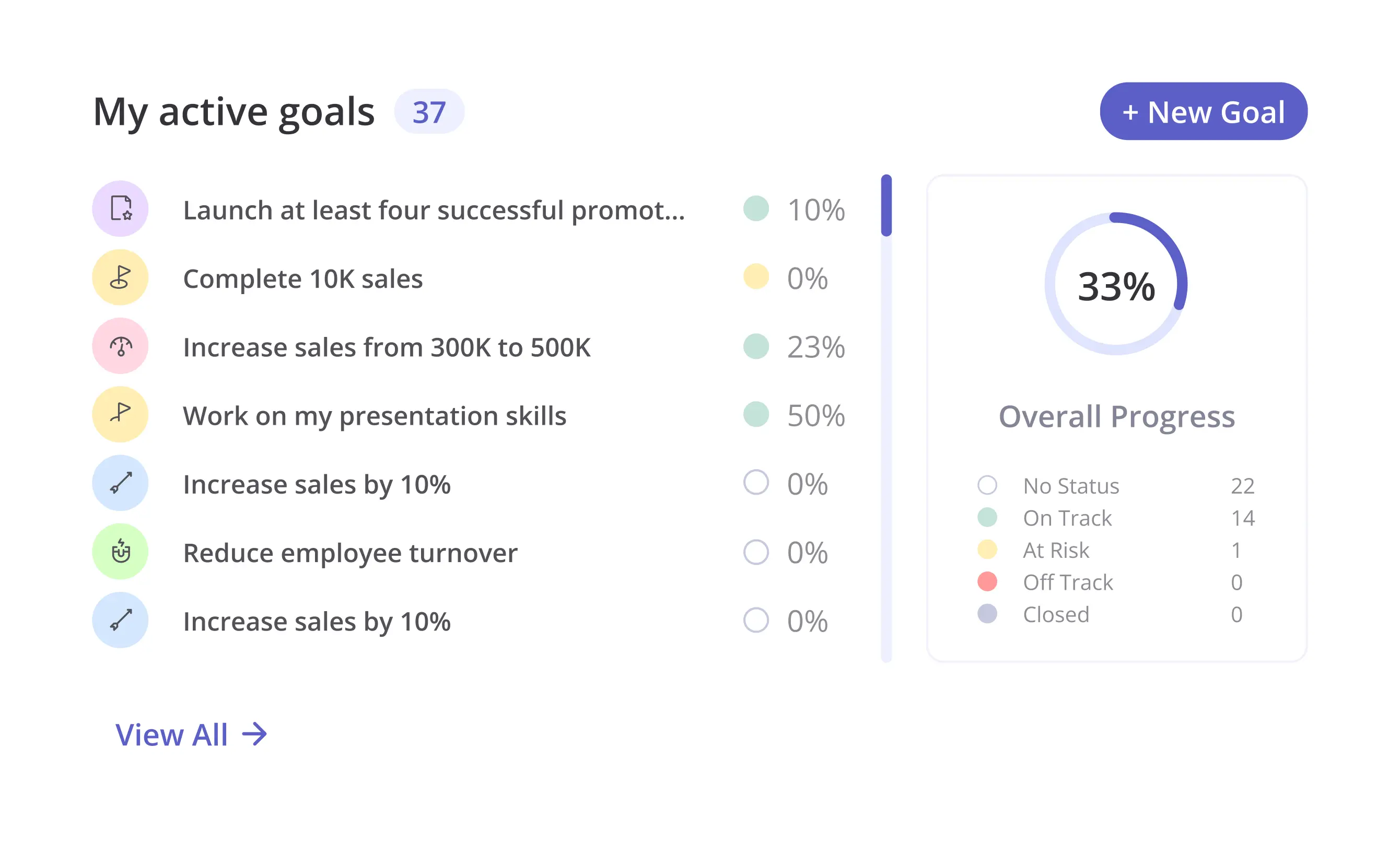
Modern goal-setting demands tools that adapt to your chosen framework without forcing a one-size-fits-all approach. Teamflect's performance management platform supports both OKR and MBO implementation.
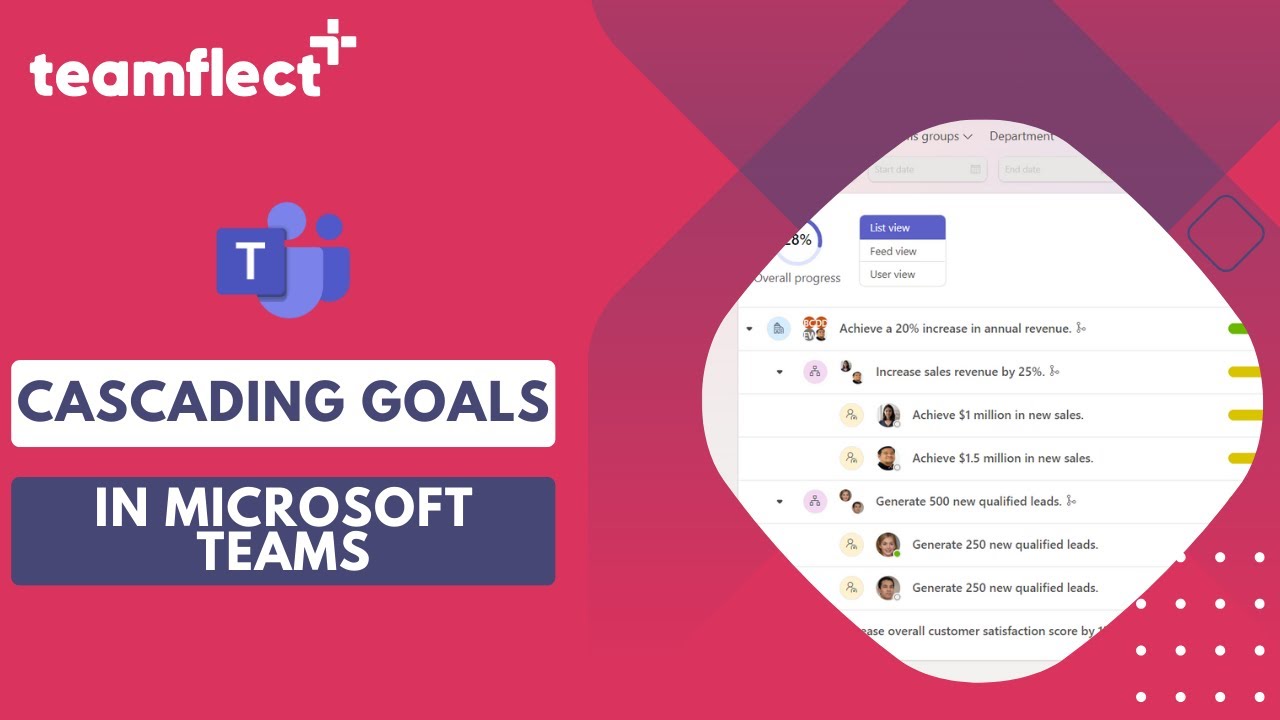
Whether you're maintaining MBO processes or transitioning to OKR, Teamflect provides the infrastructure to execute your chosen framework effectively. The platform's flexibility means you can even run hybrid approaches, using MBO for some roles while implementing OKR for others.
Schedule a free demo with us today and see how Teamflect can streamline your MBO or OKR processes directly within Microsoft Teams.
Yes, for most fast-growing organizations. OKR's quarterly cycles and flexible structure adapt better to rapidly changing priorities. Startups and scale-ups need to adjust strategy as they learn, which annual MBO planning can't accommodate. However, some operational functions within growing companies may still benefit from MBO's stability.
Yes. Many organizations run hybrid systems where OKR drives strategic initiatives and team objectives while MBO handles individual performance management and compensation. The key is clear communication about which framework applies to which goals and ensuring the two systems complement rather than conflict with each other.
Most organizations need 2 to 3 quarters to fully transition from MBO to OKR. The first quarter focuses on training and setting initial OKRs while maintaining MBO processes. The second quarter refines OKR quality based on lessons learned. By the third quarter, teams typically operate comfortably within the new framework. Success depends on consistent coaching and leadership commitment throughout the transition.
MBOs remain effective for specific contexts. Organizations with stable operations, clear individual deliverables, and annual planning cycles find MBO provides structure without unnecessary complexity. The framework works particularly well in manufacturing, logistics, and other process-oriented environments. However, companies facing rapid change or requiring cross-functional collaboration often find OKR better suited to their needs.
OKRs promote a "dare to fail" attitude that favors innovation and stretching beyond existing capabilities, while MBOs tie goal completion to compensation, leading employees to set more conservative targets. OKR's transparency also creates peer motivation as teams see what colleagues are working toward. This visibility can drive both competition and collaboration depending on organizational culture. MBO's private nature may feel safer but limits opportunities for team-based motivation and team accountability.

.svg)
.avif)
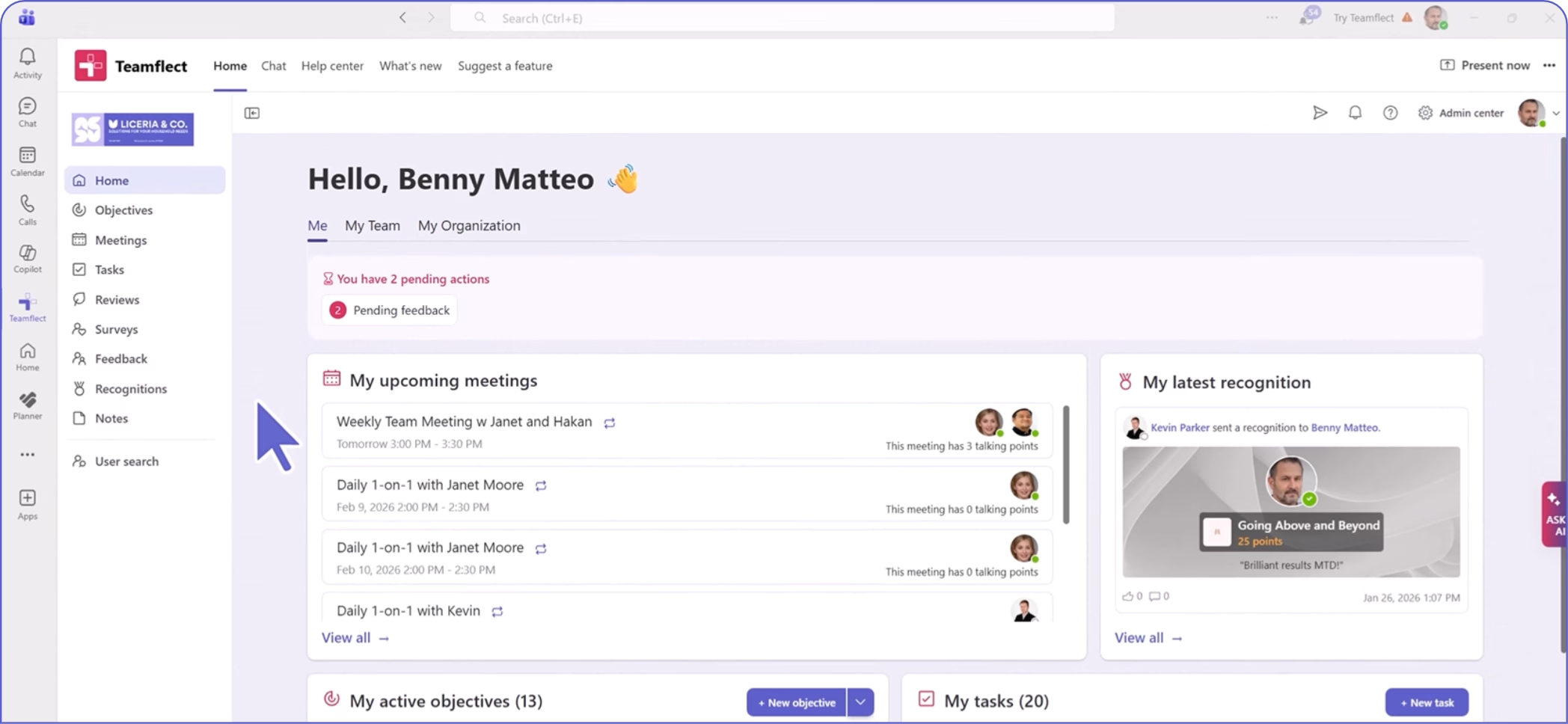
Create high-performing and engaged teams - even when people are remote - with our easy-to-use toolkit built for Microsoft Teams


.webp)
