.svg)
.svg)
How to Set Effective Performance Goals for Employees

Updated on:
December 5, 2025

Prefer Teamflect as your HR source on Google
.svg)

Achieving high performance requires cultivating a strong culture around employee development. According to Gallup, organizations that strategically invest in employee growth see an 11% greater profitability and are twice as likely to retain their staff.
Performance goals are essential within this structure, translating abstract roles into concrete expectations. Without them, teams lack direction, managers struggle to assess progress, and employees cannot connect their work to company objectives.
Strong employee performance goals answer three questions:
A customer service representative might have a goal to "Resolve 85% of customer inquiries within 24 hours by Q2," while a product manager might aim to "Launch two feature updates based on user feedback before year-end."
The best performance goals for employees connect individual contributions to team outcomes and company strategy. They provide clarity on priorities, create accountability through measurable outcomes, and establish a foundation for fair performance conversations throughout the year.
Performance goals are fundamental tools that dictate how successfully teams operate and deliver tangible results. Establishing effective goals transforms abstract duties into clear, measurable targets.
Setting clearly defined goals directly impacts efficiency and output. Research shows that employees working with specific targets are 12% to 15% more productive than those operating without them.
Clear goals eliminate ambiguity regarding priorities. When employees understand exactly what is required, they minimize time spent second-guessing tasks and maximize time spent on execution.
Goals are powerful drivers of employee motivation. Individuals perform better when they have a clear definition of success and can actively track their progress toward meaningful outcomes. Goals establish natural checkpoints for providing recognition and making necessary course corrections, which keeps employees actively invested in and committed to their work.
Fair and objective performance evaluations depend entirely on goal clarity established from the beginning.
Without documented objectives that are agreed upon prior to a review period, assessments are vulnerable to personal bias and the recency effect (over-emphasizing recent performance).
Transparent goal-setting protects both employees and managers by creating a set of shared, objective expectations upfront.
Different types of performance goals serve different purposes in employee development and business execution. Most employees need a balanced mix across several categories.
The table below outlines the five most common types of performance goals used in modern performance management.
Each type plays a distinct role: some drive day-to-day execution, others fuel long-term strategy or personal growth, while some strengthen company culture and collaboration. High-performing organizations intentionally blend all five categories, so employees stay productive today while preparing for tomorrow’s challenges.
The list that follows expands on each category, explaining why it matters, how it differs from the others, and the real-world impact when teams get the mix right.
Operational goals focus on core job functions and daily responsibilities. These targets ensure employees maintain quality and efficiency in their primary duties. Examples include processing a specific number of orders per week, maintaining response time standards, or achieving quality benchmarks.
Strategic goals connect individual work to broader company initiatives. They require employees to think beyond routine tasks and contribute to longer-term objectives. A marketing manager might have a strategic goal to increase qualified lead generation by 20%, supporting the company's revenue growth targets.
Development goals prioritize skill building and career growth. Development goals address competency gaps, prepare employees for future roles, and keep capabilities current. An analyst might set a goal to complete advanced SQL training and apply new techniques to monthly reporting.
Behavioral goals target how work gets done, not just what gets accomplished. These goals address behaviors tied to company values such as communication style, collaboration effectiveness, and cultural fit. A team lead might work on improving feedback delivery or increasing cross-functional partnership quality.
In a recent episode of The Team Check-In Podcast, we addressed how company values can be framed into behaviors and competencies. Listen to the episode below:
Cross-functional goals encourage collaboration across departments and break down silos. They require employees to coordinate with other teams to achieve shared outcomes. A sales representative and product manager might share a goal to conduct joint customer discovery sessions each quarter.
Effective employee goal setting follows a structured process that ensures alignment, clarity, and achievability. Here's how managers should approach setting performance goals for employees.
Start by understanding what your organization and department need to accomplish this period. Individual employee performance goals should directly support these higher-level priorities. If your company is focused on customer retention, employee goals should reflect activities that improve retention metrics.
Look at the employee's job description and recent performance data. Identify where they're excelling and where improvement would create the most value. New employees need goals that emphasize learning and integration, while experienced team members can handle more complex targets.
Structure each goal using the SMART criteria: Specific, Measurable, Achievable, Relevant, and Time-bound. Vague goals like "improve communication" become actionable when reframed as "Present project updates to stakeholders bi-weekly with 90% attendance by Q3."
Set stretch goals that push employees beyond their comfort zone without setting them up for failure. Goals should feel ambitious but attainable with focused effort. Mix easier wins with challenging targets to maintain motivation throughout the performance period.
Define exactly what "done" looks like for each goal. Include intermediate milestones for longer-term objectives, so employees can track progress incrementally. A six-month goal should have monthly checkpoints that signal whether the employee is on track.
Discuss what the employee needs to accomplish their goals. This might include training, tools, budget, or time allocation. Document these requirements to ensure realistic expectations and prevent future obstacles.
Strong performance goals are specific, measurable, achievable, relevant, and time-bound (SMART). The table below provides concrete, high-quality examples tailored to different roles and levels. Each goal includes clear success metrics and demonstrates how individual contributions ladder up to team or company success.
New employee performance goals differ from those set for established team members. Early goals should emphasize integration, learning, and relationship building rather than advanced output expectations.
First-month goals focus on understanding the role, team structure, and company processes. New hires should complete required training, meet key stakeholders, and demonstrate basic competency in core tools. A realistic goal might be "Complete all onboarding modules and shadow three experienced team members on customer calls."
Second-month goals introduce more independence while maintaining support structures. Employees should begin contributing to team projects and handling routine responsibilities with minimal supervision. Goals might include "Successfully complete first solo project deliverable" or "Resolve 10 customer inquiries independently with quality scores above 80%."
By the third month, new employees should work toward regular performance benchmarks. Goals should reflect increasing complexity and accountability while still acknowledging the learning curve. Examples include "Meet 75% of standard productivity targets" or "Lead one team meeting and present findings to stakeholders."
Development goals remain critical throughout the onboarding period. New hires need explicit objectives around learning systems, building relationships, and understanding company culture. Managers should check progress weekly during the first 90 days and adjust goals as needed based on the employee's learning pace.
Effective goal setting for employees requires dialogue, not dictation. Collaborative approaches increase buy-in, surface potential obstacles early, and create more realistic expectations.
Managers should share organizational priorities and team objectives, then ask employees what goals they think would create the most value. Employees often identify opportunities or challenges that managers miss. This exchange ensures both perspectives shape the final goals.
Give employees a voice in how their performance will be measured and when deliverables are due. They understand their workload capacity and technical constraints better than most managers. Negotiating these details upfront prevents unrealistic expectations and builds ownership.
Ask questions that help employees think through their goals critically:
These prompts improve goal quality and prepare employees for execution challenges.
Both parties should sign off on final goals in a shared document or system. Written goals prevent misunderstandings later and provide an objective reference point during performance reviews. Documentation also protects both manager and employee if disputes arise about expectations.
Agree on review frequency when setting goals. Weekly check-ins work well for new employees or complex projects, while monthly or quarterly reviews suit experienced team members with established goals. Regular touchpoints catch problems early and allow for course corrections.
Employees should feel comfortable pushing back on unrealistic goals or proposing alternatives. Managers who welcome this dialogue get more thoughtful commitments. Business conditions change, so build in flexibility to revise goals when circumstances shift significantly.
Setting performance goals means nothing without consistent tracking and meaningful reviews. Different review cadences serve different purposes in keeping employees on track.
Weekly reviews work best for urgent projects, new employees, or goals with tight deadlines. These brief conversations identify blockers quickly and keep momentum strong. Focus on immediate obstacles and next steps rather than comprehensive progress analysis.
Monthly check-ins suit most operational and behavioral goals. This frequency provides enough data to spot trends without overwhelming managers or employees. Review key metrics, discuss any deviations from plan, and adjust tactics if needed.
Quarterly reviews align well with most business planning cycles and strategic initiatives. Use these sessions to assess progress on longer-term objectives, update goals based on changing priorities, and ensure continued alignment with company strategy. Quarterly timing also works well for development goals, giving employees enough time to complete training or demonstrate new skills.
Annual reviews synthesize the full year's performance and inform compensation, internal promotions, and succession decisions. They should contain no surprises if managers have conducted regular interim reviews. Use annual conversations to reflect on overall growth and set goals for the coming year.
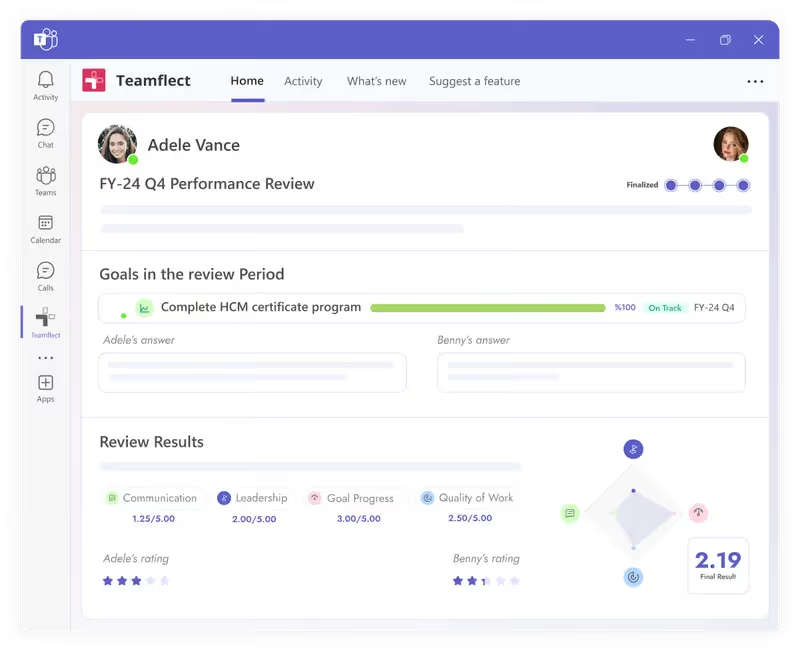
Modern performance review software like Teamflect eliminates the need for spreadsheet tracking and manual status updates. Platforms with Microsoft Teams integration allow employees to update goal progress where they already work, making tracking effortless. Real-time visibility helps managers spot issues before they become critical.
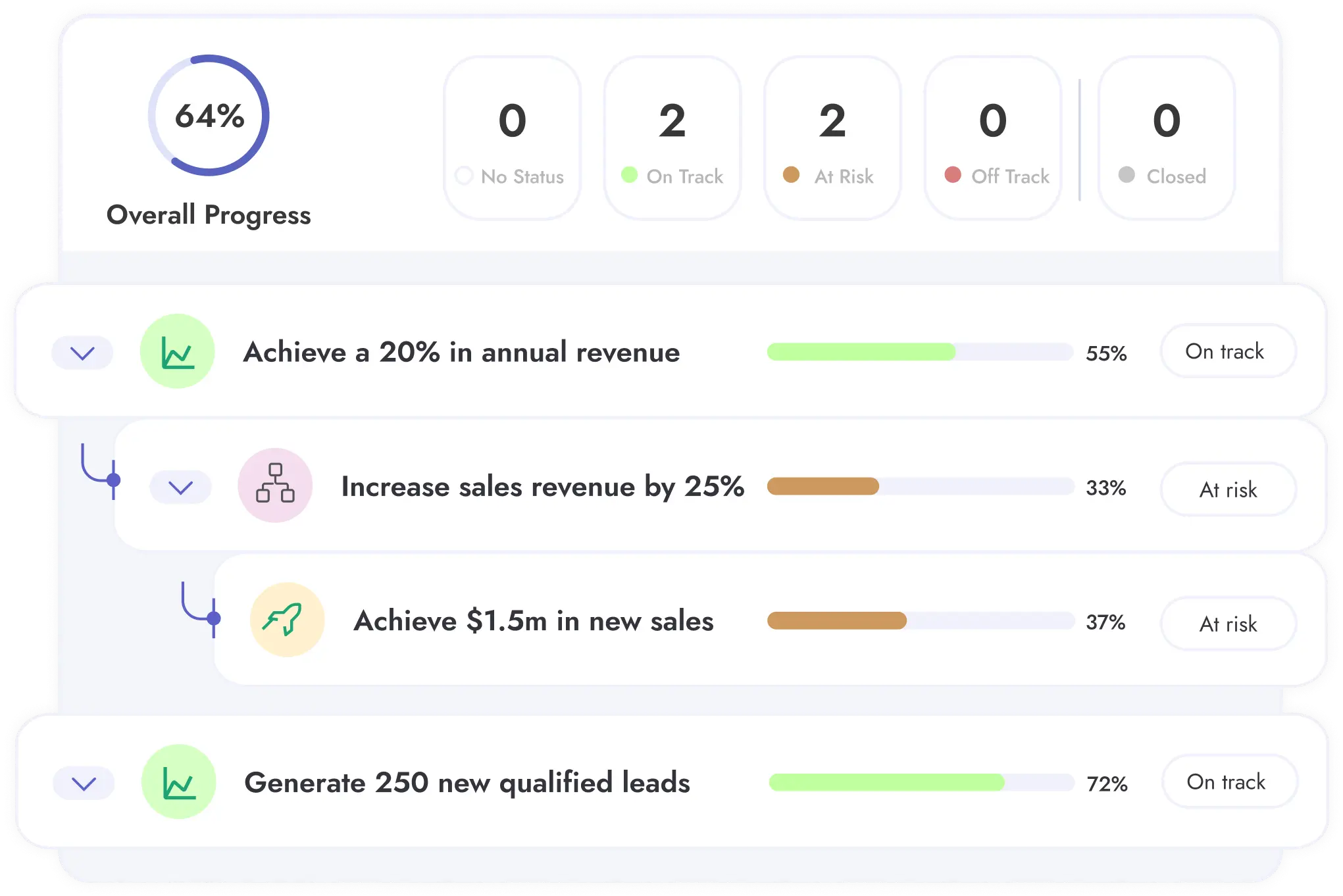
Monitor both outcomes (lagging indicators) and activities that drive those outcomes (leading indicators). A sales goal might track closed deals (lagging) alongside calls made and proposals sent (leading). Leading indicators provide earlier warning when goals are at risk.
Even experienced managers make predictable errors that undermine goal effectiveness. Avoid these common pitfalls when setting performance goals for employees.
Employees with over 10 goals can't focus effectively. Three to five well-chosen goals typically cover what matters most without overwhelming anyone. More goals dilute effort and make it harder to achieve meaningful progress on any single objective.
Vague goals like "improve customer satisfaction" or "be more proactive" can't be objectively evaluated. Every goal needs quantifiable success criteria. If you can't measure it, you can't manage it or fairly assess whether someone achieved it.
Goals that ignore an employee's actual capacity or current responsibilities set people up for failure. A customer service representative covering for a vacant position can't realistically take on the same new project goals as someone with a full team.
Goals that don't support broader objectives waste effort on activities that don't matter. Every employee goal should answer, "How does this help the company achieve its priorities?"
Goals disconnected from strategy demotivate employees who can't see their impact.
Setting goals in January and not discussing them again until December makes them irrelevant. Business conditions change, priorities shift, and employees need feedback along the way. Regular reviews keep goals current and demonstrate management engagement.
Managers who dictate goals without employee input get lower commitment and miss important context. Collaborative goal setting produces better objectives and stronger buy-in. Employees support what they help create.

Teamflect brings employee goal setting directly into your team's daily workflow. The platform combines OKR management with comprehensive performance management features, all accessible through Microsoft 365 integration.
Get your free demo and bring modern, painless goal management to your Microsoft Teams workspace today.
Most employees should have three to five primary performance goals at any given time. This number provides enough focus areas to cover critical responsibilities without diluting effort. Include a mix of operational, strategic, and development objectives to balance immediate needs with longer-term growth.
Allocate roughly 70% of goals to achievable targets that push performance modestly, and 30% to ambitious stretch goals that require exceptional effort. Stretch goals should feel challenging but not impossible. Clearly label which goals are stretch objectives, so employees understand that partial achievement still represents strong performance.
No. While employees at the same level might share some common objectives, individual goals should reflect each person's specific role, current performance, development needs, and career trajectory. A senior analyst focused on technical depth needs different goals than a peer preparing for a management transition.
Review goals quarterly and adjust when business priorities shift significantly or when circumstances make original goals irrelevant. Minor tactics can change, but core objectives should remain stable enough to allow meaningful progress. Frequent wholesale changes prevent employees from building momentum.
Replace outdated goals promptly when strategy or market conditions change. Document why the original goal no longer applies and collaborate with the employee on a replacement objective. Don't penalize employees for missing goals that became obsolete through no fault of their own.
First, investigate whether goals are realistic given the employee's role, resources, and competing priorities. If goals are appropriate, work with the employee to identify specific obstacles and skill gaps. Create a performance improvement plan with more frequent check-ins and additional support. Consistent goal failure despite adequate support may indicate a poor role fit.
Yes. Development goals help employees build skills needed for current and future roles. They demonstrate the organization's investment in employee growth and give people clear direction for professional advancement. Balance development goals with operational objectives, typically using one or two development goals alongside three to four performance targets.
Employees should come to goal-setting conversations prepared with suggested objectives tied to team priorities and personal development interests. Frame proposals around business value and explain how achieving these goals would benefit the organization. Managers appreciate initiative when employees identify opportunities to contribute beyond baseline expectations.

.svg)
.avif)
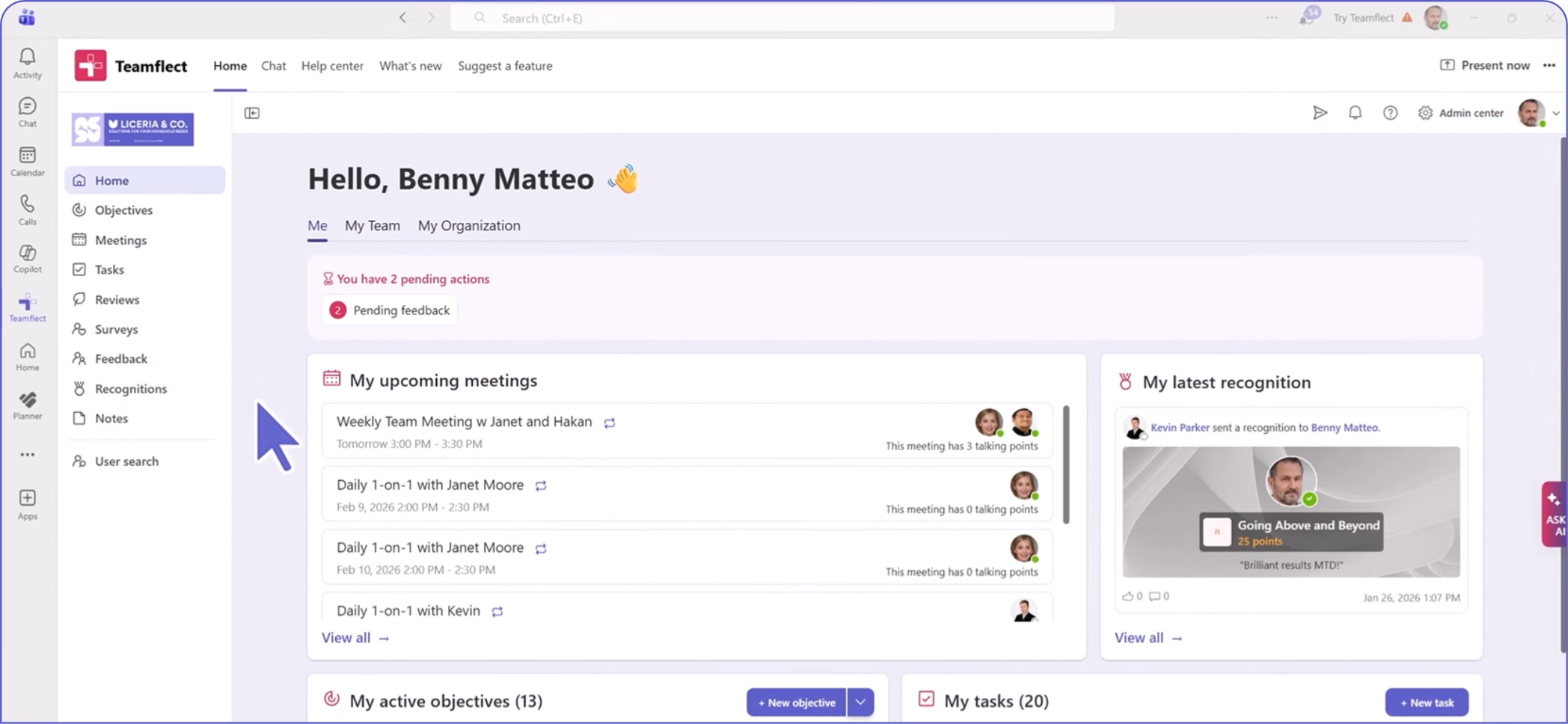
Create high-performing and engaged teams - even when people are remote - with our easy-to-use toolkit built for Microsoft Teams