.svg)
.svg)
Making Employee Performance Evaluations Effective: Metrics & Methods

Updated on:
December 5, 2025

Prefer Teamflect as your HR source on Google
.svg)

Most organizations conduct employee performance evaluations, but far fewer run evaluations that actually improve performance. This lack of effectiveness is often linked to unclear boundaries: a Gallup survey found that only one-fifth (21%) of workers strongly agree their performance measures are entirely within their control.
An effective employee performance evaluation process addresses this challenge by doing more than simply documenting the past quarter. Instead, it provides actionable insights that help employees grow and enables managers to make better decisions regarding development, compensation, and advancement.
Strong evaluations share several characteristics that make them useful for both employees and managers. Here's what separates effective systems from ineffective ones:
📚 Recommended Reading: How Medquest reworked their performance rating scales to empower employees.
Even well-intentioned evaluation systems run into predictable problems. Recognizing these issues helps you build better processes from the start.
The table below highlights eight of the most widespread problems that undermine the fairness, accuracy, and usefulness of conventional once-a-year performance appraisals.
| Problem | Description | Impact on Effectiveness |
|---|---|---|
| Ambiguous Rating Scales | Rating labels (e.g., “Exceeds,” “Meets,” “Needs Improvement”) are not anchored with specific behavioral examples or measurable standards. | Leads to wildly different interpretations of the same rating, destroying calibration and fairness. |
| Recency Effect | The evaluation heavily weights performance from the last 4–8 weeks. | Earlier achievements or issues in the year are ignored, creating a distorted picture of overall contribution. |
| Absence of Ongoing Feedback | Managers keep no running record of performance incidents throughout the year. | Reviews become vague, memory-based opinions rather than evidence-based assessments. |
| Manager-Specific Priorities | Each leader applies their own unspoken criteria (e.g., visibility vs. quality vs. accuracy vs. teamwork). | Employees receive conflicting signals about what drives success and promotion. |
| 360-Degree Input Missing | Only the direct supervisor’s opinion counts, regardless of how little time they spend with the employee. | Critical perspectives from peers, stakeholders, or direct reports are excluded, producing incomplete or biased ratings. |
| No Accountability Loop | Goals and development actions from the review are rarely tracked or revisited until the next annual cycle. | Promised growth stalls; the review becomes a meaningless administrative ritual. |
| Grade Inflation & Conflict Avoidance | Most employees receive the same high score (“Meets+” or “Exceeds”) to keep morale high and avoid tough discussions. | True top performers cannot be distinguished from average ones; pay and promotion decisions lose credibility. |
| Disconnect from Actual Work | Review forms use generic competencies that rarely reflect the real day-to-day responsibilities or current projects. | Employees feel the process is bureaucratic theater rather than a meaningful reflection of their contribution. |
While the table gives you a quick, at-a-glance diagnosis, the deeper consequences of these flaws often go unnoticed until employee engagement drops, top talent leaves, or legal risks appear. The list below expands on each problem with real-world implications and why these issues persist in so many organizations despite decades of criticism.
When terms like “Meets Expectations” or “Exceeds Expectations” have no clear behavioral anchors or examples, one manager’s “4 out of 5” can easily be another manager’s “3 out of 5.” This lack of a shared standard makes organization-wide calibration impossible and opens the door to unconscious bias.
Human memory naturally prioritizes recent events. Without deliberate effort (e.g., quarterly notes or check-ins), a stellar first half of the year can be completely overshadowed by an average or difficult last quarter, resulting in unfair final ratings.
When managers only think about performance once a year, they rely on vague impressions rather than concrete examples. This forces both manager and employee into defensive or surprised conversations because neither can point to specific evidence from months earlier.
One leader may reward employees who speak up in meetings, while another rewards those who deliver flawless work quietly. Without explicit, aligned criteria, employees play a guessing game and often optimize for their boss’s personal preferences rather than organizational goals.
In many roles, the direct manager sees only a small fraction of the employee’s actual work. Peers, cross-functional partners, customers, or even direct reports often have far more relevant observations, yet their input is systematically ignored in traditional systems.
A performance review often ends with a list of “development areas” or new goals, but there is no mechanism to track progress. Twelve months later, the same issues reappear because nothing was ever followed up on or supported.
A common pattern in giving out performance reviews is the abrupt swing between leniency and severity. Very often, managers would demonstrate leniency bias, in that they would give out high marks to avoid emotional discomfort or HR paperwork. Then this will swing to the other end when the organization mandates stricter rules for reviews. Over time, the constant back-and-forth can render the entire differentiation and reward system meaningless.
Generic competency models (e.g., “Demonstrates leadership,” “Drives results”) are copied from templates and rarely updated to match evolving roles or current projects. Employees read their review and think, “I’ve never done anything like this in my actual job.”
📚 Recommended Reading: What are the different types of biases that an infiltrate performance reviews?
Choosing the right metrics depends on the role, but certain categories apply across most positions. The table below shows when to use different metric types and how they might look in practice.
| Metric | When to Use | Example Roles | Example Metric |
|---|---|---|---|
| Output-based measurement | Roles with clear deliverables | Sales, Content Creation, Manufacturing | Number of qualified leads, Articles published, Units produced per shift |
| Quality indicators | Work requiring accuracy and precision | Engineering, Customer Service, Accounting | Bug rate, Customer satisfaction score, Error rate in financial reporting |
| Skill proficiency levels | Competency development matters | Technical roles, Management, Client-facing | Certification completion, Mentoring frequency, Client retention rate |
| Initiative tracking | Innovation and proactivity are valued | Product teams, Operations, Marketing | Process improvements suggested, Cross-functional projects initiated |
| Collaboration measures | Team coordination is critical | Project management, Research, Operations | Peer feedback scores, Cross-team project success rate |
The best evaluation systems combine quantitative and qualitative metrics. Numbers provide objectivity, but qualitative assessment captures behaviors that numbers miss. A customer service representative might have excellent response time metrics but struggle with empathy during difficult calls. Both matter.
Role clarity makes metric selection easier. When job descriptions clearly define expectations, choosing relevant metrics becomes straightforward. Ambiguous roles lead to ambiguous evaluations.
A reliable evaluation system needs structure. Without a consistent framework, assessments vary wildly between managers and departments. Here's how to build one that works.
Begin by identifying skills and behaviors that apply across your entire organization. These competencies, such as communication, problem-solving, accountability, and collaboration, form the foundation of your system. Every employee, regardless of role, should be evaluated on these non-negotiable foundations.
Next, tailor the framework by defining role-specific criteria. A software engineer needs different technical skills than a marketing manager. Define what "good" looks like for each position, using specific examples and technical performance indicators to assess unique job duties.
Establish evaluation categories that align directly with your strategic business priorities. If customer satisfaction is paramount, it should be a prominent category. If innovation is the focus, track initiative and creative problem-solving. This ensures the evaluation drives the right organizational behaviors.
Not every category should hold the same value. Define weighting rules to reflect importance. For example, a sales role might weight revenue generation at 50%, while relationship building gets 30%, and internal collaboration receives 20%. This guides employee focus toward the most critical business outcomes.
A standard five-point scale works well, but only when each level has clear, defined descriptions. "Exceeds expectations" must mean specific, observable behaviors, not just a vague sentiment. Clear definitions ensure evaluation consistency and reduce subjective bias in scoring.
Structure the entire system using a simple, effective three-layer approach.
Traditional annual reviews are giving way to more sophisticated approaches. These modern methods reduce bias and provide richer insights into employee performance.
| Method | Strengths | Weaknesses | Best For |
|---|---|---|---|
| Behavioral rubrics | Removes subjectivity, provides clear examples | Time-intensive to create | Organizations wanting standardization |
| Competency-based scoring | Focuses on skills development | Can feel disconnected from results | Development-focused cultures |
| Multi-rater input | Reduces individual bias, captures multiple perspectives | Requires coordination, potential for politics | Collaborative environments |
| Continuous feedback notes | Builds accurate year-round picture | Demands manager discipline | Organizations moving away from annual reviews |
| Calibration sessions | Ensures consistency across managers | Time-consuming, requires senior leadership | Large organizations with many managers |
Behavioral rubrics work by describing what each rating level looks like in practice. Instead of "communication skills: 4/5," a rubric might say "proactively shares project updates with stakeholders, adjusts communication style based on audience, responds to questions within 24 hours."
Competency mapping connects evaluation criteria to skill development paths. Employees see how improving specific competencies opens advancement opportunities. This approach turns evaluations into career planning tools.
With continuous feedback notes, managers and employees are required to document performance moments in real-time. This involves using a digital tool to log both positive and constructive observations immediately following an event (e.g., a successful presentation, a misstep in a meeting). The key is to capture recency bias before it sets in, providing a rich set of data points for a fair year-end summary.
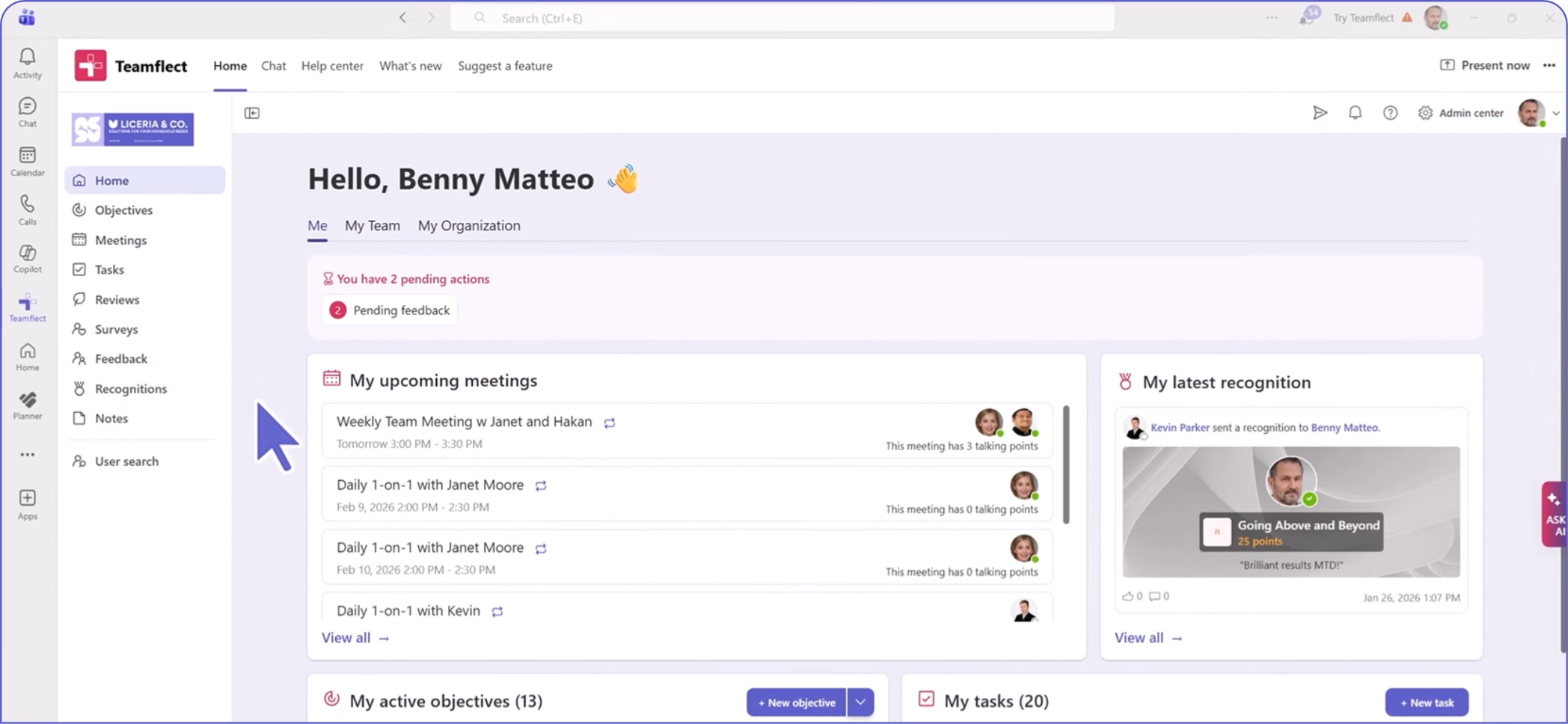
Multi-source input, like a 360-degree feedback approach, gathers perspectives from peers, direct reports, and cross-functional collaborators. This method catches blind spots that single-perspective evaluations miss. Performance management tools with Teams integration, such as Teamflect, make collecting this input straightforward.
Calibration sessions bring managers together to discuss ratings before finalizing them. This practice reduces inconsistency and helps new managers learn evaluation standards. Senior leaders can spot patterns like rating inflation or excessive harshness.
The evaluation meeting matters more than the form itself, as poor delivery can undermine even the best-designed assessment system. To ensure these conversations are productive and accurate, effective planning is crucial.
For instance, an employee appraisal software like Teamflect, which includes continuous feedback capabilities, is valuable because it helps managers document specific examples throughout the year.
Here are other strategic and actionable ways that can help make feedback conversations productive.
Replace "you need to communicate better" with "in the March client meeting, the deadline confusion could have been avoided by sending a follow-up email." Specific examples make feedback credible and actionable.
Start with what's working well before addressing gaps. Employees are more receptive to constructive feedback when they feel their contributions are recognized.
Don't just identify problems. Explain what success looks like going forward and what specific actions will help. "Try scheduling 30-minute check-ins with each team member weekly" gives clearer direction than "improve your management."
Explain why certain behaviors matter. "Your thorough code reviews catch bugs early, which saved the team three days of debugging last month" helps employees understand their contribution.
Evaluations should feel like development discussions, not judgment sessions. Ask questions like "what support do you need to improve in this area?" rather than just delivering verdicts.
Take notes during the conversation and share them afterward. This creates a reference point for future check-ins and ensures both parties remember what was discussed.
End every evaluation with specific actions, timelines, and follow-up dates. Without accountability mechanisms, development plans rarely get executed.

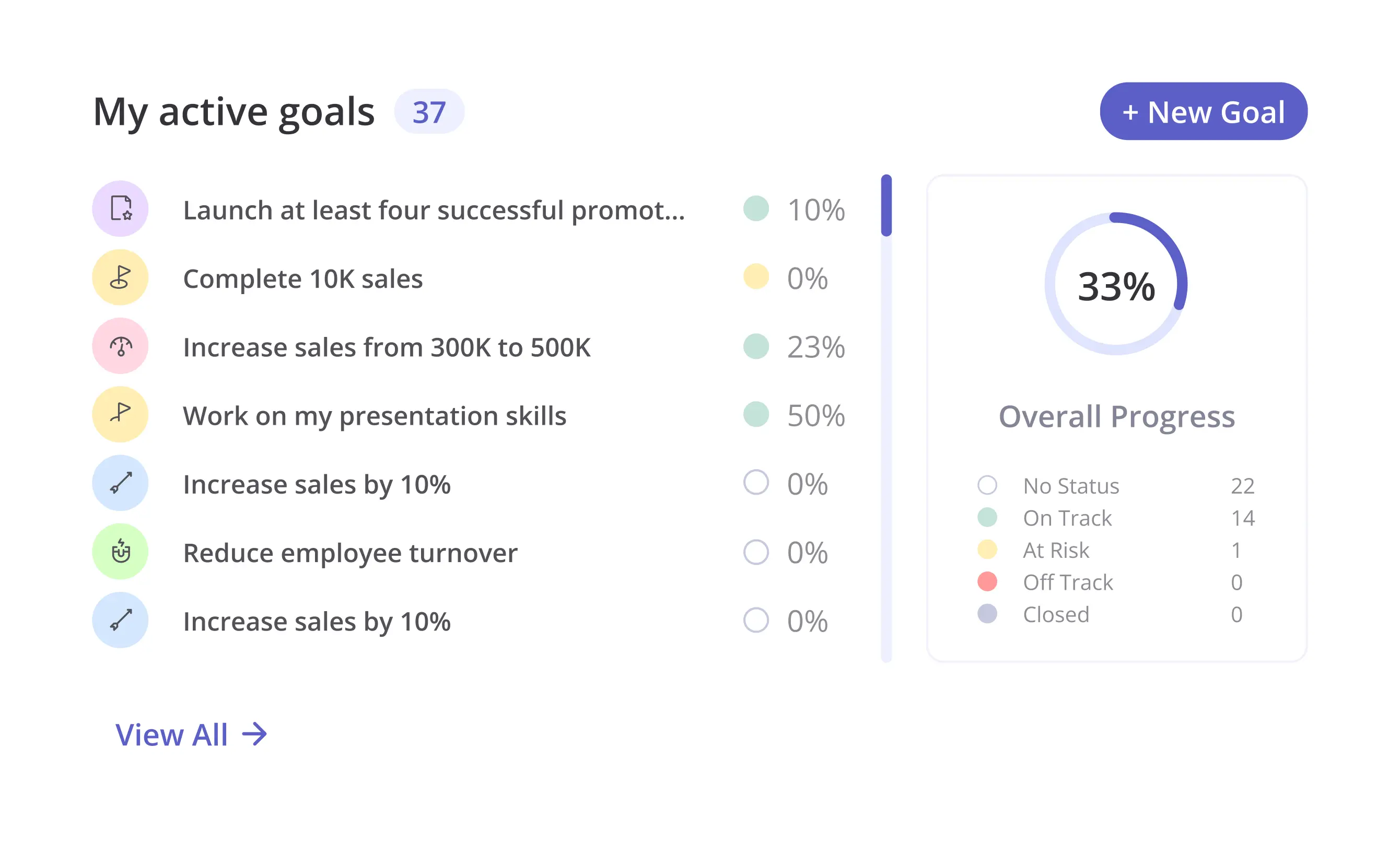
Teamflect brings structure and consistency to the employee performance evaluation process without adding administrative burden. The platform integrates directly into Microsoft Teams, so managers can conduct evaluations where they already work.
The platform's performance management features work together to create a complete evaluation system. You're not juggling separate tools for goal tracking, feedback collection, and formal reviews.
Conduct formal evaluations at least twice yearly, with quarterly check-ins for newer employees or those on development plans. Many organizations are moving toward continuous performance conversations supported by quarterly structured reviews. Annual evaluations alone can't capture fast-changing business priorities or provide timely course correction.
Inconsistent application of standards across managers creates the most perceived unfairness. When two employees with similar performance receive different ratings because their managers interpret criteria differently, trust in the system breaks down. Calibration sessions and clear rating definitions help address this problem.
Yes. Organizations should have a formal process for employees to provide additional context or dispute factual inaccuracies in their evaluation. This doesn't mean employees get to change their rating, but they should be able to add their perspective to the record. Skip-level reviews can help resolve disputes fairly.
Look for consistent high performance across multiple evaluation cycles rather than one exceptional quarter. Track skill development progression and readiness for next-level responsibilities. Multi-source input reveals whether someone is ready for broader influence. Comparing evaluation patterns across potential candidates makes promotion decisions more objective.
Five to seven metrics provide enough coverage without overwhelming the assessment. Too few metrics create blind spots, while too many dilute the focus and make the evaluation feel like a checklist. Include a mix of output-based measurements, quality indicators, and behavioral competencies for a well-rounded assessment.
Pair new managers with experienced ones during evaluation season. Have them observe calibration sessions to see how senior leaders discuss ratings and evidence. Provide training on common biases like halo effect and recency bias. Most importantly, require new managers to document specific examples throughout the year rather than relying on memory during review time.
Focus on outputs and observable behaviors rather than presence or activity. Use structured assessment criteria that don't favor office-based workers. Collect multi-source input to capture contributions that remote managers might miss. Schedule regular check-ins throughout the year, so evaluations aren't based on limited visibility.
Include both. Job performance assessment covers current role responsibilities, but development goals prepare employees for future opportunities. Many organizations split evaluations into "performance" and "potential" sections. This approach helps identify high performers who are ready for advancement versus solid contributors who excel in their current role.

.svg)
.avif)
Create high-performing and engaged teams - even when people are remote - with our easy-to-use toolkit built for Microsoft Teams