.svg)
.svg)
Performance Management vs Performance Appraisal: Modern Best Practices

Updated on:
January 30, 2026

Prefer Teamflect as your HR source on Google
.svg)

Only 26% of companies say their performance management systems are actually effective. That means roughly 3 in 4 organizations are running processes that don't work, often because they've confused performance management with performance appraisal and built everything around the wrong one.
This article breaks down what separates the two, where most organizations go wrong, and what modern best practices look like for each.
This process involves regular coaching conversations, goal tracking, continuous feedback loops, and development planning throughout the year. Yet 59% of managers and employees report seeing little value in their current performance management processes, showing that many organizations still treat performance as a paperwork exercise rather than a continuous system.
To further understand the distinction, here are the core elements of effective performance management:
The distinction between performance management and performance appraisal starts here. Management is the entire system supporting employee growth. Appraisal is just one event within that system.
Organizations typically conduct these reviews annually or semi-annually to assess achievements, identify gaps, and make compensation decisions. At the same time, more than 9 in 10 managers are dissatisfied with how their companies conduct annual performance reviews, and almost as many HR professionals share that concern, signaling that traditional appraisals alone are not working.
Standard components of performance appraisals include:
Performance appraisal serves specific organizational needs around documentation, compensation, and talent decisions. The problem emerges when companies treat appraisal as their entire approach to performance management rather than one component within a broader system.
The approaches to performance management and appraisal differ fundamentally in scope, timing, and purpose. This comparison clarifies the structural differences.
Organizations that distinguish between performance management and performance appraisal see better results. They use management practices to develop people and appraisal mechanisms to make informed decisions, rather than expecting one annual review to serve both purposes.
Performance appraisal functions as a formal checkpoint within the broader performance management system. Understanding this relationship prevents the dysfunction that occurs when organizations treat appraisal as the complete system.
A comprehensive performance management system includes goal tracking, continuous feedback, regular check-ins, and development planning. The performance appraisal represents one moment where you document and formalize what has already been discussed throughout the performance cycle.
When appraisal becomes the only performance interaction, employees receive no guidance between review periods.
Organizations that fail to distinguish between performance management and performance appraisal create several problems:
Treating appraisal as your entire performance management approach leads to predictable failures:
A performance management software like Teamflect addresses this by separating ongoing management activities from formal appraisal events, allowing both to serve their distinct purposes effectively.
The traditional approach of relying solely on annual performance appraisals no longer matches how modern work gets done. Several workplace shifts have made continuous performance management necessary rather than optional.

Josh Bersin
"We've moved from a world of 'top-down' performance management to 'continuous performance management' to what I'd call 'team-led or manager-enabled' performance tools."
As the way we work undergoes a fundamental transformation, traditional annual reviews are failing to meet the needs of a fast-paced, distributed workforce. The following factors explain why organizations must move toward a more frequent, coaching-centric model to maintain high performance:
Hybrid and remote work environments eliminate the informal feedback that used to happen naturally in offices. Employees working from different locations need explicit, regular input to stay aligned with expectations. The physical distance makes coaching conversations more important, not less, as managers must be intentional about bridging the gap created by the lack of face-to-face interaction.
Faster business cycles require quicker performance adjustments. When organizational priorities shift quarterly or even monthly, annual appraisals cannot provide the feedback cadence needed to keep employees focused on the right work. The gap between strategy changes and performance discussions creates misalignment that can stall progress for months.
Skills-based development has replaced tenure-based progression in many industries. Employees need continuous feedback on capability development, not just yearly ratings. Performance management must support ongoing employee growth, acting as a forward-looking guide, rather than simply documenting what already happened in the past.
Retention pressure makes development a competitive advantage. Talented employees leave organizations that offer minimal coaching and unclear growth paths. Regular performance insights and manager enablement provide the clarity and development planning that modern professionals expect from their employers.
Your organization likely needs continuous performance management if:
These patterns indicate that the difference between performance management and performance appraisal has become a problem. The appraisal event alone cannot carry the weight of all performance activities.
Despite the shift toward continuous performance management, formal appraisals remain valuable for specific organizational needs. The key is positioning appraisal as one tool within the broader system, not the entire system itself.
In specific organizational contexts, these documented evaluations remain a core component of effective management:
Compliance and documentation requirements often mandate formal performance records. Regulated industries, government agencies, and unionized environments need documented evaluations that follow consistent evaluation criteria. The appraisal creates an official record that informal feedback cannot replace.
Compensation calibration requires structured comparison across employees. Organizations distributing limited salary increase budgets need a systematic way to allocate rewards. Annual or biannual appraisals provide the framework for making these decisions fairly and transparently.
Promotion decisions benefit from documented performance history. When considering employees for advancement, leaders need evidence of sustained performance over time. Appraisals create that evidence trail when conducted consistently.
Talent review processes use appraisal data to identify high performers and development needs across the organization. These organizational assessments require standardized performance insights that informal feedback alone cannot provide.
Legal protection in employment disputes depends on documented performance issues. If termination becomes necessary, formal appraisals demonstrate that the employee received clear feedback and opportunity to improve. This accountability framework protects both the organization and the employee.
Performance appraisal works best when it formalizes what has already been discussed through ongoing feedback. The review confirms and documents performance trends rather than revealing them for the first time. This approach maintains the value of formal evaluation while avoiding the surprises and resentment that come from appraisal-only models.
Organizations using performance management software can automate much of the appraisal process by aggregating feedback, goals, and check-in notes throughout the year, making the formal review a summary rather than a discovery process.
Organizations moving beyond appraisal-only approaches need a clear picture of what comprehensive performance management actually requires. The modern model balances structure with flexibility and combines multiple elements into a coherent system.
By integrating the following elements, organizations can transform performance management from a yearly burden into a practical tool for success.
Goals and objectives tied directly to organizational strategy provide direction. Employees understand what to accomplish and why it matters. These goals get updated as priorities shift rather than remaining static throughout the year. Goal tracking happens continuously, not just at review time.
Continuous feedback replaces the waiting-until-appraisal approach. Managers provide input when it is relevant, allowing employees to adjust their approach while work is still in progress. This feedback cadence prevents the surprise ratings that damage trust and engagement.
Regular check-ins create dedicated time for coaching conversations. These meetings happen weekly, biweekly, or monthly depending on role complexity and employee experience. The consistency matters more than the frequency. Each check-in builds on previous conversations rather than starting fresh.
Development planning identifies skills employees need to build and creates paths to acquire them. This planning happens throughout the performance cycle, not just during annual reviews. Employees receive support for growth rather than just evaluation of current capability.
Performance insights from multiple sources inform better decisions. Manager observations combine with self-assessments, peer feedback, and objective metrics. This comprehensive view reduces bias and blind spots that occur when managers evaluate alone.
Analytics and reporting show patterns across teams and the organization. Leaders can identify which managers need coaching support, which teams face alignment issues, and where development investments should go. These performance insights drive systemic improvements.
The shift from old to modern practices requires both process changes and technology support. A performance review software like Teamflect enables this transition by making continuous feedback and goal tracking as easy as traditional annual reviews, while maintaining the formal appraisal capability organizations still need.
Organizations that fail to distinguish between performance management and performance appraisal make predictable errors that undermine both employee development and business results.
The underlying error in all these mistakes is confusing the periodic appraisal event with the continuous management system. Organizations need both, but they serve different purposes. The appraisal documents and formalizes what continuous management has already addressed.
A performance management software like Teamflect helps prevent these mistakes by creating structure for ongoing activities while maintaining the formal appraisal process.
When managers have tools that make continuous feedback easy, they stop treating appraisals as their only chance to communicate about performance.
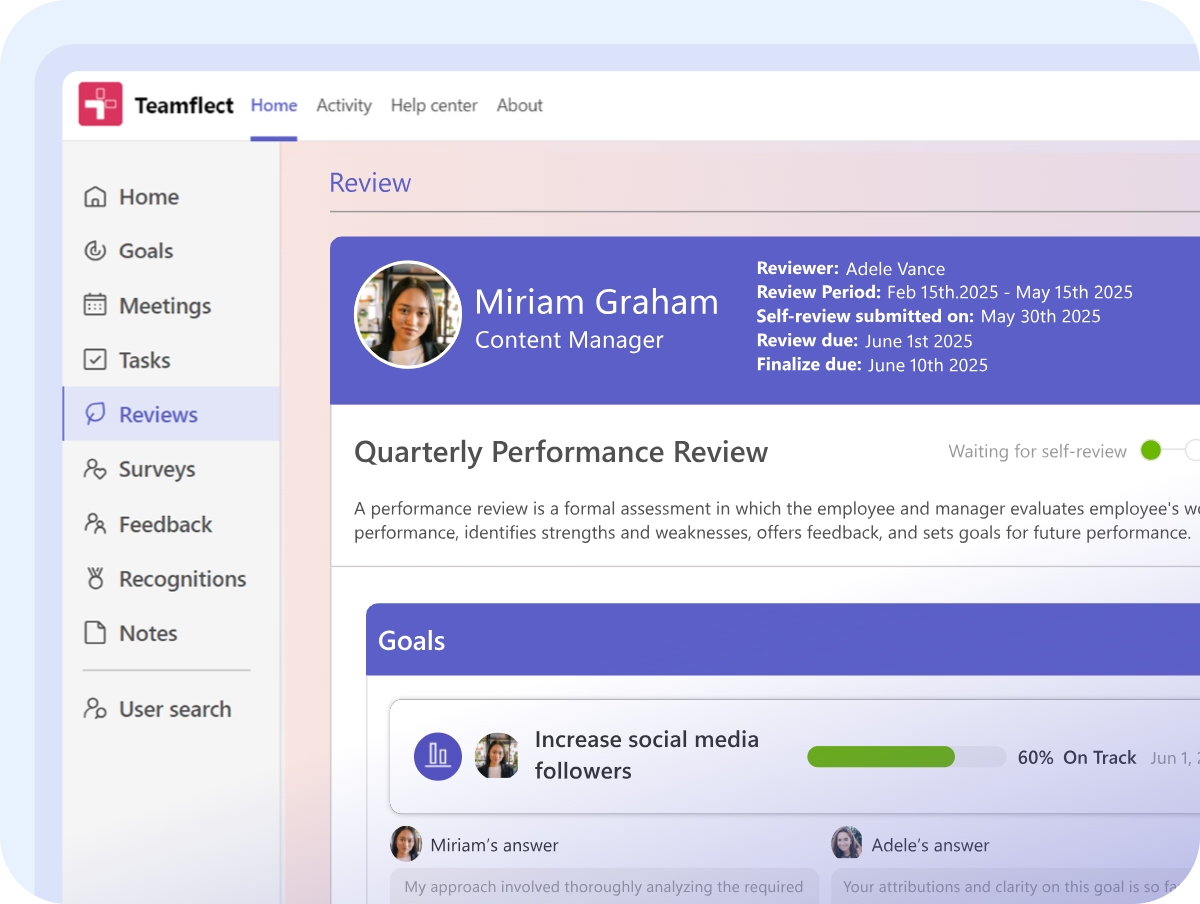
Teamflect provides a comprehensive performance management solution that distinguishes between ongoing management activities and formal appraisal events, addressing the core difference between performance management and performance appraisal.
Teamflect recognizes that organizations need both continuous performance management and periodic formal appraisals. It serves both needs without forcing you to choose between them or confusing them as the same thing.

Performance appraisal is one component within the broader performance management system, not a separate process. Think of performance management as the continuous system that includes goal setting, feedback, coaching conversations, and development planning. The appraisal represents a formal checkpoint where you document and evaluate what has been managed continuously throughout the performance cycle.
Organizations can conduct appraisals without continuous performance management, but this approach creates significant problems. Employees receive no feedback between formal reviews, making improvement impossible. Managers document performance at a single point in time rather than tracking progress.
The result is typically surprise ratings, low trust, and missed opportunities for employee growth. Appraisals work best as documentation of ongoing management, not as the only performance interaction.
Modern work moves too quickly for annual feedback to remain relevant. Business priorities shift faster than yearly review cycles allow. Hybrid and remote environments require more explicit communication, not less.
Employees expect continuous development support rather than waiting months for input. The review frequency of appraisal-only systems cannot match the speed of current business operations or meet employee expectations for coaching conversations and clear goal alignment.
Performance management is continuous, not periodic. Feedback should occur in real-time when relevant to current work. Check-ins typically happen weekly, biweekly, or monthly depending on role complexity and employee experience level.
Goal tracking and updates occur whenever priorities shift. Development planning happens throughout the year as needs emerge. Formal appraisals may occur annually or semi-annually, but the surrounding management activities must be ongoing to be effective.
Yes, formal appraisals serve distinct purposes that continuous feedback alone cannot fulfill. Appraisals create official documentation for compliance, legal protection, and organizational records. They provide structured moments for comprehensive evaluation using consistent evaluation criteria across employees.
Appraisals also enable compensation calibration and talent review processes that require standardized assessment. The key is positioning appraisal as one tool within continuous performance management rather than the entire system itself.

.svg)
.avif)
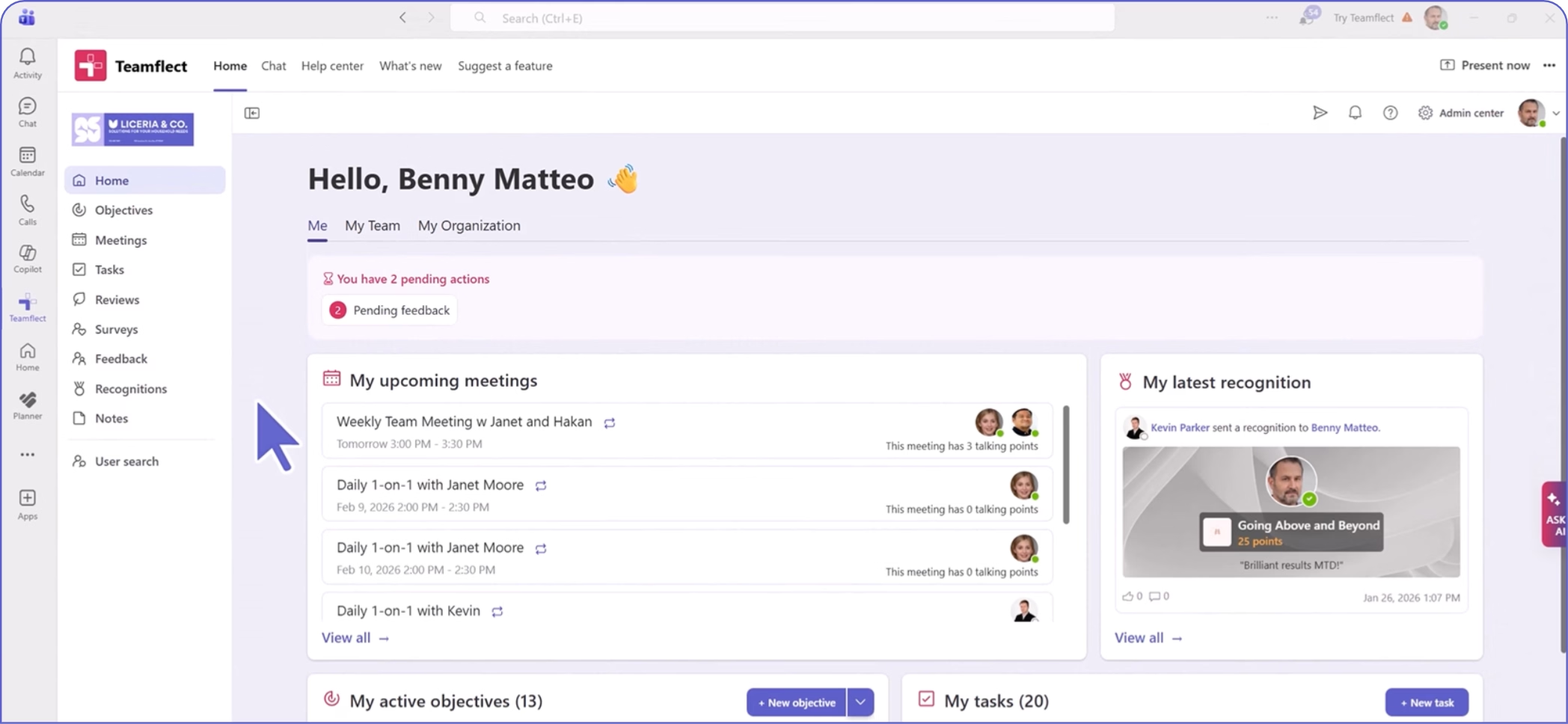
Create high-performing and engaged teams - even when people are remote - with our easy-to-use toolkit built for Microsoft Teams