Performance reviews can be tricky, especially when you're trying to summarize a year's worth of work into a few lines. A well-crafted performance review summary helps both employees and managers understand what's working well, what needs adjustment, and the next steps to take.
In this guide, we've put together 82 performance review summary examples covering different aspects of work, from key achievements and leadership strengths to mid-year check-ins and year-end evaluations.
These examples will help you highlight what employees are excelling in and where they might need more support, making it easier to address issues and build a career development plan.
5 Essential Tips for Writing Performance Review Summary Examples
Drafting the perfect evaluation requires more than just a list of tasks; it requires a narrative that balances results with professional growth. As we move through 2026, the stakes for clear communication are higher than ever. Whether you are a manager looking to inspire or an employee documenting your own wins, keep these strategies in mind:
- Quantify the Impact: Whenever possible, use percentages, dollar amounts, or timeframes. Saying "increased efficiency" is good, but "increased efficiency by 15% over Q3" is undeniable.
- Contextualize with Industry Data: Grounding your reviews in data isn't just a best practice—it's a retention strategy. According to Gartner, organizations that successfully embed performance culture into daily work can see up to a 34% increase in employee performance.
- Pair Strengths with Growth: Use the "Next Steps" approach. For every strength identified, suggest a way to leverage that skill into a new challenge or leadership opportunity.
- Maintain Objectivity: Focus on behaviors and outcomes rather than personality traits. Use "The employee missed three project deadlines" instead of "The employee is disorganized."
- Focus on the Future: Always conclude with a forward-looking statement. The best reviews don't just look at where the employee has been, but where they are going next.
Performance Summary Examples About Key Achievements
Key achievements are all about celebrating successes and hitting targets. To keep things transparent, back up your summaries with solid data.
Here's a simple formula to follow: describe the action, then the result.
This approach is useful for employees preparing self-evaluation examples as well as professionals conducting performance reviews.
Below are examples that illustrate this approach effectively:
- Delivered Project X on schedule, increasing client satisfaction by 20%.
- Implemented a new workflow system, cutting project turnaround time by 30%.
- Consistently exceeded sales targets by 15%.
- Rolled out a training program with the L&D team, enhancing team productivity by 25%.
- Led a cross-departmental project that significantly contributed to organization profitability.
- Received positive feedback from clients for service on three major accounts.
- Successfully negotiated a client contract that improved profit margins by 12%.
- Developed and launched a new feature, boosting user engagement by 40%.
- Streamlined the onboarding process, reducing training time by 20%.
- Managed a key project that improved customer satisfaction.
Employee Strengths and Weaknesses
This section focuses on what's going well and where there's room for growth. A balanced review should include examples that showcase both employee strengths and areas for improvement at work.
Emphasizing achievements supports a culture of recognition, reinforcing positive contributions. At the same time, addressing areas for growth helps set clear goals, ensuring employees are guided toward continuous improvement and alignment with organizational objectives.
- You excel at teamwork; developing more independent decision-making skills could complement your role.
- Your attention to detail is impressive. Improving time management would boost your efficiency.
- Your strategic planning skills are strong; polishing your presentation delivery could better showcase your strategies.
- You're a proactive team leader; improving conflict resolution skills could strengthen your leadership even further.
- Your problem-solving abilities are impressive; focusing on project management could take you further.
- Clients appreciate your service, and you handle client relations well. Building resilience could be your next step.
- Your analytics skills are outstanding; diving deeper into big data could advance your career even more.
- Your creative solutions are outstanding; focusing on implementation could make them even more effective.
- Your enthusiasm for new projects is admirable; improving project documentation would help keep everything on track.
- Your technical skills are solid; working on your communication could help convey complex ideas more clearly.
Performance Review Summary Examples for Managers
Performance reviews are crucial for managers just as they are for employees. These evaluations provide a structured opportunity to assess and enhance managerial effectiveness.
They help organizations determine how well managers are meeting goals, driving business results, and offer insights on how to be a more effective manager.
- Manages team conflicts effectively but could benefit from more proactive conflict prevention strategies.
- Sets ambitious goals; providing more detailed milestones could help meet them on time.
- Needs to give more timely feedback to keep the team on track.
- Adapts well to changing priorities; strengthening backup plans could improve team stability.
- Excels in strategic vision; getting more hands-on with daily team operations could enhance outcomes.
- Shows strong decision-making skills; incorporating more data-driven approaches could lead to better results.
- Provides clear direction and support; focusing on empowering team members could improve delegation.
- Manages resources effectively; setting more realistic deadlines could avoid last-minute stress.
- Demonstrates excellent problem-solving; enhancing the ability to foresee potential issues could strengthen team performance.
- Exhibits strong leadership; increasing individual engagement could boost overall morale.
Year-End and Annual Performance Review Summary Examples
Year-end and annual reviews are a pivotal opportunity to recognize the major accomplishments and contributions made over the past year. They offer a chance to reflect on goals achieved, showcasing how individual efforts have driven team success and supported organizational objectives.
Condensing an entire year's worth of performance into a single review summary is a challenging task. Below are 12 examples covering both strong performers and employees with room to grow.
- Managed multiple key projects simultaneously, completing them on time and within budget, delivering a measurable boost to team productivity.
- Enhanced the project tracking process, cutting delays and streamlining team operations.
- Coordinated resources and schedules for major projects, resulting in cost savings and improved efficiency.
- Successfully led the implementation of a new CRM system, improving team collaboration and data management.
- Optimized the workflow process, reducing overhead costs by 15%.
- Managed a team of 10, achieving all project milestones on time and within budget.
- Over the past year, this employee has consistently delivered outstanding results, demonstrating exceptional commitment and expertise in their role. Their contributions have significantly strengthened the team's performance, and their proactive approach continues to drive positive outcomes.
- Throughout the year, they have embraced challenges, adapted to change with ease, and demonstrated a strong ability to solve problems effectively. Their dedication to continuous improvement has not only enhanced their own growth but has also benefited the entire organization.
- Over the past year, this employee has delivered solid work but could further enhance their impact by taking more initiative. Proactively identifying opportunities for growth and contributing beyond assigned tasks will strengthen their overall performance.
- This review highlights the need for improved time management, as delays in meeting deadlines have occasionally affected project timelines. Strengthening prioritization skills and better workload organization will lead to more consistent efficiency going forward.
- Over the last twelve months, they have shown dedication to their work. However, they tend to rely too heavily on direct guidance. Developing stronger problem-solving skills and approaching challenges independently will enhance their professional development.
- Looking back at the past year, they have demonstrated diligence but often hesitate when making decisions. Building confidence in independent decision-making will help them advance in their role and take on more responsibility.
Mid-Year Performance Review Summary Examples
Mid-year reviews are a valuable way to get people back on track and ensure everyone is on the right path to achieving their objectives. A mid-year review guide with clear best practices can help you navigate this process effectively.
- Led the launch of a new product line, managing timelines and resources to achieve sales targets two months early.
- Adopted a new project management tool that increased team collaboration and accelerated task completion.
- Handled tight deadlines impressively, keeping all projects on track without compromising quality.
- Restructured the team's workflow, leading to a 20% increase in project completion rates.
- Coordinated a smooth transition to remote work, ensuring minimal disruption to ongoing projects.
- Implemented a new digital filing system that improved document retrieval time.
Communication and Teamwork
Assessing communication and teamwork skills focuses on how well individuals collaborate and share information. To illustrate these skills, include examples that show how effective communication contributed to successful project outcomes and team cohesion.
- Consistently shares important information across teams, keeping everyone aligned with regular updates.
- Always ready to assist colleagues, share resources, and help with tasks.
- Encourages idea-sharing during discussions, creating an inclusive atmosphere where everyone feels valued.
- Facilitates productive meetings and coordinates effectively with remote team members.
- Handles team conflicts calmly, maintaining a positive and productive work environment.
- Builds strong relationships by actively listening and addressing colleagues' concerns.
- Proactively communicates project changes, ensuring all team members are informed and prepared.
- Supports a team-oriented culture by recognizing and celebrating others' contributions.
- Mediates conflict with a balanced approach, ensuring fair resolutions and maintaining team harmony.
- Provides clear and constructive feedback, helping team members grow and improve their skills.
Leadership Strengths
Leadership summaries should reflect how well an individual guides, motivates, and supports their team, and the impact they've had on performance and organizational success. For more detailed examples, check out our manager performance review examples.
- Demonstrates exceptional leadership by setting clear goals and providing support, resulting in improved team performance.
- Leads by example, inspiring team members with commitment and work ethic.
- Delegates tasks effectively, empowering team members and contributing to overall success.
- Shows strong decision-making skills with timely, well-considered choices that enhance project outcomes.
- Provides constructive feedback, helping team members develop skills and advance their careers.
- Maintains a positive work environment, fostering collaboration and enthusiasm.
- Exhibits visionary leadership, guiding the team through challenging projects with strategic direction.
- Encourages professional development, providing opportunities and resources for skill enhancement.
- Effectively manages change, guiding the team through transitions with clear communication and support.
- Demonstrates resilience in overcoming obstacles, motivating the team to stay focused and achieve objectives.
Overall Performance Summary Comments
This section offers broader performance summary comments not tied to a single skill category. The first five are positive; the latter five are constructive.
- This employee consistently exceeds expectations, delivering high-quality work ahead of deadlines. Their proactive approach and ability to collaborate effectively have strengthened team performance.
- Their adaptability and problem-solving skills make them a valuable asset. They embrace challenges with a positive attitude and continuously find ways to improve processes.
- A strong communicator, they foster collaboration and ensure smooth teamwork. Their ability to listen actively and provide clear input has resolved conflicts and improved efficiency.
- Highly dependable, they take ownership of their work and meet deadlines consistently. Their attention to detail and strong work ethic set a great example for the team.
- They demonstrate leadership potential by mentoring colleagues and guiding projects successfully. Their ability to motivate others and stay solutions-focused makes them a key contributor.
- While technically skilled, they could take more initiative in driving projects forward. Engaging more proactively and sharing ideas will help maximize their impact.
- Time management improvements are needed to meet deadlines more consistently. Prioritizing tasks and proactively communicating progress will enhance efficiency.
- Their enthusiasm is commendable, but attention to detail needs improvement. Reviewing work carefully before submission will help reduce errors.
- They are hardworking but often rely on direct instructions. Strengthening problem-solving skills and approaching challenges independently will boost their growth.
- While diligent, they hesitate to make decisions without validation. Building confidence in independent decision-making will improve efficiency and professional development.
Positive Performance Comments
"Effective feedback must go beyond a mere checkbox mentality. If we reduce it to a transactional task, we risk delivering input that is imprecise, lacks meaningful direction, and fails to provide actionable insights."
— Jim Link, CHRO, SHRM — Source: SHRM
According to Gallup and Workhuman research, employees who receive meaningful recognition are 45% less likely to leave their jobs. For high performers, promotions, and retention-focused reviews, positive overall comments deserve dedicated, specific language, not just the absence of criticism.
The examples below are designed for situations where the goal is to clearly articulate what outstanding looks like, whether that's for a top performer, a promotion case, or an employee you're invested in retaining.
- This employee is consistently one of the strongest contributors on the team. Their ability to balance quality, speed, and collaboration sets the bar for what high performance looks like in this role.
- Throughout this review period, they have approached every assignment with professionalism and a genuine commitment to results. Their work requires minimal revision and consistently meets the highest standards.
- Their positive influence on team culture is evident. Colleagues frequently cite them as a resource and a motivator, and their presence raises the performance level of those around them.
- They bring both technical depth and strong interpersonal skills to their role, a combination that is genuinely rare. This employee is a clear candidate for increased responsibility.
Feel free to use these examples as they are or tailor them to suit your specific needs. Whether you're drafting year-end summaries, conducting mid-year evaluations, or providing feedback during quarterly check-ins, the goal is always the same: clear, specific, and actionable language that helps employees understand exactly where they stand.
For more on building a strong feedback process, SHRM's guide on conducting performance reviews is a practical starting point.
How to Summarize Performance Reviews?
To write an effective performance review summary, you need to capture the employee's strengths, areas of improvement, and contributions throughout the review period. Follow these steps:
- Step 1: Highlight Strengths and Contributions: Make sure your summary shows the employee that their hard work and positive contributions haven't gone unnoticed.
- Step 2: Address Areas of Improvement: There is always room for growth. Highlight areas of improvement through constructive feedback.
- Step 3: Wrap Up with Future-Focused Statements: Finish your summary by outlining specific ways the employee can build on areas of improvement going forward, as well as make the most of the strengths mentioned at the start.
- Key Factor: While specific examples belong in the actual performance review, make sure your summary uses objective language and data-driven comments.
Using AI to Summarize Performance Reviews
For managers with a large number of direct reports, summarizing reviews can be time-consuming. In a properly conducted performance appraisal, there is a lot of key data to include: goal completion rates, 360-degree feedback, and various performance metrics.
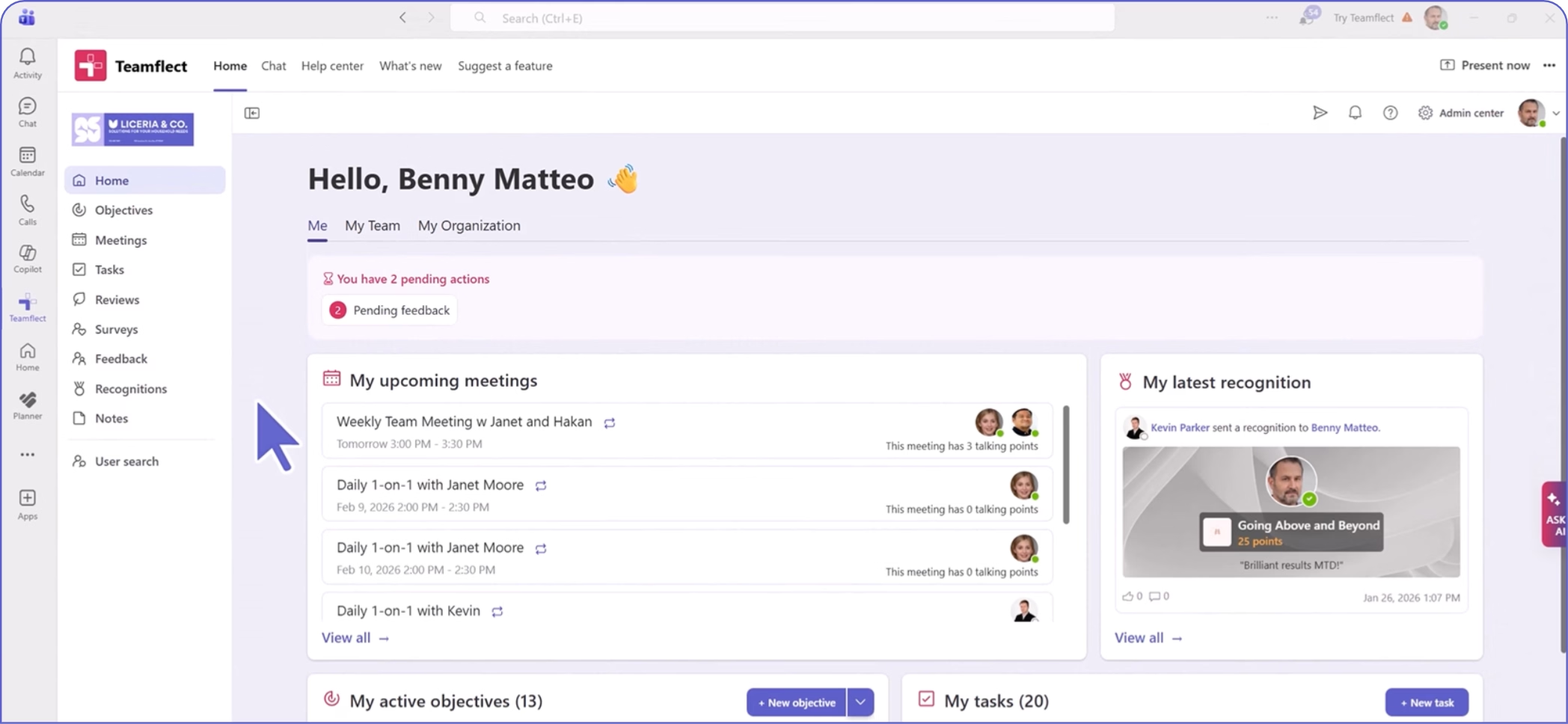
Using the highest-rated performance management software in the Microsoft Teams App Store, you can conduct detailed performance appraisals through customizable templates and analyze results using AI.
Teamflect's built-in AI assistant allows managers to:
- Enhance performance review comments with AI
- Generate insights from multiple reviews at once with AI
- Create development goals for employees with AI
.svg)
.svg)


.svg)



.svg)
.avif)