.svg)
.svg)
Using AI to Improve the Quality of Performance Reviews

Updated on:
December 25, 2025

Prefer Teamflect as your HR source on Google
.svg)

Experts in the field all agree that AI has transformed talent management as we know it. Even with all the uncertainty, the role of AI in talent management should be viewed as supportive, not destructive. According to a Bentley-Gallup Business in Society study,many Americans view AI with caution, with 75% anticipating a decrease in the total number of U.S. jobs over the next decade.
However, AI for performance reviews is not a matter of replacing managers; it's about giving them better tools to write more accurate, fair, and helpful evaluations without spending hours staring at blank screens.
Managers spend anaverage of 210 hours per year on performance reviews. That's more than five full work weeks dedicated to writing evaluations, often with inconsistent results. Lowering this time with the help of AI can greatly reduce manager burnout. Here's why performance review assisted with AI has become essential for modern organizations:
Using AI to write performance reviews handles the initial draft, letting managers focus on adding context and nuance rather than constructing sentences from scratch.
Different managers have different writing styles. Some are naturally detailed while others default to vague statements. AI evaluation writing creates a structured performance reviewframework that maintains standards across departments.
Traditional reviews often contain gendered language or focus on personality rather than performance. Bias-reduction algorithms flag problematic phrasing before it reaches the employee.
Not every manager is a strong writer. AI-assisted wording helps translate observations into clear, actionable feedback that employees can actually use.
AI-generated performance review content includes specific behavior-based examples and measurable outcomes that stand up to scrutiny.
AI scoring models identify patterns across multiple reviews, helping HR spot trends in team performance or management blind spots.
Understanding the boundaries of AI employee performance review technology helps managers use it effectively.
What AI can do:
What AI cannot do:
The line is clear. AI helps with structure and language. Managers provide judgment and context.
Most managers don't need AI to write entire reviews. They need it for specific tasks that eat up time or require expertise they don't have.
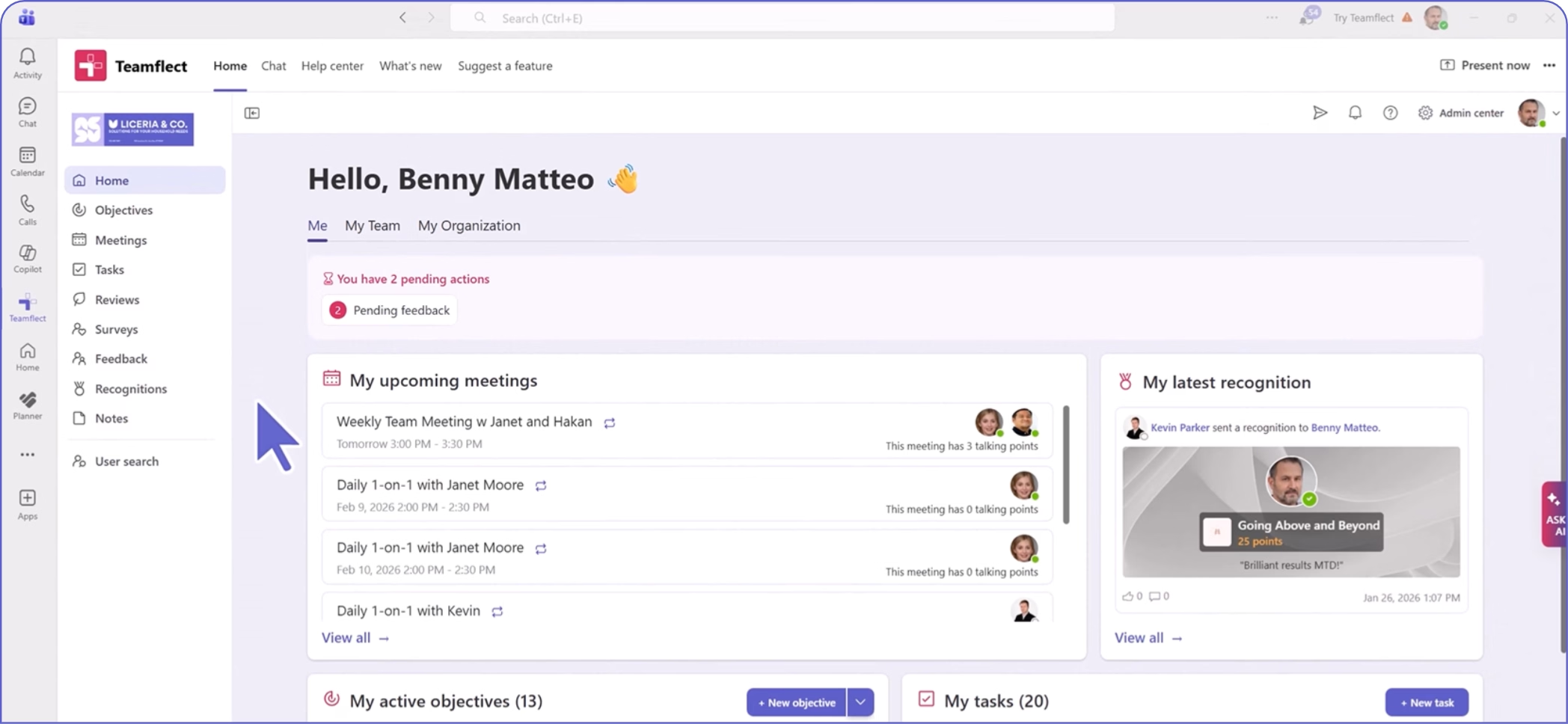
One of the biggest challenges with AI in performance management is context switching. Managers are asked to export data, open external tools, and stitch insights together manually. With Teamflect, AI support is embedded directly into the performance review experience inside Microsoft Teams so preparation, writing, analysis, and follow-up all happen where work already lives.
Here’s how that looks in practice:
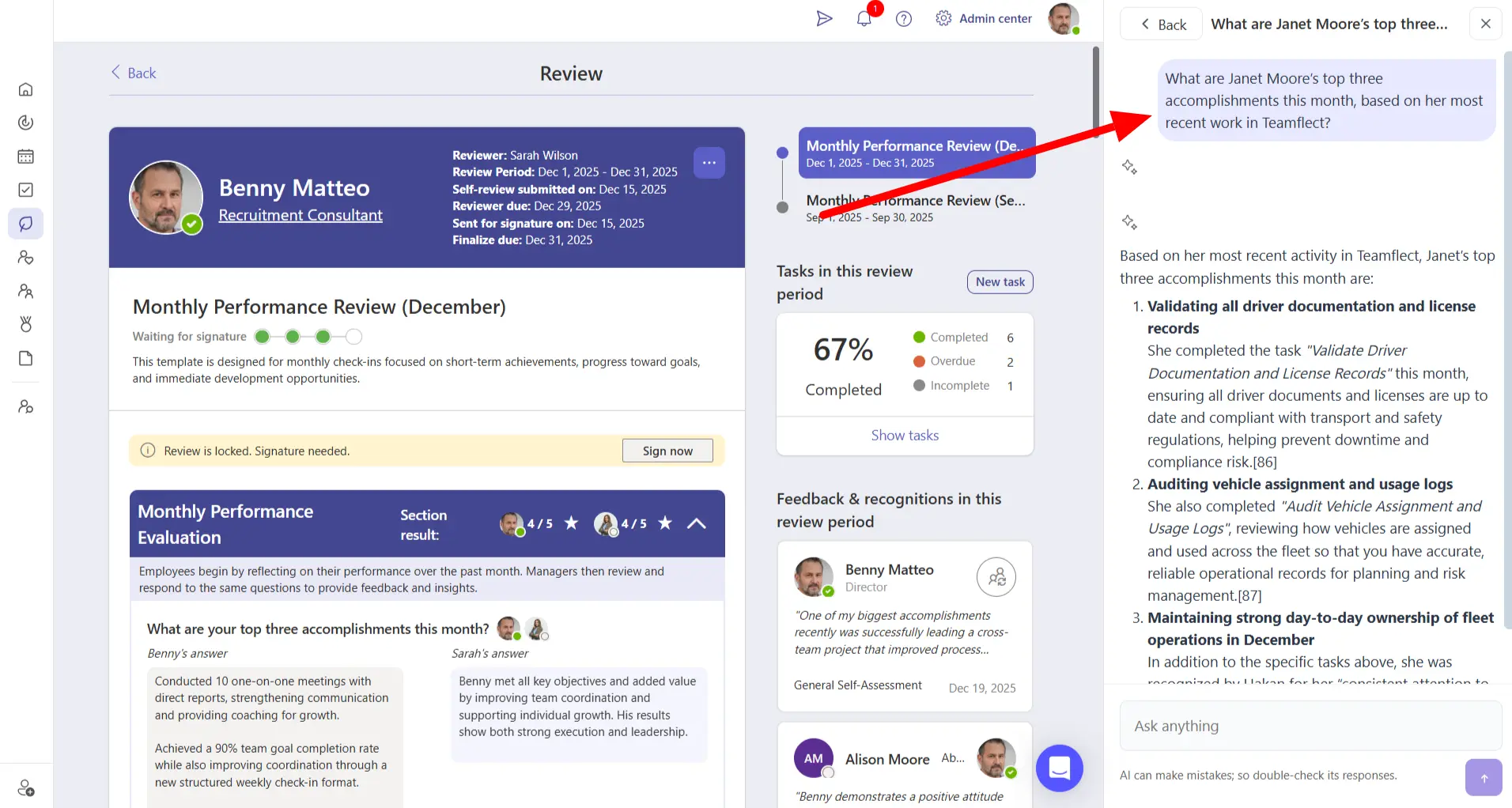
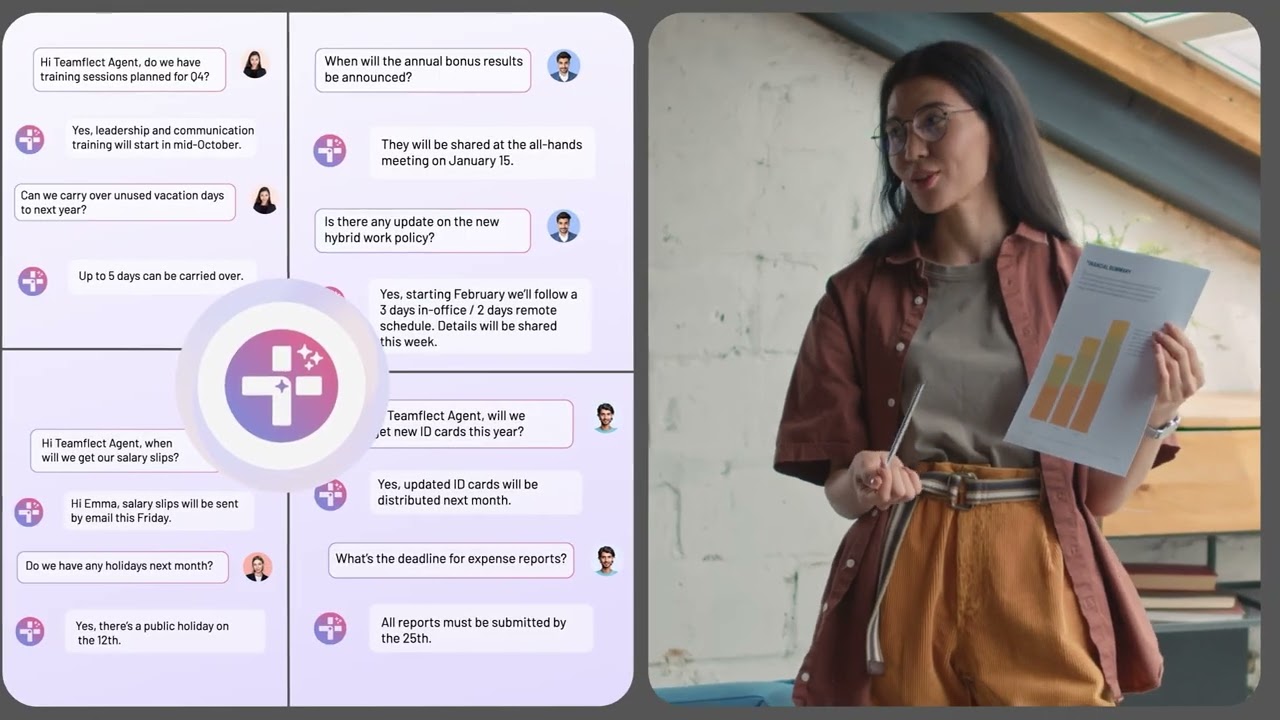
Both managers and employees can start by asking Teamflect Agent, a built-in agentic HR assistant, for help preparing for an upcoming performance appraisal. The agent can surface relevant inputs such as recent goals, completed tasks, feedback from 1-on-1s, and 360 feedback, all within Teams chat. Instead of starting from a blank page, reviewers begin with a clear, structured view of performance history.
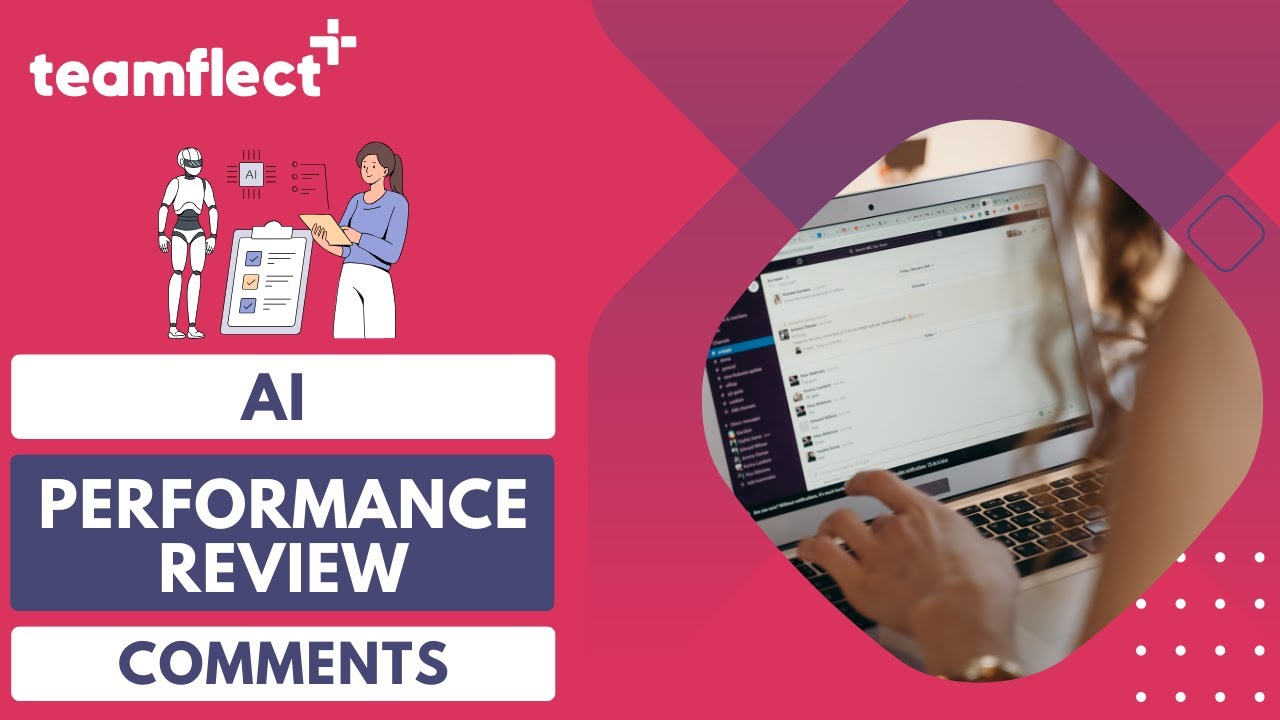
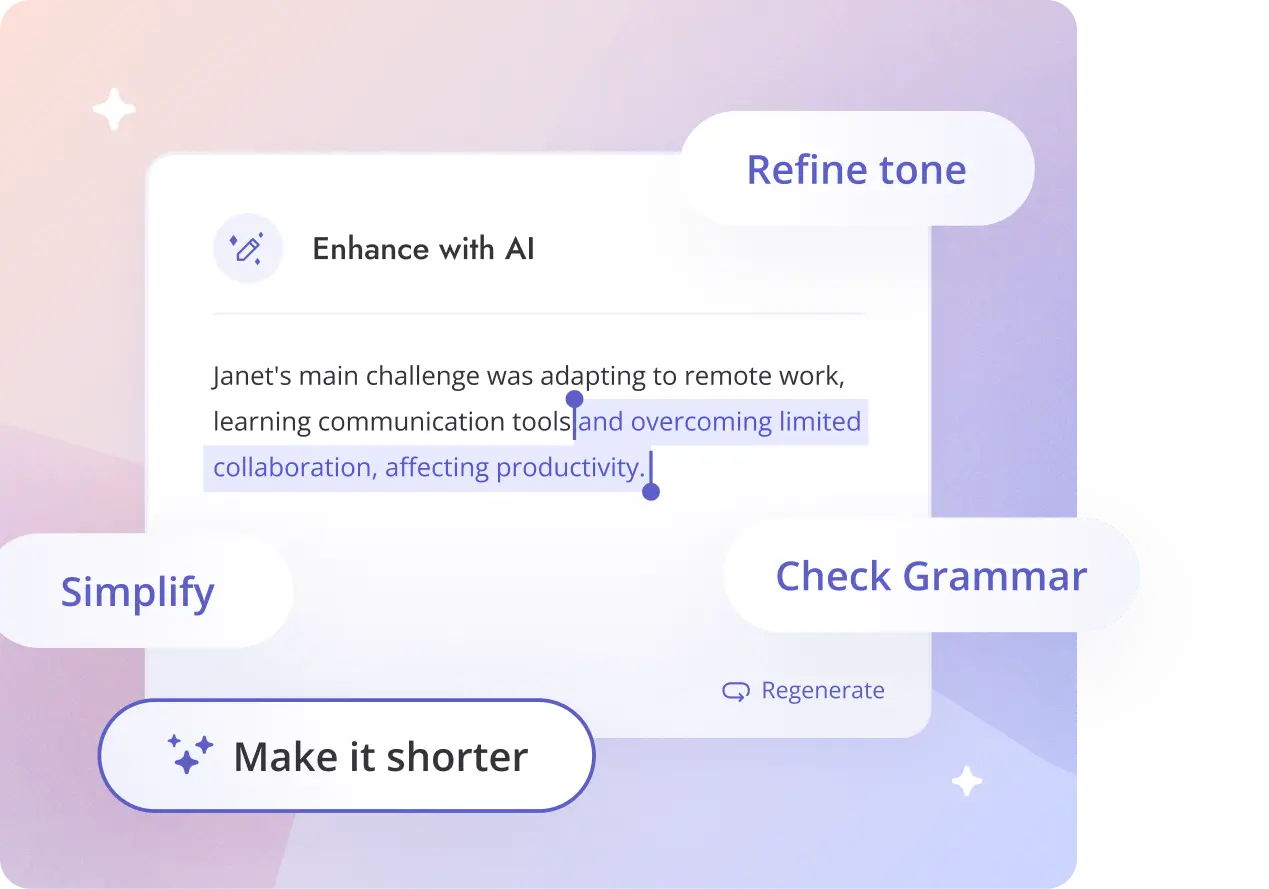
While writing the review, Teamflect’s AI assistance helps refine feedback in real time. Managers can shorten or expand comments, simplify complex language, and check for potentially biased or risky phrasing before submitting. This keeps feedback clear, consistent, and professional, without outsourcing judgment to AI or losing the manager’s voice.
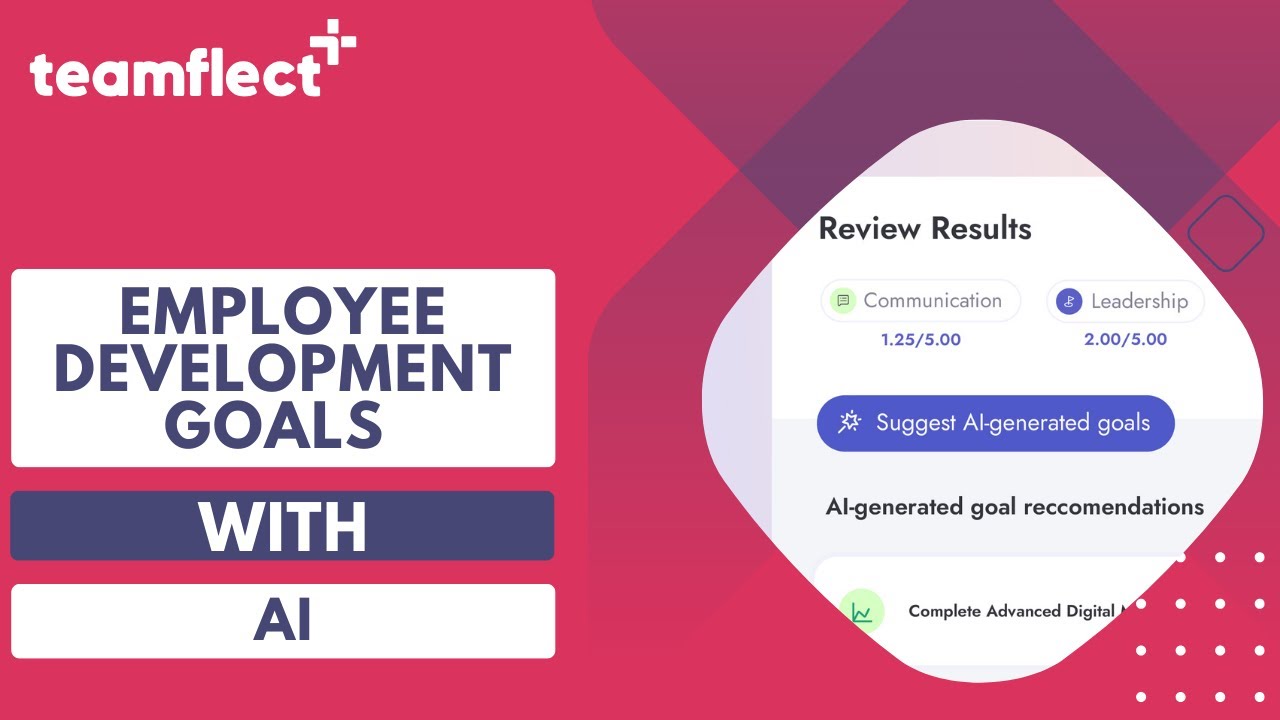
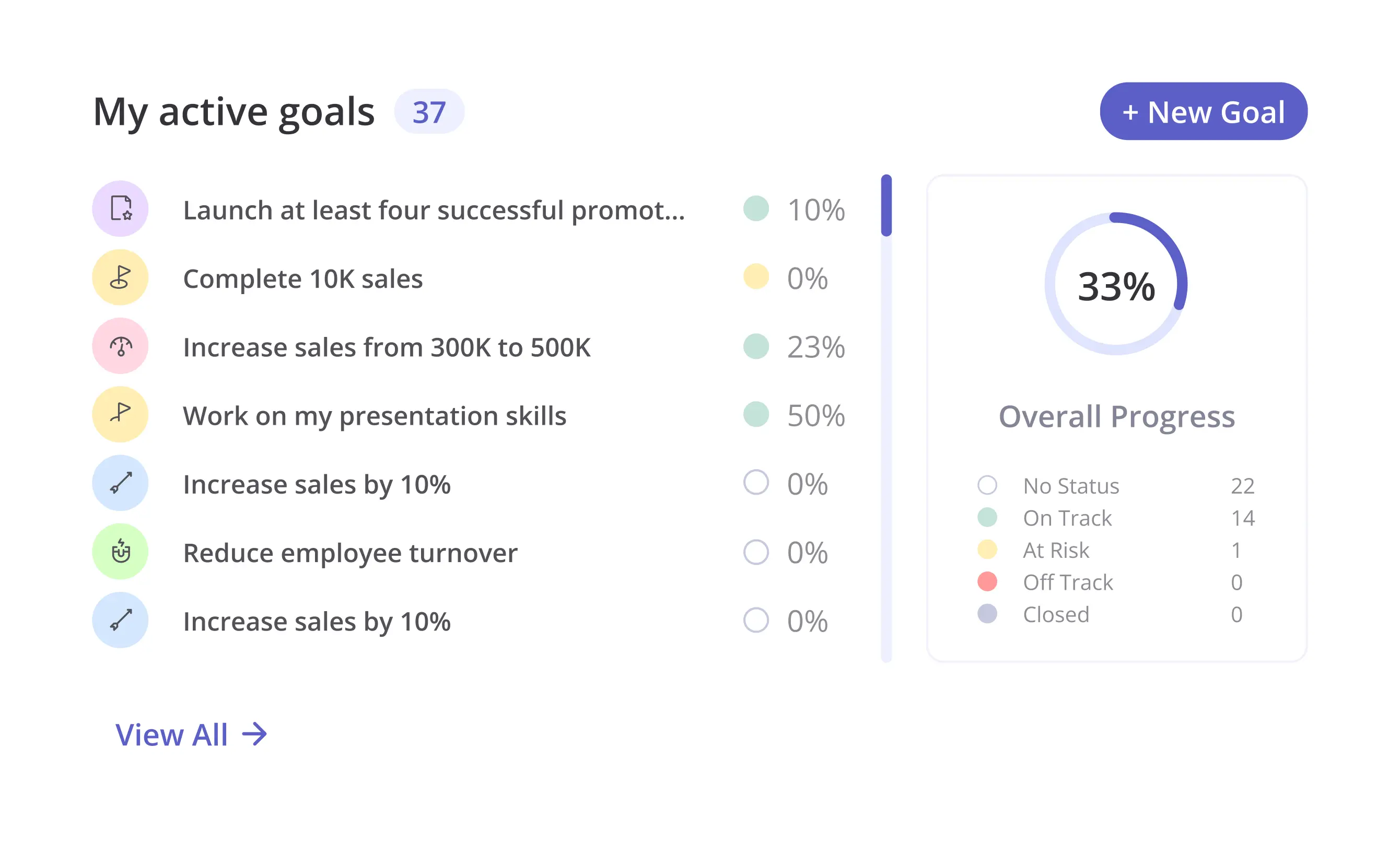
Once reviews are complete, Teamflect can analyze performance review responses, 360 feedback data, and goal completion rates together. Based on identified strengths and gaps, AI suggests relevant, actionable development goals that managers can adjust and assign immediately.
Teamflect users can later connect these development goals with their individual development plans as well.
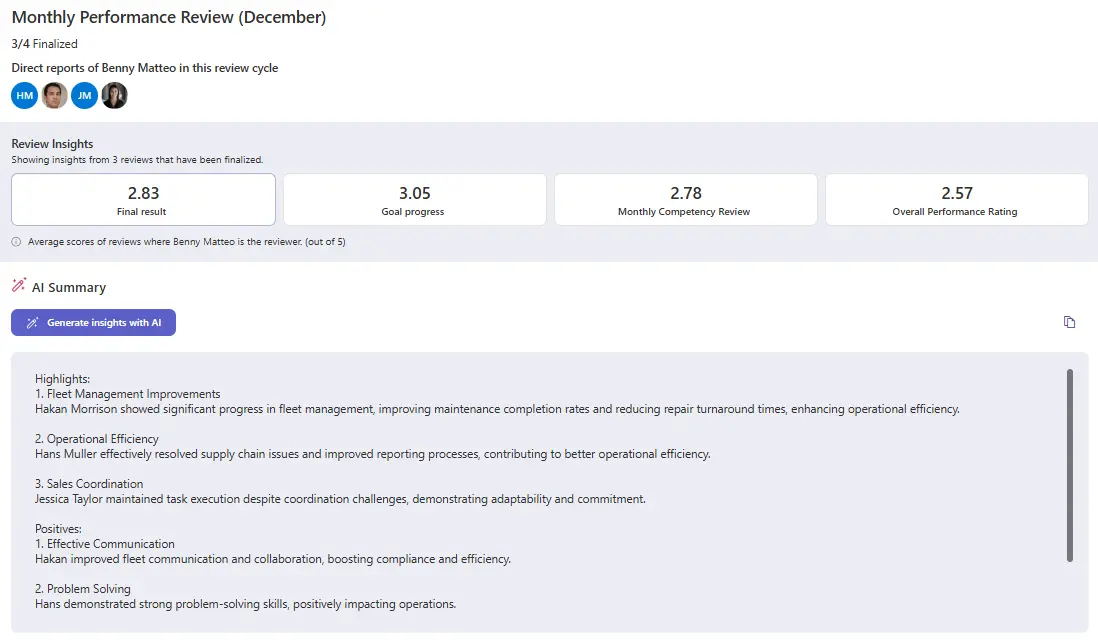
Managers can also step back and look at performance trends across their entire team. Teamflect’s AI helps analyze review outcomes at scale, highlighting patterns, inconsistencies, and areas where ratings or feedback may differ across similar roles.
Would you like to see for yourself?
The difference between helpful AI and useless AI comes down to specificity and manager validation.
Notice the pattern. Good AI output includes numbers, specific actions, measurable outcomes, and clear recommendations. Poor AI output could apply to anyone.
AI isn't perfect and using AI in HR comes with its unique complications. Here's what can go wrong and how to prevent it.
AI trained on vague reviews produces vague output.
Mitigation: Always provide specific data points and examples in your prompts. "Increased sales" becomes "Increased Q2 enterprise sales by 34% while maintaining 95% customer retention."
AI sometimes invents plausible-sounding accomplishments that never happened.
Mitigation: Verify every factual claim against actual records. Never submit an AI-generated review without checking each statement.
If your organization's historical reviews contain bias, AI learns and perpetuates those patterns.
Mitigation: Use bias-reduction algorithms specifically designed to flag problematic language, and have diverse reviewers validate outputs.
Managers who let AI do all the thinking produce robotic reviews that employees immediately recognize as impersonal.
Mitigation: Treat AI as a drafting tool, not a decision-maker. Your voice and judgment should be obvious in the final version.
Feeding performance data into third-party AI tools can violate confidentiality policies.
Mitigation: Only use AI systems that comply with your organization's data governance standards. Many companies require on-premises or enterprise AI solutions.
AI can't judge when feedback needs to be delivered gently or when directness is more appropriate.
Mitigation: Adjust tone manually based on your relationship with the employee and the sensitivity of the feedback.
Below, we've listed all the different types of AI tools available to managers looking to take advantage of AI in performance reviews. However, if you scroll down just enough you will find that all you need is a single tool to take care of all these needs.
General-purpose tools that help draft professional text. These work for reviews but require more manual structuring since they're not built specifically for performance management.
Platforms that collect feedback throughout the year and use AI to synthesize it during review time. These provide richer context than annual-only systems.
Systems that analyze performance gaps and suggest specific, measurable development objectives. Particularly useful for creating actionableimprovement plans.
AI that processes multiple feedback sources (peer reviews, self-assessments, manager notes) and creates a coherent summary. Saves hours of manual consolidation.
Teamflect addresses the most common challenges of AI-powered performance reviews through structured workflows and intelligent automation.
AI makes performance reviews faster and more consistent, but it works best when integrated into a complete performance management system.
Yes, but with caveats. AI can draft reviews, but the manager remains legally responsible for the content. Courts and regulatory bodies hold the person who signs the review accountable, not the tool that helped write it. Always review AI-generated content for accuracy and appropriateness before submission.
It depends on implementation. AI trained on biased historical data will replicate those biases. However, AI specifically designed with bias-reduction algorithms can flag gendered language, vague personality assessments, and inconsistent standards that human reviewers miss. The key is using AI as a check, not as the sole author.
No. AI can't understand context, interpret subtle behaviors, or make judgment calls about readiness for advancement. It's excellent at structure, language, and pattern recognition. It's terrible at nuance, empathy, and strategic decision-making. Think of AI as a drafting assistant, not a substitute manager.
There's no magic percentage, but best practice suggests AI should handle structure and initial language while managers provide specific examples, context, and final judgment. If an employee can tell your review was entirely AI-written, you've gone too far. The review should sound like you, even if AI helped you write it.
Most organizations allow it as long as the employee verifies accuracy and adds personal context. AI helps employees articulate accomplishments professionally, which is especially valuable for those who struggle with self-promotion. The ethical line is claiming credit for achievements that didn't happen or letting AI invent accomplishments.
Data privacy tops the list. Performance reviews contain sensitive information that shouldn't leave your organization's control. Compliance with employment law is second since AI might generate legally problematic language. Third is consistency since managers using AI in different ways creates new fairness issues. Address these through clear policies on approved tools and required human review, and get a sense of how ready your HR team is for AI before rolling it out to every manager.

.svg)
.avif)
Create high-performing and engaged teams - even when people are remote - with our easy-to-use toolkit built for Microsoft Teams