We know for a fact that a poorly written performance review comment can be the reason an employee underperforms in the next period, or worse, leaves the organization completely. Research shows that only about one in four employees strongly agree they receive valuable feedback from the people they work with, and those who do are five times as likely to be engaged, 57% less likely to be burned out, and 48% less likely to be looking for another job.
While we are aware of the fact that today, anyone can generate performance review comments and phrases with LLMs, we still decided to create a fully updated list of performance review phrases for various scenarios. Why?
Because this isn't just a list of generic pleasantries and feedback examples. Our team has spent years contacting experts from the world of performance management and HR, discussing feedback and performance review best practices with industry giants such as:
Steve Cadigan - LinkedIn's First Chief People Officer
Anna Wildman - Inventor of the CEDAR Feedback Model
Mindy Honcoop - Founder of Agile in HR
And many more. We meticulously crafted this list of performance review phrases based on all the insights and best practices we derived from those conversations. We also ran all the categories by our internal HR department and asked them to offer their pro-tips on how each category should be evaluated.
While the sample phrases on this list can simply be used as they are, what we recommend is that you make adjustments based on examples from real cases and occurrences from that employee's performance through the review period as well as the performance rating scales you are using. We hope that the examples you find in this list will help you in your performance management process:
📚 Recommended Reading: We Tested & Reviewed 10 of the Best Performance Review Software of 2026
People decide whether they're going to accept that feedback based on whether they like you, whether they trust you... First, they decide what they think about you. And then they'll decide what they think about the feedback.
— Anna Wildman · Creator of the CEDAR Feedback Model
Quality of Work
Exceptional Performance (4.5-5.0 Rating)
"Your work consistently exceeds our highest quality standards, serving as a benchmark for the entire team. The attention to detail in your Q3 project deliverables was particularly impressive, with zero revisions needed across all 15 submissions."
"You demonstrate mastery in your craft, producing work that not only meets immediate needs but anticipates future requirements. Your proactive approach to quality assurance has prevented numerous potential issues."
"The exceptional quality of your work has directly contributed to three major clients wins this quarter. Your ability to translate complex requirements into flawless execution sets you apart."
Above Average Performance (3.5-4.4 Rating)
"The work you deliver is consistently at a very high quality. This not only reflects well on your performance and benefits the organization but also sets a high standard for your teammates."
"You pay great attention to detail. We've noticed that your work is always crisp, accurate and free from errors."
"This review period, you've demonstrated a strong commitment to excellence, regularly going above and beyond to produce outstanding results."
Meets Expectations (3.0-3.4 Rating)
"You consistently meet the quality standards required for your role. Your work is reliable and completed according to specifications."
"Your deliverables meet our quality expectations. With some additional attention to detail, particularly in final reviews, you could elevate your work to the next level."
"You produce work that fulfills requirements and meets deadlines. Incorporating peer feedback more systematically could help enhance your output quality."
Needs Improvement (2.0-2.9 Rating)
"While you meet basic quality requirements, there's significant room for improvement. Let's work together on a development plan to strengthen your attention to detail and technical skills."
"You could benefit from dedicating more time to reviewing your work to ensure it meets the expected quality standards. I've noticed errors in 30% of submissions that could be caught with careful review."
"Your work sometimes requires multiple revisions to meet our quality standards. I recommend using our quality checklist before submitting deliverables to reduce rework."
"The quality of your work requires immediate improvement to meet minimum standards. We need to create an improvement plan with specific milestones and additional training support."
"Multiple stakeholders have raised concerns about work quality, specifically regarding accuracy and completeness. This is impacting team productivity and client satisfaction."
"Your current work quality does not meet the requirements of your role. We'll need to see significant improvement within the next 30 days, starting with the specific areas outlined in your performance improvement plan."
Pro Tip from Our HR Team
Start with the paper trail. Before we draft a single comment in our own reviews, we pull up the goals, feedback, and 1-on-1 notes logged during the period. Comments built on documented examples take half the time and hold up far better in calibration.
— Teamflect HR Team
Overall Performance Comments
From The Team Check-In Podcast
Great feedback conversations are just as much about what's going well. And asking a team member, how did you do this?... not just saying, hey, great job you did there.
— Anna Wildman · Creator of the CEDAR Feedback Model
Positive Overall Performance Review Phrases:
"You have exceeded expectations in your role and demonstrated exceptional performance alongside a strong commitment to our organization's goals."
"You show remarkable dedication and enthusiasm for your work, consistently delivering high-quality results."
"You are a reliable and valued team member who regularly contributes innovative ideas and solutions."
"You exhibit excellent leadership qualities, effectively managing your responsibilities and inspiring your colleagues."
"You have shown significant growth and development over the past year, continuously improving your skills and performance."
Constructive Phrases:
"We've noticed that you could be setting clearer goals and priorities to help focus your efforts and improve your overall performance."
"You on occasion struggle with meeting deadlines. Enhancing your time management skills could lead to more consistent results."
"We appreciate your effort but we believe there is still room to grow. You could build upon your overall performance by seeking regular feedback and actively working on areas for development."
"You have a tendency to rely heavily on established methods. Being open to new approaches and ideas could enhance your effectiveness."
"You could work on building stronger relationships with your colleagues to improve teamwork and collaboration."
Overall Performance Review Phrases Based on Ratings
Outstanding Performance (4.5-5.0 Rating)
"You have exceeded expectations in every aspect of your role, demonstrating exceptional performance and an unwavering commitment to our organization's goals. Your contributions have been instrumental to our success."
"Your remarkable dedication and enthusiasm have resulted in consistently outstanding outcomes. You've not only met every objective but have redefined what excellence looks like in your position."
"You are an invaluable team member whose innovative ideas and solutions have driven significant improvements. Your performance sets the benchmark for excellence across the organization."
Above Expectations (3.5-4.4 Rating)
"You consistently deliver high-quality results and demonstrate strong commitment to organizational goals. Your performance regularly exceeds expectations in key areas."
"Your dedication and positive attitude contribute significantly to team success. You reliably produce excellent work and show initiative in taking on new challenges."
"You are a dependable team member who frequently contributes valuable ideas. Your performance is consistently above average with occasional instances of exceptional work."
Meets Expectations (3.0-3.4 Rating)
"You meet the performance standards expected for your role and contribute positively to team objectives. Your work is reliable and consistent."
"You demonstrate competence in your position and fulfill your responsibilities adequately. There are opportunities to stretch beyond current performance levels."
"You are a stable team member who completes assigned tasks satisfactorily. Seeking additional challenges could help accelerate your professional growth."
Needs Improvement (2.0-2.9 Rating)
"While you show potential, your overall performance needs improvement to meet role expectations. Let's work together on a development plan to address key areas."
"You occasionally struggle with meeting deadlines and maintaining quality standards. Enhancing your time management and prioritization skills is essential for improvement."
"Your performance is inconsistent, with some areas meeting standards while others fall short. Regular feedback sessions and focused development efforts will help stabilize performance."
"Your current performance falls significantly below the requirements of your role. Immediate and substantial improvement is necessary, starting with the specific areas outlined in your performance improvement plan."
"Multiple performance standards are not being met, impacting team productivity and outcomes. We need to see marked improvement within the next 30 days through intensive support and monitoring."
"The gap between current performance and role expectations requires urgent attention. Daily check-ins and additional training will be implemented to support your improvement."
Communication Skills
From The Team Check-In Podcast
Am I just communicating things in a very vanilla, generic way? But instead, how might I think about tailoring different communication to meet people where they're at?
— Mindy Honcoop · Chief People Officer and Founder of Agile in HR
Positive Performance Review Phrases on Communication Skills:
"You consistently impress with how you communicate your ideas and feedback so clearly and effectively. You ensure everyone understands your perspective and that is a huge asset to your team."
"You excel at active listening and it helps you address concerns and provide thoughtful responses to your team members."
"You regularly use clear and concise language in your written communications. Messages from you are always easy to understand, leaving no room for misunderstandings."
"Regardless of the situation, you always maintain a positive and approachable demeanor and it hasn't gone unnoticed! You easily encourage open communication and collaboration among your colleagues."
"You effectively facilitate meetings, ensuring all participants have a chance to contribute and feel heard."
Constructive Performance Review Comments:
"When sharing specialized knowledge, consider providing additional context or examples. I've observed that some team members hesitate to ask follow-up questions when they don't fully understand."
"In group settings, try building in more pauses after making your points. Those pauses create natural openings for quieter team members to contribute their perspectives."
"Your messages sometimes assume background knowledge that not everyone has. Taking a moment to consider what information your audience needs could strengthen your already solid communication skills."
"While your written communication is strong, some situations call for direct conversation. For sensitive topics or complex problems, consider scheduling a quick call instead of relying on email threads."
"Under pressure, your communication style can become more directive and less collaborative. Being aware of this tendency during high-stress periods would help maintain the inclusive environment you typically create."
Pro Tip from Our HR Team
Check every channel before you judge. Some of the strongest communicators on our own team rarely speak up in meetings, and we only noticed once we started reading their written updates and handoffs closely. Look at how a person communicates everywhere before settling on a comment.
— Teamflect HR Team
Role-Related Competencies
Positive Performance Review Phrases:
"Throughout the review period, you've demonstrated a high level of expertise in your role, consistently applying your knowledge and skills to achieve excellent results."
"You are proficient in using the tools and technologies required for your job, which enhances your efficiency and productivity."
"You continuously seek to improve your competencies by staying updated with the latest industry trends and best practices."
"You effectively apply your problem-solving skills to overcome challenges and find innovative solutions."
"You exhibit strong analytical abilities, enabling you to make data-driven decisions that benefit the team and organization."
📚 Recommended Reading: How to Connect Competencies with the Performance Review Process
"You could benefit from further developing your technical skills to better meet the demands of your role."
"You might improve your job performance by seeking out additional training or professional development opportunities."
"You sometimes struggle with applying theoretical knowledge to practical situations. Gaining more hands-on experience could help bridge this gap."
"You could work on enhancing your decision-making skills by thoroughly analyzing all available information before taking action."
"You tend to rely on familiar methods and approaches. Exploring new techniques and innovative solutions could improve your job performance."
Pro Tip from Our HR Team
Reread the job description first. Half the rating disputes we deal with trace back to role expectations that quietly changed mid-year. Confirm what the role requires today before grading anyone against it.
— Teamflect HR Team
Taking Initiative
Positive Phrases:
"You've shown a strong tendency to take the initiative to identify and tackle problems before they escalate. This is a sign of your proactive attitude."
"You are always willing to take on additional responsibilities and go above and beyond your regular duties."
"On many different occasions, you've proposed new ideas and improvements. This shows your commitment to enhancing our processes and outcomes."
"You take the lead on projects, coordinating efforts and ensuring tasks are completed efficiently and effectively."
"You demonstrate strong self-motivation, regularly seeking out opportunities to contribute to the team's success."
Constructive Review Phrases:
"We know you are capable of contributing more. You could be a bit more proactive in identifying areas where you can help without waiting for direction."
"You sometimes hesitate to take on new challenges. Embracing a more proactive mindset could help you grow in your role. We trust your judgement. So should you."
"You have the potential to be more effective by simply taking the initiative to address issues as they arise, as opposed to waiting for them to be assigned."
"You could work on suggesting solutions to problems you identify, rather than just pointing them out."
"You tend to rely on others to drive projects forward. Taking more ownership and initiative could enhance your impact on the team's success."
Problem-Solving
Positive Phrases:
"It hasn't gone unnoticed that you demonstrate strong problem-solving skills. You quickly identify the root causes of issues and develop effective solutions."
"You approach challenges with a positive attitude, using creative thinking to overcome obstacles and achieve goals."
"You excel at analyzing complex problems and breaking them down into manageable components. On many occasions, you've made it easier to find solutions."
"You actively seek out information and resources to address problems, demonstrating resourcefulness and initiative."
"The way you effectively collaborate with team members to brainstorm and implement solutions has enhanced the overall problem-solving process in our organization."
Constructive Phrases:
"We believe you are capable of developing a more structured approach to problem-solving, and ensure all potential solutions are thoroughly evaluated."
"There have been instances in which you've focused on the symptoms of a problem rather than the underlying cause. Identifying the root issue could lead to more effective solutions."
"You might improve your problem-solving skills by seeking input from colleagues and considering diverse perspectives."
"You have the tendency to rush through the problem-solving process. Slowing down and being more thorough could enhance your effectiveness."
"You could work on becoming more proactive in identifying potential problems before they arise, allowing for preemptive action."
Time Management
Positive Phrases:
"You regularly complete tasks ahead of schedule, demonstrating excellent time management skills and reliability."
"We appreciate the way you prioritize your workload. You always ensure that high-priority tasks are completed on time and with high quality."
"You are adept at managing your time during meetings, keeping discussions focused and productive."
"You set an example with your use of productivity tools and techniques to stay organized and manage your time efficiently."
"You balance multiple projects seamlessly, meeting all deadlines without compromising the quality of your work."
Constructive Phrases:
"We've noticed that you could be setting clearer priorities to ensure that high-impact tasks are completed on time."
"You sometimes take on too many tasks at once, which can lead to missed deadlines. Delegating when appropriate might help manage your workload more effectively."
"We appreciate the amount of work you are taking on. Perhaps you could make your life easier by breaking down larger projects into smaller, more manageable tasks with specific deadlines."
"There have been instances where we noticed that you underestimate the time required for some tasks. Allocating buffer time could help in managing unforeseen delays."
"You could work on minimizing distractions during work hours to enhance your focus and productivity."
Leadership
From The Team Check-In Podcast
Am I just communicating things in a very vanilla, generic way? But instead, how might I think about tailoring different communication to meet people where they're at?.
— Steve Cadigan · LinkedIn's first Chief HR Officer and author of Workquake
Positive Phrases:
"You demonstrate exceptional leadership skills, consistently guiding your team towards achieving their goals with clarity and motivation."
"You lead by example, maintaining high standards of integrity and professionalism that inspire others to follow."
"You excel at delegating tasks effectively, ensuring that team members are empowered and tasks are completed efficiently."
"You possess strong decision-making abilities, confidently addressing challenges and making informed choices that benefit the team."
"You foster a positive and inclusive work environment, promoting teamwork and collaboration among all team members."
Constructive Phrases:
"Improving your communication with team members can help ensure everyone is aligned and informed about key objectives."
"You still have some room to grow when it comes to providing constructive feedback. Developing this skill could help team members grow and improve their performance."
"You could improve leadership effectiveness by being more open to input and ideas from your team."
"You could work on better managing conflict within the team, addressing issues promptly and fairly to maintain a harmonious work environment."
"You tend to take on too many tasks yourself. Delegating more effectively could help you focus on strategic priorities and develop your team's skills."
Creativity and Innovation
Positive Phrases:
"You bring fresh and innovative ideas to the table. We've seen how this helps drive the team's creative efforts forward."
"You have, throughout the review period, demonstrated a strong ability to think outside the box, finding unique solutions to complex problems."
"You are always willing to experiment with new approaches, and they often lead to successful and innovative outcomes."
"You inspire creativity in others by encouraging a collaborative and open-minded work environment."
"You regularly contribute original and valuable ideas that enhance our projects and processes."
Areas of Improvement Phrases:
"We appreciate your consistency but we believe you could benefit from taking more risks with your ideas, even if they are unconventional, to foster greater innovation."
"You tend to focus on traditional methods, which can limit creativity. Embracing a more open approach could lead to more innovative solutions."
"We know you have a lot of creative potential. You can improve your creative output by seeking inspiration from a wider range of sources and industries."
"Have you considered working on developing your brainstorming techniques to generate a broader array of creative ideas."
"Your commitment to excellence sometimes results in you overthinking new ideas. Trusting your instincts more could help unleash your creative potential."
Self-Appraisal Comments
Positive Phrases:
"I believe I always strive to exceed expectations in my role by delivering high-quality work and meeting deadlines efficiently."
"I take pride in my ability to collaborate effectively with my team, fostering a positive and productive work environment."
"I have demonstrated strong leadership skills by successfully managing projects and guiding my team to achieve our objectives."
"I am committed to continuous improvement, regularly seeking out opportunities for professional development and skill enhancement."
"I have effectively managed my time and resources, balancing multiple tasks and projects to ensure timely and successful completion."
Constructive Phrases:
"I recognize that I need to improve my time management skills to better prioritize tasks and meet all deadlines consistently."
"I acknowledge that I could benefit from seeking more feedback from my colleagues and supervisors to identify areas for growth."
"I am working on enhancing my communication skills to ensure that my ideas and feedback are clearly understood by the team."
"I realize that I sometimes hesitate to take on new challenges, and I am committed to being more proactive in seeking out opportunities."
"I understand the importance of delegating tasks more effectively to empower my team and focus on strategic priorities."
Pro Tip from Our HR Team
Collect self-appraisals first. Ask employees to submit their self-appraisal before they read your comments. We sequence it this way in every cycle we run because it surfaces the real perception gaps. If you collect them after, you mostly get your own words echoed back.
— Teamflect HR Team
Supervisor Recommendations
Examples of Comprehensive Supervisor Comments
For High-Performing Employees: When it comes to high-performers, your supervisor comments should focus not only on appreciating the employee but also how the organization can take better advantage of said employees output and potential.
"Your exceptional performance this year positions you for potential leadership opportunities. I recommend pursuing our advanced project management certification program and taking on cross-departmental initiatives to broaden your strategic skills."
For Employees with Development Opportunities: For employees with clear areas of improvement, your supervisor recommendations should be centered not around the "What?" but the "How?". How can your company provide the necessary opportunities to address those development areas.
"To support your professional growth, I suggest we create a structured development plan that includes mentorship from senior team members, targeted training in data analysis, and quarterly check-ins to track your progress."
For Technical Role Employees: For employees with key technical roles, supervisor comments can be centered around how they can leave their specialized comfort zones and work more collaboratively on cross-functional projects.
"Your technical skills are strong, but I believe expanding your cross-functional communication abilities will be crucial for your next career stage. I recommend participating in our interdepartmental workshops and taking on projects that require collaboration with non-technical teams."
For Creative Role Employees: With creative employees, the name of the game is always finding different areas that can cultivate their creativity. Discuss where else can they bring their creative vision into the company.
"Your creative output has been impressive. To continue your growth, I suggest exploring advanced design workshops, attending industry conferences, and potentially leading a creative strategy initiative that allows you to showcase your innovative thinking."
For Emerging Leaders: Emerging leaders should never be seen as potential rivals during performance appraisals. The conversation should be centered around what other opportunities for leadership could exist within the organization.
"You've demonstrated potential for leadership. I recommend enrolling in our leadership development program, seeking opportunities to manage small project teams, and working with a leadership coach to refine your management skills."
Examples of Constructive Supervisor Comments & Recommendations
Below you will find five more examples of constructive supervisor comments and recommendations that if you find applicable to your situations, simply copy, paste, and use as is with a few tweaks.
"To strengthen your already solid deliverables, consider implementing a more structured review process before submission. This would help catch inconsistencies that occasionally appear in lengthy reports."
"While you meet deadlines consistently, sometimes quality suffers when you're working under tight timeframes. Building in buffer time for review could help maintain your usual high standards even during crunch periods."
"Your work shows strong technical understanding, but could benefit from considering how other departments will use your outputs. Connecting with end users before finalizing projects would enhance overall effectiveness."
"The substance of your work meets requirements, but presentation elements like formatting and organization sometimes distract from your content. Developing a consistent template could showcase your ideas more effectively."
📚 Download All Examples: We put together all the examples in this article in a single download for your convenience.
As we covered in the intro section, the role and availability of AI in performance appraisals can't be ignored. With more and more managers adopting AI in performance reviews every year according to McKinsey studies, we need to cover just how AI can be used effectively to deliver the right performance review comments and not generic slop that will disconnect employees further from the process.
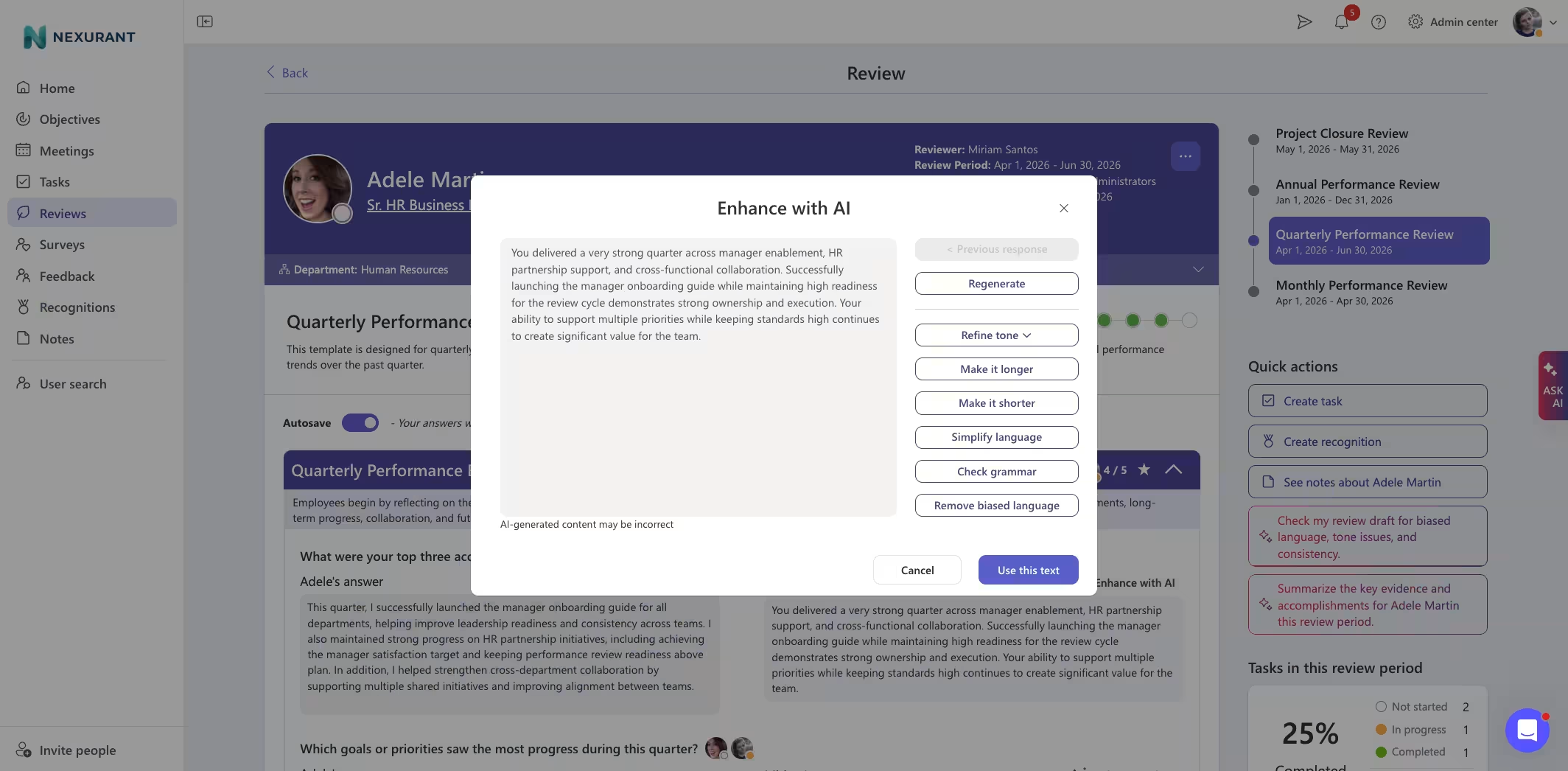
Drafting and refining comments in Teamflect
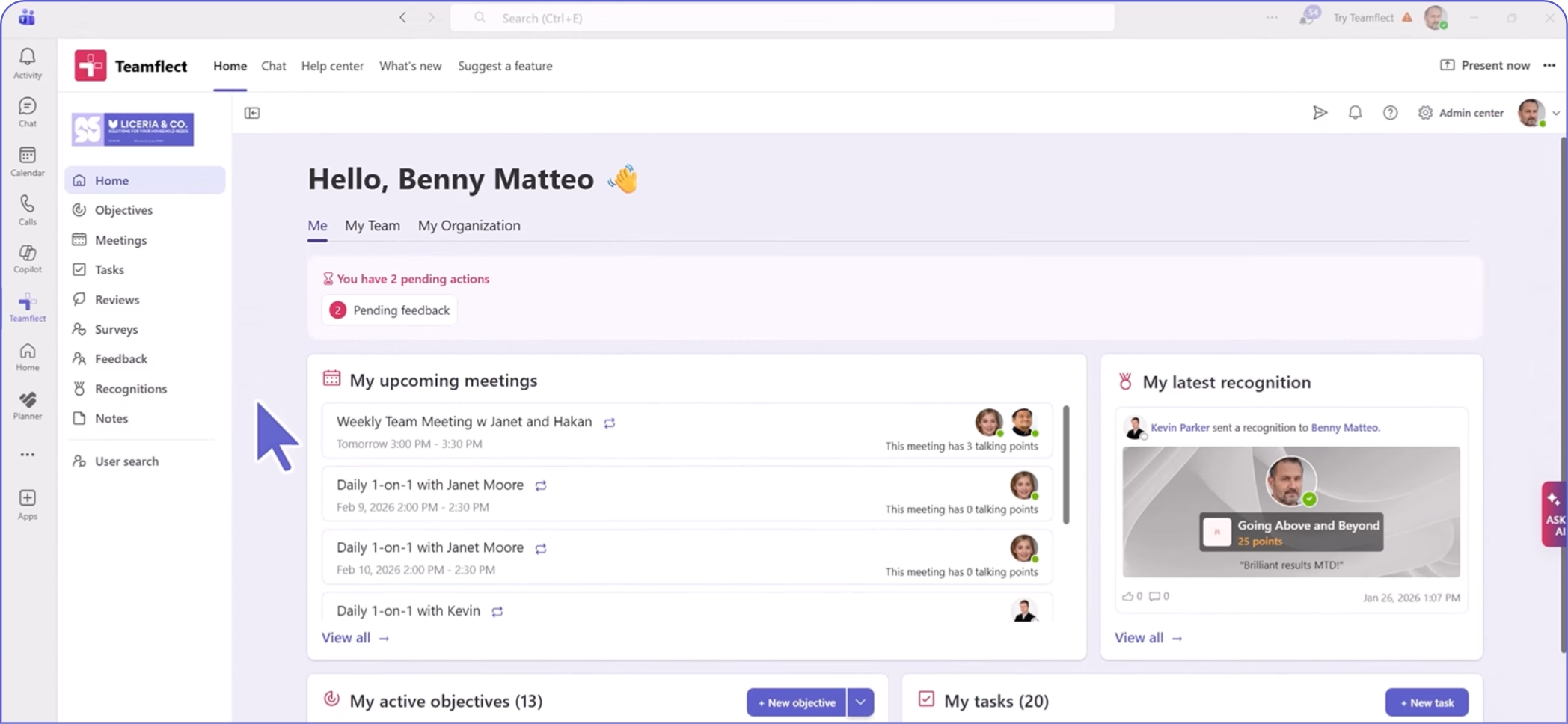
The best way to use AI in performance reviews is to take advantage of performance review tool with built-in AI assistance. Teamflect's AI review assistant works inside Microsoft Teams, where your reviews already live.
Teamflect Customer Story
What Teamflect offers fit nicely with our whole idea of radical candor. Being able to have the discussions between managers and subordinates in a platform where it can be tracked and managed is perfect for us.
— Henry Galloway · Human Resources Manager, Montego
Start from the rating and a few specific notes, let it generate a first draft, then adjust the tone, length, and reading level until the comment fits the employee. It can also flag biased or vague phrasing before you submit, so your feedback stays specific and fair. Would you like to learn more? Schedule a quick call and walk through your performance review needs with an expert.
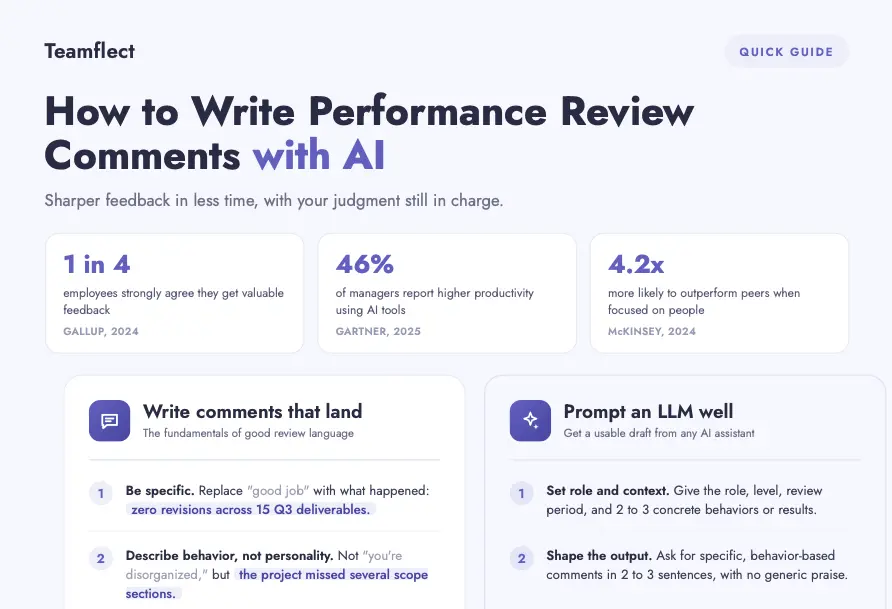
With a general-purpose LLM, the comment is only as good as the prompt behind it. While there are many intricacies to prompting LLMs effectively to create the right performance review comments, here are four habits that make the difference:
Give context. State the role, the rating, the review period, and two or three concrete behaviors or results.
Set the format. Ask for specific, behavior-focused language in two to three sentences, and rule out generic praise.
Direct the tone. Request a balanced comment that pairs a clear strength with a genuine area to develop.
Verify before you use it. Check the draft for accuracy and fairness, then rewrite anything that does not match what you observed.
To help you draft performance review comments effectively with AI, we created this PDF guide you can download for free.
What should I avoid saying in performance reviews?
From The Team Check-In Podcast
If you use a feedback sandwich day-to-day... people will either hear only the positive, more likely they'll hear only the negative. And worst of all, they'll roll their eyes and think you're using skills on me... Just stay real and authentic.
— Anna Wildman · Creator of the CEDAR Feedback Model
What you don't say in an employee evaluation may sometimes matter more than the things you actually write. There are some thresholds reviewers need to avoid crossing at all costs. In this next section, we will be giving you some people management tips on everything you should avoid saying in performance reviews. From overtly negative language, to comparing employees to each other, here is everything you need to leave out of your final review comments:
Pitfall
Don't say
Try instead
Negative absolutes. "Always" and "never" feel demotivating and rarely hold up to scrutiny.
"You always miss deadlines."
"I noticed a few instances where deadlines slipped. Let's work on time management together."
Comparisons to peers. Breeds resentment and unhealthy competition.
"You're not as efficient as Sarah."
"I think you can sharpen your efficiency with a few time-saving techniques."
Vague feedback. Leaves employees with nothing they can actually act on.
"You need to do better."
"Your last project was missing detailed documentation. Let's make that standard going forward."
Personal criticism. Keep feedback about the work, not the person.
"You're too introverted for this role."
"This role rewards proactive communication. Let's find ways to build that into your week."
How to make supervisor comments and recommendations?
As a supervisor, it is your job to offer comments and recommendations to your direct reports. While this may seem like a mundane task at first, effective supervisor comments and recommendations can prove to be the most valuable out of all your review comments.
1. What is the point of your supervisor comments and recommendations?
Many leaders fall under the false impression that since they are a supervisor, they are under the obligation to offer comments and recommendations. Unless there is a distinct purpose behind your comments, you should abstain from handing them out. Or you will start skirting the dangerous line into the micro-management territory!
2. Do your homework first!
To make sure your comments and recommendations as a supervisor are hitting the mark, you need to do your research and do it well! Some of the best ways to gather that information include:
Instead of just pointing out problems, provide recommendations for improvement. Better yet, turn your feedback session into a discussion where you and your direct reports brainstorm on fixing any existing problems together. Comments and recommendations are opportunities to show your team that you're in it together.
How do I write my own performance review?
Writing your own performance review is straightforward when you follow this proven structure:
5 Steps to Write Your Self-Review:
1. List Your Key Accomplishments
Start with 3-5 major achievements
Include specific numbers: "Increased sales by 25%" not "improved sales"
Focus on outcomes that matter to your boss
Example: "Led product launch that generated $2M in revenue and acquired 50 new clients"
2. Acknowledge Challenges and Growth
Mention 1-2 areas where you've improved
Show self-awareness without being overly critical
Include steps you've taken to develop
Example: "Strengthened my presentation skills through training, now confidently leading client meetings"
3. Connect Your Work to Company Goals
Link your achievements to team/company objectives
Show you understand the bigger picture
Demonstrate your strategic thinking
Example: "My process improvements directly supported our goal to reduce costs by 20%"
4. Outline Your Future Goals
Include 2-3 specific objectives for next period
Make them measurable and realistic
Show ambition while being practical
Example: "Plan to complete project management certification and lead the Q3 product launch"
5. End with Your Value Proposition
Summarize your unique contributions
Express enthusiasm for your role
Keep it brief and confident
Example: "I'm excited to continue driving innovation in our department and taking on increased responsibilities"
Pro Tips:
Write throughout the year, not just at review time
.svg)
.svg)


.svg)



.svg)
.avif)


.webp)
