.svg)
.svg)
Performance Gaps Explained: Causes, Examples, and How to Close Them

Updated on:
January 30, 2026

Prefer Teamflect as your HR source on Google
.svg)

Performance gaps drain morale and waste resources. Organizations already invest heavily in performance processes, yet only about 1 in 4 companies in North America (26%) say their performance management systems are effective, which means many gaps remain unresolved despite the effort.
To fix them, leaders must use HR analytics to pinpoint why output falls short and apply targeted HR strategies to bridge the divide.
This article breaks down the causes of these discrepancies and provides data-driven methods to close them for good.
A performance gap occurs when an employee's actual output falls short of what their role requires. The gap measures the distance between performance expectations and delivered results.
These gaps appear at three levels:
Not every performance shortfall signals a serious problem. Temporary dips happen during transitions, role changes, or after organizational shifts. Persistent gaps that resist quick fixes require structured intervention.
This matters because 93% of organizations cite driving organizational performance as a critical objective for performance management, but only 44% say their current programs actually achieve that goal, leaving a wide gap between intent and reality.
Performance gaps differ from temporary setbacks in their consistency. An employee who struggles for two weeks after a system change faces a learning curve, not a gap. An employee who consistently misses benchmarks after six months shows a true performance gap that needs attention.
📊 Only 21% of employees globally are engaged at work, while 62% are not engaged and 15% are actively disengaged.
Performance gaps rarely stem from low effort alone. Most gaps have identifiable root causes that managers can address once they understand what's driving the shortfall.
Systemic factors create many gaps that appear to be individual problems. Unclear role definitions, poor processes, and inadequate resources handicap even motivated employees. Treating these as personal failures wastes time and damages relationships.
| Cause | What It Looks Like | Manager Signal |
|---|---|---|
| Unclear expectations | Inconsistent output quality | Repeated rework on similar tasks |
| Skill gaps | Missed quality standards | Employee avoids certain responsibilities |
| Poor goal alignment | High activity, low impact | Busy work doesn't move key metrics |
| Feedback gaps | Same mistakes repeat | No course correction after errors |
| Insufficient resources | Delayed deliverables | Employee cites missing tools or support |
| Motivation issues | Declining engagement | Reduced initiative and participation |
Individual factors contribute when employees lack necessary capabilities or understanding. Skill mismatches appear when role requirements exceed current abilities. Knowledge gaps create problems when employees don't know what's expected or how to meet those expectations.
Organizational barriers include conflicting priorities, unclear accountability frameworks, and poor communication structures. These systemic issues affect multiple employees simultaneously and require leadership-level solutions rather than individual coaching.
Confusing performance gaps with opportunity gaps leads to wrong interventions that frustrate everyone involved. The two concepts look similar but require completely different responses.
A performance gap means someone isn't meeting established standards they should already be capable of reaching. Meanwhile, an opportunity gap means someone lacks the exposure, resources, or developmental experiences needed to perform at a higher level.
| Aspect | Performance Gap | Opportunity Gap |
|---|---|---|
| Core issue | Execution below established standard | Missing access or developmental exposure |
| Typical cause | Unclear expectations, skill mismatch, motivation | Limited resources, restricted visibility, lack of sponsorship |
| Best intervention | Coaching, feedback, targeted training | Enablement, stretch assignments, mentorship |
| Risk if ignored | Declining performance and team impact | Stalled career growth and retention risk |
| Measurement focus | Current role requirements | Future potential and readiness |
Managers who treat opportunity gaps as performance problems damage trust and lose talented employees. An analyst ready for leadership responsibilities but never given the chance doesn't have a performance gap. They have an opportunity gap that succession planning should address.
Performance management software helps distinguish between these two by tracking both current output and developmental readiness signals over time.
📚 Recommended Reading: How can first-time managers approach performance gaps?
Real performance gaps appear in predictable patterns across roles and experience levels, meaning each scenario requires a specific intervention. For instance, skill shortages demand targeted training, while a lack of role clarity necessitates better goal alignment. Similarly, collaboration breakdowns often require process improvements and stronger accountability frameworks.
Recognizing these common scenarios helps managers respond faster with appropriate solutions. Here are some frequent examples:
A software engineer joins with strong credentials but takes four months to reach productivity levels expected at 90 days. The gap stems from incomplete onboarding, unclear code review processes, and lack of dedicated mentorship during the critical first quarter.
An account manager promoted to team lead continues to excel at client relationships but struggles with delegation, coaching, and performance conversations. The capability gap reflects missing leadership skillsthat weren't required in their previous individual contributor role.
A product manager delivers excellent roadmaps but consistently misses launch dates because cross-functional coordination falls apart. The execution gap reveals poor stakeholder management and unclear accountability frameworks across departments.
A senior analyst demonstrates technical excellence but avoids strategic thinking, relationship building, and ambiguous problem-solving that director-level roles demand. The output variance shows they haven't developed skills needed for the next level.
A customer success manager resolves issues quickly but delivers inconsistent communication quality. Some clients receive thorough updates while others get minimal information. The performance expectation gap reflects unclear standards about documentation and follow-through.
Early detection prevents small performance issues from becoming formal problems that require documentation and improvement plans. Managers who spot gaps quickly can course-correct through regular feedback before situations escalate.

Jack Welch
"Failing to differentiate among employees—and holding on to bottom-tier performers—is actually the cruelest form of management there is."
Single missed deadlines don't indicate gaps. Repeated patterns signal underlying issues that need attention. Track whether quality issues cluster around specific tasks, whether an observed productivity loss follows certain triggers, or whether capability gaps appear with particular types of work.
Weekly or biweekly one-on-ones surface problems faster than quarterly reviews. Performance management becomes a continuous conversation rather thanannual performance reviews. Managers who maintain feedback frequency catch small deviations before they compound.
Output variance from established benchmarks provides clear evidence of gaps. Compare actual performance against expected standards for productivity, quality, timeliness, and accuracy. Data removes guesswork and enables fact-based conversations.
Employees consistently behind on goal milestones show execution gaps worth investigating. Review whether delays stem from unclear priorities, skill limitations, or external barriers. Goal alignment tools within talent management software make this tracking automatic.
📊62% of companies with effective performance management programs revisit their goals more than twice per year.
Performance gaps often appear first to colleagues who work closely with the employee. Stakeholders notice missed commitments, quality issues, or collaboration problems before formal metrics reflect the gap.
Managers who wait until review cycles to document performance lose crucial context. Note specific examples when gaps appear: dates, deliverables, outcomes, and circumstances. This documentation supports fair, objective conversations and helps identify root causes.
Closing performance gaps requires matching your intervention to the specific cause. Generic solutions waste time and rarely address the real problem.
| Gap Type | Recommended Action | Expected Outcome |
|---|---|---|
| Skill gap | Targeted training and practice | Demonstrated capability improvement within 90 days |
| Expectation gap | Goal clarification and role definition | Consistent output aligned to standards |
| Feedback gap | Weekly check-ins and coaching | Faster error correction and quality lift |
| Motivation gap | Recognition and development coaching | Increased engagement and initiative |
| Resource gap | Tool access and support enablement | Immediate productivity improvement |
Don't assume you know why the gap exists. Ask the employee what's blocking better performance. Unclear expectations, missing resources, and skill limitations all create similar symptoms but need different fixes.
Define exactly what success looks like in measurable terms. Replace vague expectations like "improve quality" with specific standards like "reduce error rate to under 2% within 60 days." Clear benchmarks remove ambiguity and enable objective progress tracking.
📚 Recommended Reading:How to choose the right performance rating scale?
Skill gaps need targeted training and practice opportunities. Identify specific capabilities that need improvement, assign relevant learning resources, and schedule application exercises where employees practice new skills in low-risk situations.
A 360-degree feedback software like Teamflect enables continuous feedback loops rather than waiting for formal review cycles. Weekly check-ins help employees course-correct quickly and signal that managers care about their success.
Traditional, annual-only reviews often fail to motivate; in one study, only 14% of employees strongly agreed that their performance review inspired them to improve, highlighting why ongoing feedback is essential for closing gaps.
Some gaps stem from missing tools, insufficient budget, or inadequate support systems. Address these organizational barriers before assuming the employee is the problem.
Break improvement into measurable checkpoints. Review progress at 30, 60, and 90 days rather than waiting months to evaluate results. Adjust your approach if early milestones show limited improvement.
Employees often know what they need to improve. Collaborative problem-solving increases buy-in and surfaces obstacles managers might miss. Performance management works better as a partnership than a directive.
Even well-intentioned managers make predictable errors that prolong performance gaps or damage relationships. Avoid these common missteps.
Managers who hope gaps will self-correct often watch small issues become formal problems requiring HR involvement. Early conversations feel awkward but prevent larger failures.
Assuming you know the root cause without asking the employee leads to solutions that miss the mark. Skill training won't fix unclear expectations. Coaching won't solve resource shortages.
Verbal conversations feel easier than written notes, but undocumented gaps make future accountability impossible. Record dates, specific examples, agreed actions, and deadlines.
Development needs vary by individual. Copy-pasted improvement plans ignore the specific capability gaps, work style differences, and situational factors that drive each person's performance.
Conversations that highlight only failures demoralize employees and reduce engagement. Balance feedback by acknowledging what's working while addressing specific gaps that need correction.
Not every performance gap reflects individual shortcomings. Poor processes, unclear priorities, and insufficient resources create problems that coaching can't fix. Address organizational issues rather than blaming employees for systemic failures.
Performance improvement plans (PIPs)signal serious consequences. Using them as first-line interventions escalates situations unnecessarily and damages trust. Reserve formal plans for persistent gaps after other interventions fail.
Performance improvement plans serve as formal documentation when informal interventions haven't closed persistent gaps. They're escalation tools, not default solutions.
Formal improvement plans make sense when coaching, feedback, and development support don't produce required changes. Employees should have clear knowledge of performance concerns and specific improvement targets before entering a PIP.
Some performance issues warrant immediate formal action: consistent missed deadlines that impact clients, quality problems that create risk, or behavioral issues that violate policies. These situations justify structured plans without extended informal periods.
Effective PIPs define exact performance expectations with objective success criteria. Vague requirements like "show better judgment" set employees up to fail. Specify measurable standards: "submit weekly reports by Friday noon with zero calculation errors."
Most PIPs run 30 to 90 days depending on gap severity and improvement complexity. Shorter periods work for execution issues. Longer timelines suit skill development needs that require training and practice.
Formal plans shouldn't mean abandoning the employee. Increase check-in frequency, provide clear coaching intervention, and remove obstacles that prevent improvement. PIPs work best when managers actively support success.
Record all conversations, progress updates, and milestone reviews during the PIP period. This documentation protects both the organization and the employee if the situation ends in termination or dispute.
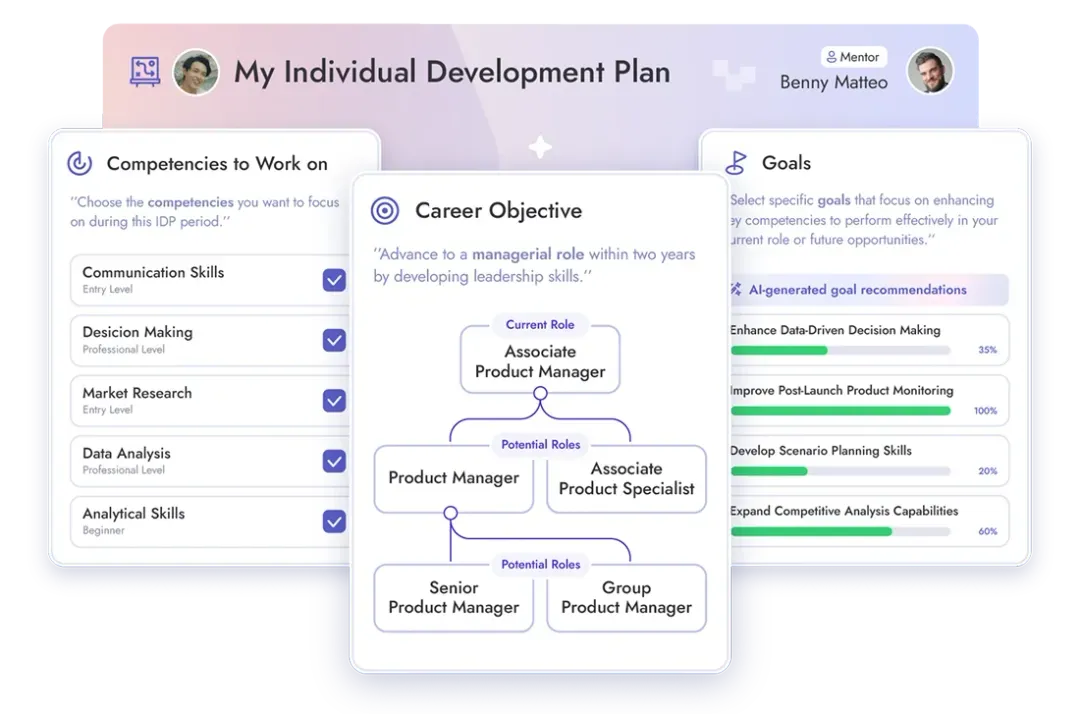
Teamflect, an all-in-one performance management software, helps organizations identify and close performance gaps before they require formal intervention. The platform brings performance management into Microsoft Teams where work already happens.
Organizations using Teamflect as their talent management software reduce performance gaps through systematic early detection and structured improvement tracking that turns reactive management into proactive development.
A performance gap is the measurable distance between expected and actual performance. Underperformance describes sustained poor results over time. All underperformance involves gaps, but not all gaps constitute underperformance. Temporary gaps during transitions or learning periods don't equal underperformance.
No. Many performance gaps stem from organizational issues: unclear role definitions, poor processes, insufficient resources, or conflicting priorities. Managers who assume all gaps reflect individual problems miss systemic barriers that prevent good performance. Root cause analysis determines whether the issue requires employee development or organizational change.
Regular one-on-ones, continuous feedback, and objective metric tracking surface problems early. Watch for repeated patterns rather than single incidents. Monitor goal progress, peer feedback, and quality variance from established benchmarks. Knowing how to automate manager feedback loops for employees, through recurring check-in reminders and triggered prompts after key milestones, ensures feedback happens consistently rather than only when a manager remembers to send it. Performance review software with built-in analytics highlights concerning trends before gaps become serious.
Yes. Role transitions, organizational changes, new responsibilities, and personal circumstances create temporary performance dips. These short-term gaps usually resolve within 30 to 90 days with basic support. Persistent gaps lasting beyond a quarter despite intervention indicate deeper issues requiring structured improvement plans.
Timeline depends on gap type and severity. Expectation gaps often close within 30 days once clarity improves. Skill gaps need 60 to 90 days for training and application. Motivation gaps vary widely based on root causes. Complex capability gaps might require six months or more. Set milestone reviews at 30, 60, and 90 days to track progress and adjust interventions.

.svg)
.avif)
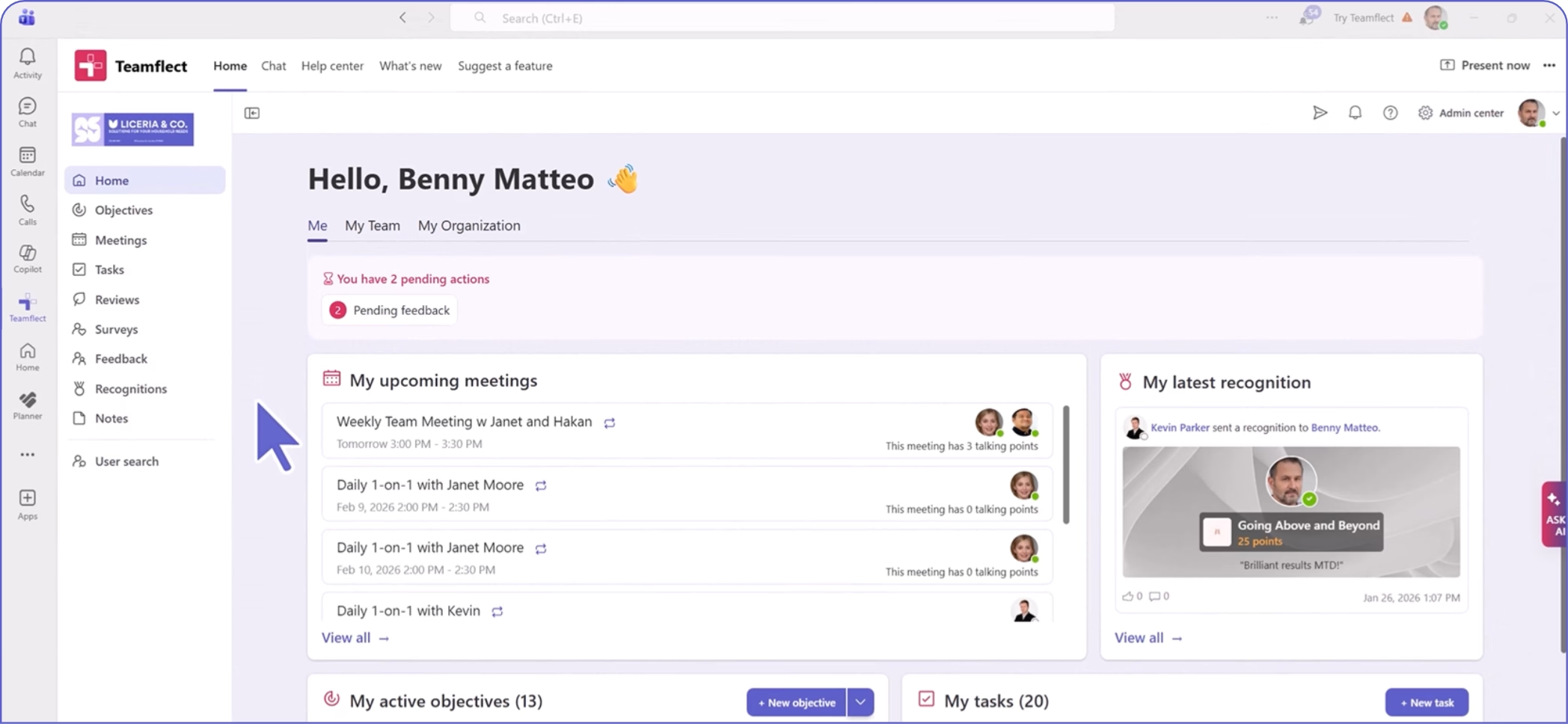
Create high-performing and engaged teams - even when people are remote - with our easy-to-use toolkit built for Microsoft Teams