.svg)
.svg)
Smart Goals vs OKR: Differences, Best Practices and Template

Updated on:
December 25, 2025

Prefer Teamflect as your HR source on Google
.svg)

Lack of clarity on expectations hurts engagement. Gallup data shows employees who help set their goals are3.6 times more likely to be engaged. SMART goals and OKRs both work well when they spark discussion and shared ownership, ultimately driving stronger results.
Goal management doesn’t have to feel like choosing sides. Both tools are effective, but they work differently. Knowing when to use each one decides how well your performance system performs.
The confusion between OKR vs SMART goals isn't new, but it's gotten louder. Managers search for clarity because they're being told to implement both frameworks without understanding the difference between OKR and SMART goals or when each applies.
Here's what's happening:
This guide cuts through the noise with practical examples and real applications that show you exactly when to use each framework.
SMART goals are structured individual goals that follow five specific criteria. They're commonly used in performance reviews, personal development plans, and for individual contributors who need clear direction on daily tasks.
The goal-setting framework works because it forces specificity. Instead of merely saying "improve sales," you get or provide an actionable goal: "increase monthly revenue from $50K to $65K by June 30th through outbound prospecting."
This approach works following the SMART criteria:
SMART goals excel at employee accountability because there's no room for interpretation. You either hit the target or you don't.
OKRs (Objectives and Key Results) are outcome-driven goals that focus on value creation rather than task completion. An Objective describes what you want to achieve, while Key Results define how you'll measure success.
The framework originated at Intel and gained popularity through Google's adoption. Unlike SMART goals, OKRs embrace stretch targets that teams might achieve only 60 to 70% of the time.
Key OKR components include:
OKRs work best for alignment strategy across departments. They cascade from company-level objectives down to team-level objectives, creating priority mapping that keeps everyone moving in the same direction.
Understanding the distinction between OKR and SMART goals requires looking at how each framework operates in practice. The table below summarizes the key comparison between the two approaches.
| Criteria | SMART Goals | OKRs (Objectives & Key Results) |
|---|---|---|
| Purpose | Task completion and individual performance tracking | Strategic alignment and outcome achievement across teams |
| Structure | Single statement with all five criteria embedded | Qualitative objective + 3-5 quantitative key results |
| Ambition | Should be 100% achievable | Designed as stretch targets (60-70% achievement is normal) |
| Metrics | Built into the goal itself | Separated into key results under each objective |
| Cadence | Typically annual or quarterly, static once set | Quarterly cycles with frequent check-ins and adjustments |
| Who Uses It | Individual contributors, task-based roles, personal development | Leadership teams, cross-functional initiatives, company-wide goals |
The difference between OKR and SMART goals isn't about which is superior. It's about matching the framework to your specific needs. We further break down the key differences previously identified:
SMART Goals are fundamentally built for task completion and tracking the performance of an individual or a small, self-contained project. They ensure clarity and accountability on a specific, actionable item.
In contrast, OKRs are designed for strategic alignment across entire organizations or large teams. Their primary purpose is to articulate an ambitious, high-level outcome and measure the success of achieving that outcome. They answer the question, "Where do we want to go?"
The SMART Goals structure is a single, unified statement where the five criteria must all be embedded within the goal itself. For example: "I will complete the new user onboarding flow documentation by the end of Q3."
OKRs use a two-part structure consisting of a qualitative Objective (what you want to accomplish) and three to five quantitative Key Results (how you will measure success). This separation allows the Objective to remain inspirational while the Key Results remain purely metric-driven.
One of the most significant differences is the level of ambition. SMART Goals are designed to be 100% achievable. If a goal is truly SMART, achieving it completely is the expectation.
OKRs are intentionally designed as stretch targets. They are meant to push teams beyond their comfort zone, making a 60 to 70% achievement rate typically considered successful. If a team consistently hits 100% on their OKRs, it suggests their objectives weren't ambitious enough.
SMART Goals are often static once they are set, typically being reviewed quarterly or annually. They focus on executing a predefined plan.
OKRs operate on a shorter quarterly cycle and demand frequent check-ins, often weekly. This shorter cadence and review rhythm provide the flexibility to adjust tactics and Key Results mid-quarter based on new information without changing the core, aspirational Objective.
SMART Goals are most effective for individual contributors and task-based roles where clear, deliverable-focused accountability is key, such as sales targets or documentation projects. They are excellent for personal skill development.
OKRs are best used by leadership teams and managers to coordinate company-wide goals and cross-functional initiatives. They are a top-down tool for organizational focus and transparency.
Choosing between these goal-setting frameworks depends on employee level, role complexity, organizational maturity, and project scope.
Use SMART Goals When:
Use OKRs When:
Most effective performance management systemsdon't force an "OKR vs SMART goals" choice. They use both where each fits best.
Let's clear up the confusion that keeps managers second-guessing their approach to goal management for employees.
False. These frameworks serve different purposes in your goal-setting framework. OKRs handle alignment strategy while SMART goals manage execution planning. Teams often use OKRs at the department level and SMART goals at the individual level.
Wrong. Any organization needing strategic goals that cascade across teams can use OKRs. Manufacturing companies, nonprofits, and government agencies have successfully implemented OKR frameworks.
Not even close. SMART goals remain the most effective way to set measurable targets for task-based work. While OKRs generate excitement, they don't replace the need for clear individual performance indicators.
False. Both frameworks handle qualitative vs quantitative goals. OKRs excel at measuring outcomes like "team morale" through proxy metrics (retention rates, engagement scores). SMART goals can incorporate behavioral indicators for skills development.
Actually the opposite. OKRs demand more frequent check-ins during each performance cycle. SMART goals, once set, often require less ongoing adjustment.
Size doesn't determine your goal-setting framework. A 20-person startup pursuing rapid scaling might need OKRs for alignment, while a 500-person company with stable operations might run perfectly well on SMART goals.
Here's how the same business intent translates into each framework. These OKR vs SMART goals examples show you the practical difference.
| Scenario | SMART Goal Example | OKR Example |
|---|---|---|
| Employee Performance | Increase monthly customer satisfaction score from 82% to 90% by Q2 through weekly client feedback reviews and implementing two service improvements. |
Objective: Deliver an excellent customer experience.
Key Results:
|
| Project Delivery | Launch the new mobile app feature by August 15th with zero critical bugs, completing all 47 user stories in the backlog and achieving 95% code test coverage. |
Objective: Ship a mobile experience customers love.
Key Results:
|
| Sales Performance | Generate $500K in new annual recurring revenue by December 31st by closing 15 new enterprise accounts and maintaining an average deal size of $33K. |
Objective: Build a sustainable enterprise sales pipeline.
Key Results:
|
| Team Development | Complete leadership training for all 8 team leads by October 1st, with each participant achieving 80%+ on the final assessment and delivering one team workshop. |
Objective: Build a high-performing leadership culture.
Key Results:
|
Notice how SMART goals focus on execution planning with specific tasks, while OKRs emphasize outcome-driven goals with flexibility in how you achieve them.
Stop treating OKR and SMART goal management as an either/or decision. The most effective performance management systems use both frameworks in a coordinated way.
Set quarterly OKRs at the department or team level to define outcome-driven goals. Then cascade those into SMART goals for individual contributors who execute the work. This approach gives you strategic alignment without sacrificing employee accountability.
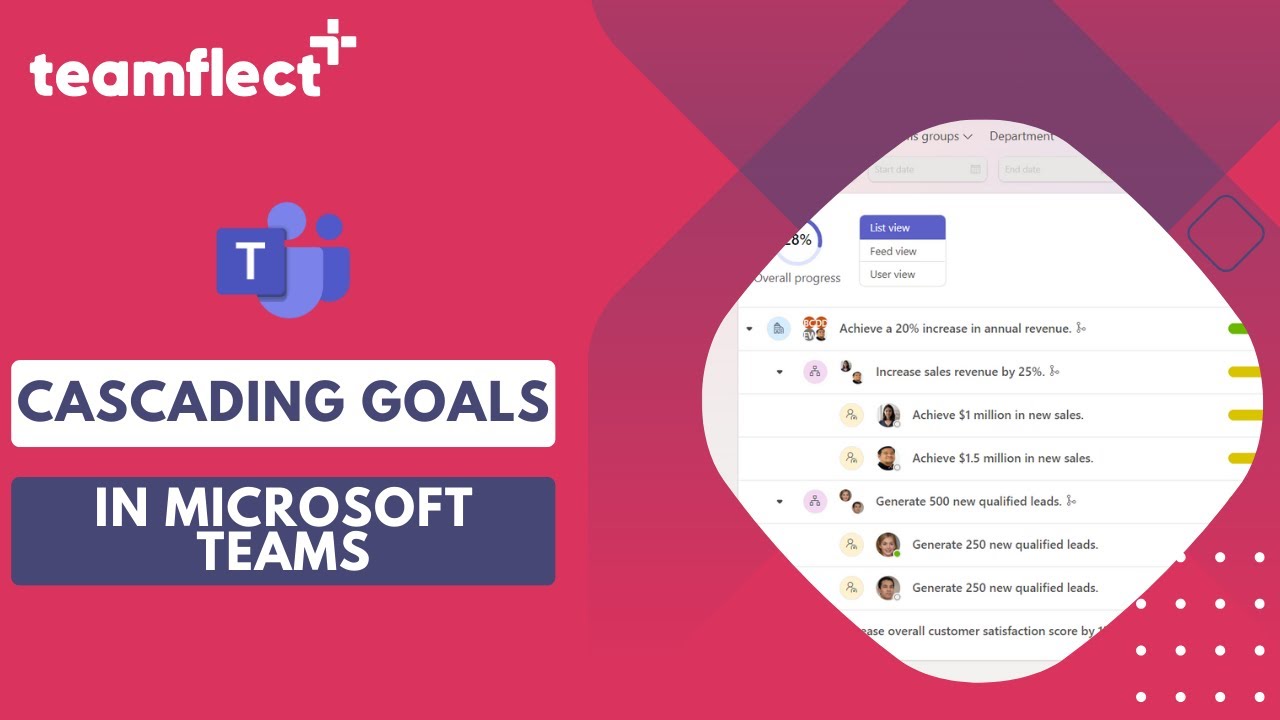
Company OKRs should informteam-level objectives, which then shape individual goals. But individuals should help write their own SMART goals based on team OKRs. This bottom-up input improves ownership and catches unrealistic expectations early.
Run OKRs on quarterly cycles with monthly check-ins. Set SMART goals that align with those quarters but allow for task-level milestones throughout. Not everything needs the same performance cycle.
Keep your goal-setting framework clean. An OKR shouldn't try to be SMART. A SMART goal shouldn't pretend to be an OKR. Each framework has specific criteria that make it work.
When you care about the result but want teams to figure out the best path, use OKRs. When the method matters as much as the outcome (compliance, safety, standardization), use SMART goals.
Employees should see how their SMART goals contribute to team OKRs. This priority mapping prevents the disconnect in which people hit their targets while the team still misses strategic goals.
Individual contributors need mostly SMART goals with maybe one OKR. Mid-level managers need a mix. Senior leadership should work primarily with OKRs that cascade down.
Don't separate your OKR check-ins from your SMART goal check-ins. Discuss them together so you can spot misalignment between strategic direction and day-to-day execution.
Ready to implement these frameworks? Start with proven templates that save you setup time.
OurSMART goals templatesinclude examples across departments and role levels. You'll find pre-built templates for sales, marketing, operations, and individual development plans that you can customize for your team. Examples include:
Smart Goals Template Excel:
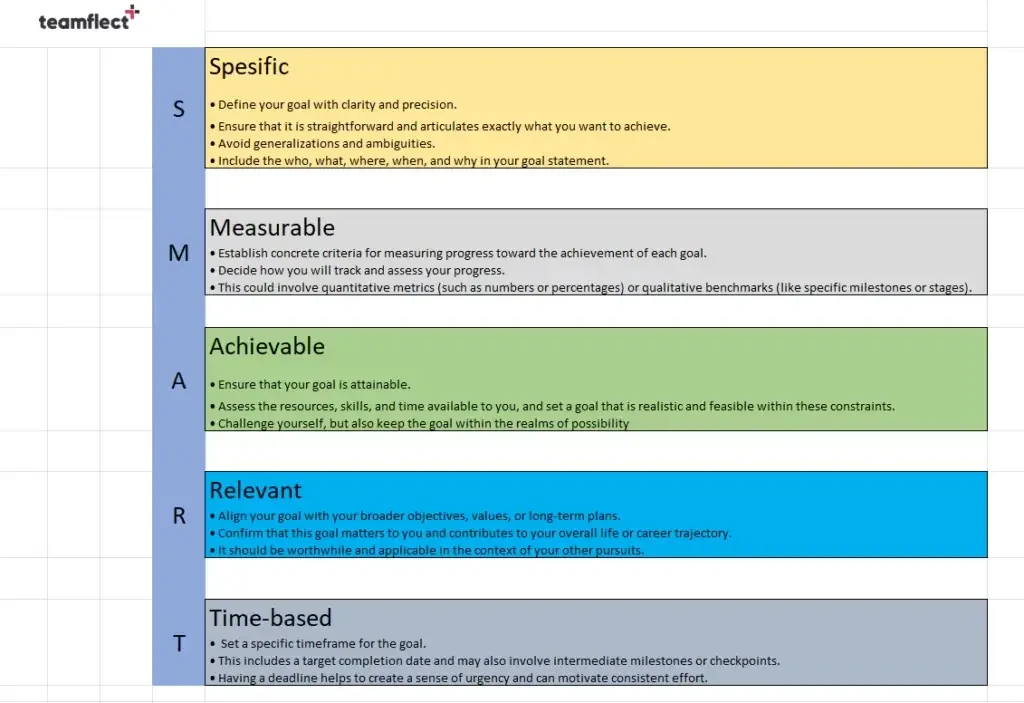
This Excel-based SMART goals template is designed to simplify goal creation by using guided, built-in criteria validation. It’s perfect for beginners or team managers who need a standardized and easily trackable structure for setting multiple employee goals.
SMART Goals Worksheet for Excel:
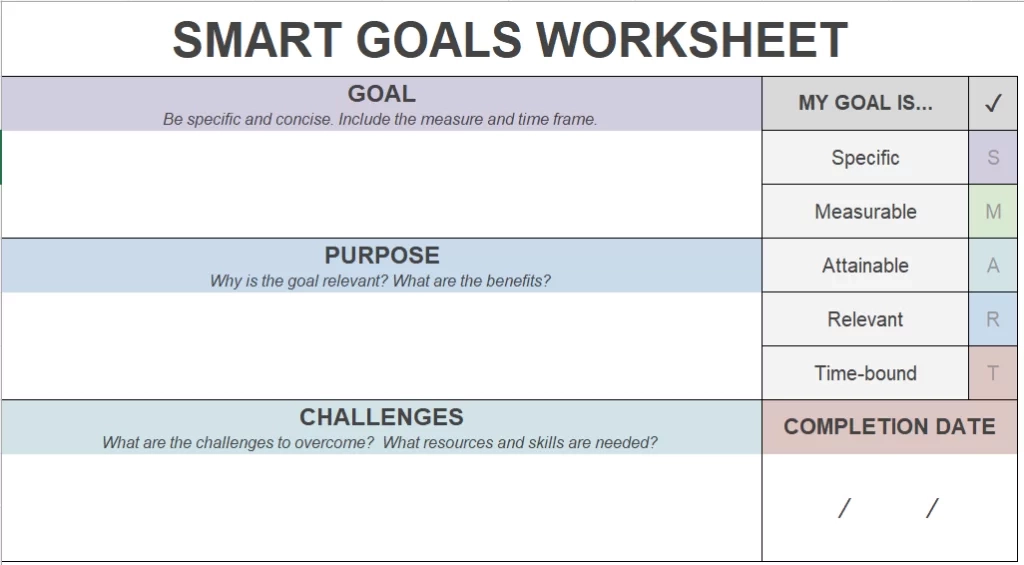
This SMART goals Excel template facilitates comprehensive planning by including dedicated sections to discuss the goal's purpose and identify potential challenges. It’s ideal for senior leaders and coaches who require detailed collaboration between the goal owner and setter.
Download our OKR templates in Excel format for easy distribution. These templates show you exactly how to structure objectives and key results for different scenarios. Examples include:
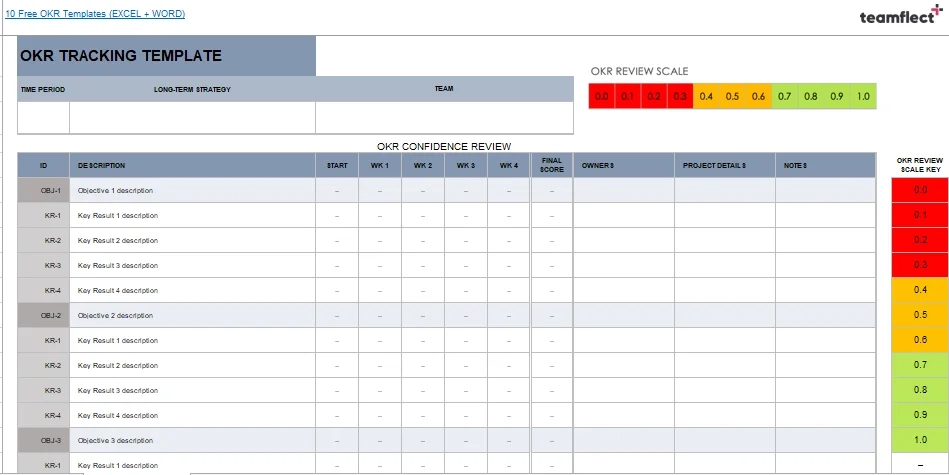
This Excel OKR tracking template features columns for weekly progress updates to monitor each objective and its associated key results effectively. It automatically calculates your overall OKR achievement score based on the consistent weekly data input, providing immediate feedback.
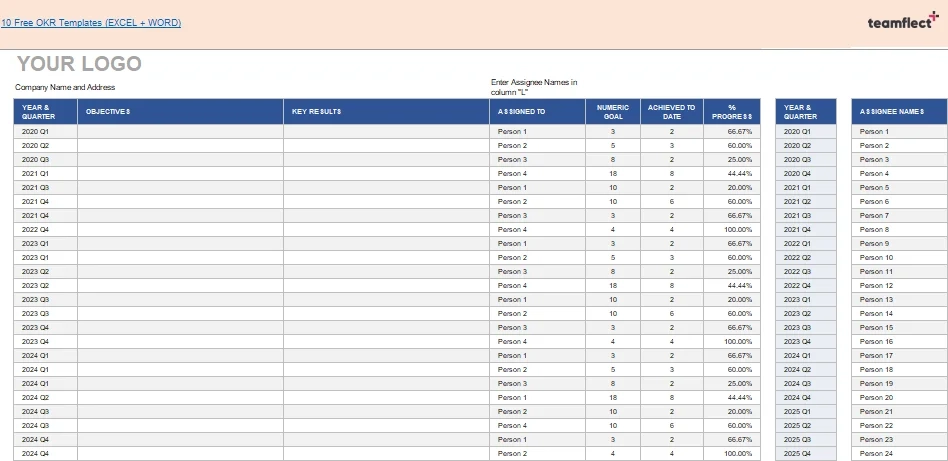
This OKR template allows you to observe your progress over multiple years and quarters by tracking objectives, key results, numeric goals, and percentage completion. A standout feature is the inclusion of an assignee names column, providing immediate clarity on ownership and responsibility for each objective.
For ongoing measurement, check out our guide on OKR tracking which explains how to monitor progress without turning check-ins into bureaucratic time sinks.

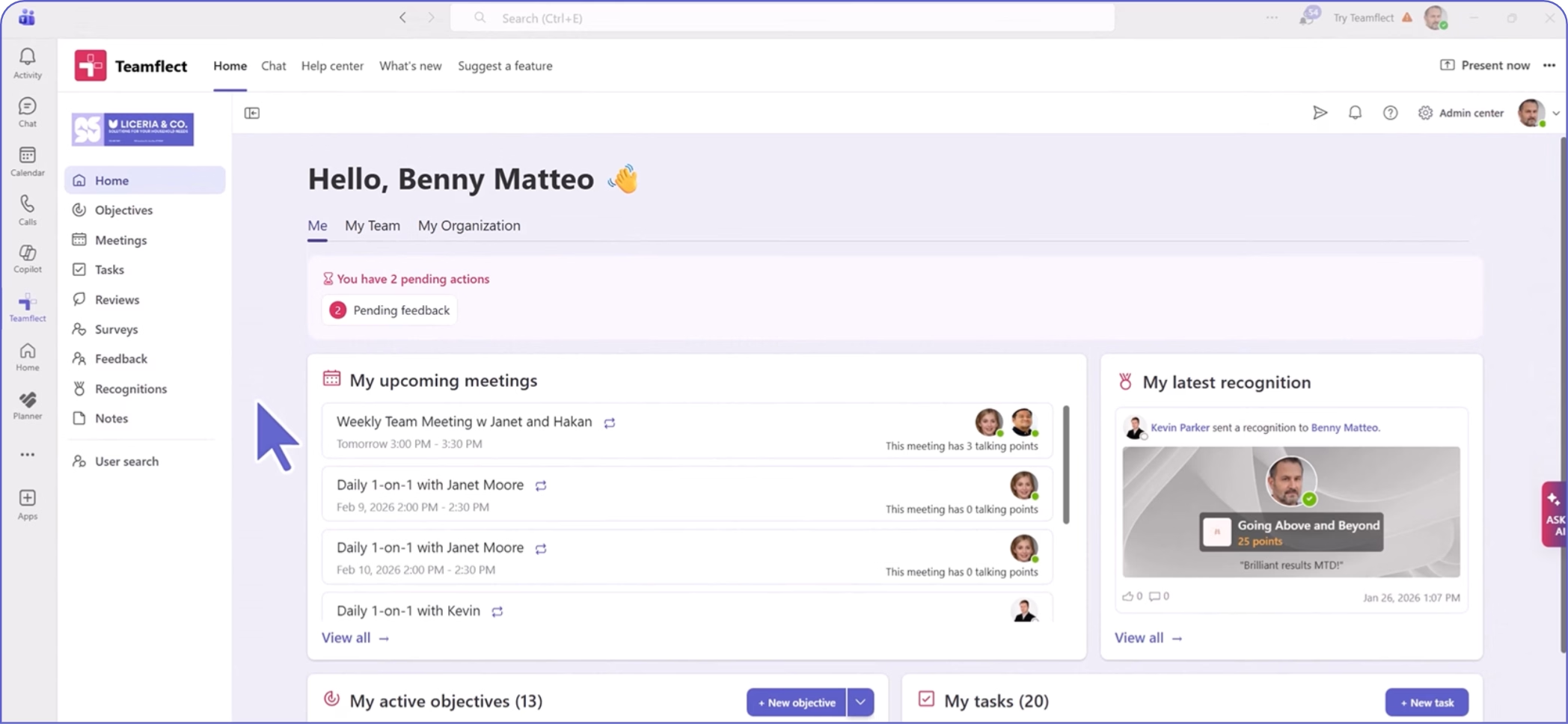
Setting up OKR vs SMART goals doesn't have to mean juggling multiple spreadsheets and chasing updates. Teamflect supports both frameworks inside Microsoft Teams, so your goal management for employees happens where work already gets done.
Teamflect's performance management platform handles the technical complexity of running both frameworks together, so you can focus on actually achieving the goals rather than administering them.
Try Teamflect FREE for up to 10 usersand start simplifying your performance management.
OKRs handle rapid change better because they're designed for quarterly adjustments and stretch targets. High-growth teams need the strategic alignment that OKRs provide across departments. That said, individual contributors on those teams still benefit from SMART goals for their specific deliverables.
Yes, and you probably should. Use OKRs for team-level objectives and strategic alignment, then create SMART goals for individuals that support those OKRs. This hybrid approach gives you both direction and execution clarity.
SMART goals work better for personal development because they provide the specificity and accountability most people need. You want clear measurable targets like "complete three leadership courses by Q3" rather than ambiguous stretch targets.
No. SMART goals remain the most effective goal-setting framework for task-based work and individual performance. OKRs don't replace them; they serve a different purpose at a different organizational level.
OKRs don't require separate KPIs because Key Results function as your performance indicators. However, understanding the difference in OKR vs KPI vs SMART goals helps: KPIs are ongoing metrics you monitor, OKRs are quarterly outcome targets, and SMART goals are specific task completions.
OKRs typically run on quarterly cycles with monthly check-ins for progress updates. SMART goals often stay fixed once set, though you should review them at least quarterly to confirm they're still relevant. OKRs need more frequent attention because they're designed to adapt.
Both work fine for distributed teams if you have the right tools. OKRs actually help remote teams by creating clear alignment strategies when people aren't in the same office. However, remote workers need extra clarity on individual accountability, which SMART goals provide well.
Senior leaders need mostly OKRs focused on strategic goals and cross-functional outcomes. SMART goals become too narrow at executive levels where success means orchestrating multiple initiatives rather than completing specific tasks. That said, even executives can use SMART goals for personal development areas.

.svg)
.avif)
Create high-performing and engaged teams - even when people are remote - with our easy-to-use toolkit built for Microsoft Teams