.svg)
.svg)
How to Evaluate Enterprise Performance Review Software: A 10-Criterion Framework

Updated on:
May 21, 2026


Prefer Teamflect as your HR source on Google
.svg)

A HR Tech Founder’s rubric for evaluating performance review platforms: The ten criteria that predict widespread adoption, the weights of and importance of each criterion, and how to test each one yourself before you sign a contract.
I'm Bora Ünlü, founder and CEO of Teamflect. Over the past few years, our team has had hundreds of conversations with HR leaders trying to choose a performance review platform, and the same problem keeps coming up: every vendor's feature checklist looks roughly identical. Cycles, templates, 360-degree feedback, AI, dashboards, integrations. Top-of-the-line performance review software mostly covers the same gaps, and the real difference lies in hard-to-notice nuances and expert product design.
That's the problem this framework was built to solve. Below you will find our reasoning and methodology behind how we built our performance review software evaluation framework.
When we tested 10 performance review platforms over eight weeks for our 2026 evaluation, our Senior Product Manager, Fetican Durakbaşı, didn't score them against a "do they have it / don't they" checklist. He scored them against ten criteria we believe actually predict whether a platform gets adopted at mid-market and enterprise scale. Each criterion has a weight. Each weight reflects how often we've seen that specific failure mode kill a rollout.
This piece walks through all ten criteria in detail. For each one, you'll get what it measures, why we weighted it where we did, what good looks like, the questions to ask vendors during demos, and the tests to run yourself in a trial.
While we believe the research and testing results we’ve published on the best performance review software available today is as definitive a list as possible, we know that the right tool for an organization depends on a wide network of variables.
This article aims to not only provide a detailed explanation to our reasoning behind how we scored each software in our research, as well as provide readers with the tools to conduct their own performance review software evaluations.
By the end of this article, you should be able to evaluate any performance evaluation software on the market against the same rubric we used, and adjust the weights for your own situation.
It's the framework we wish existed when we started building Teamflect. Now it does.
— Bora Ünlü, Founder & CEO, Teamflect
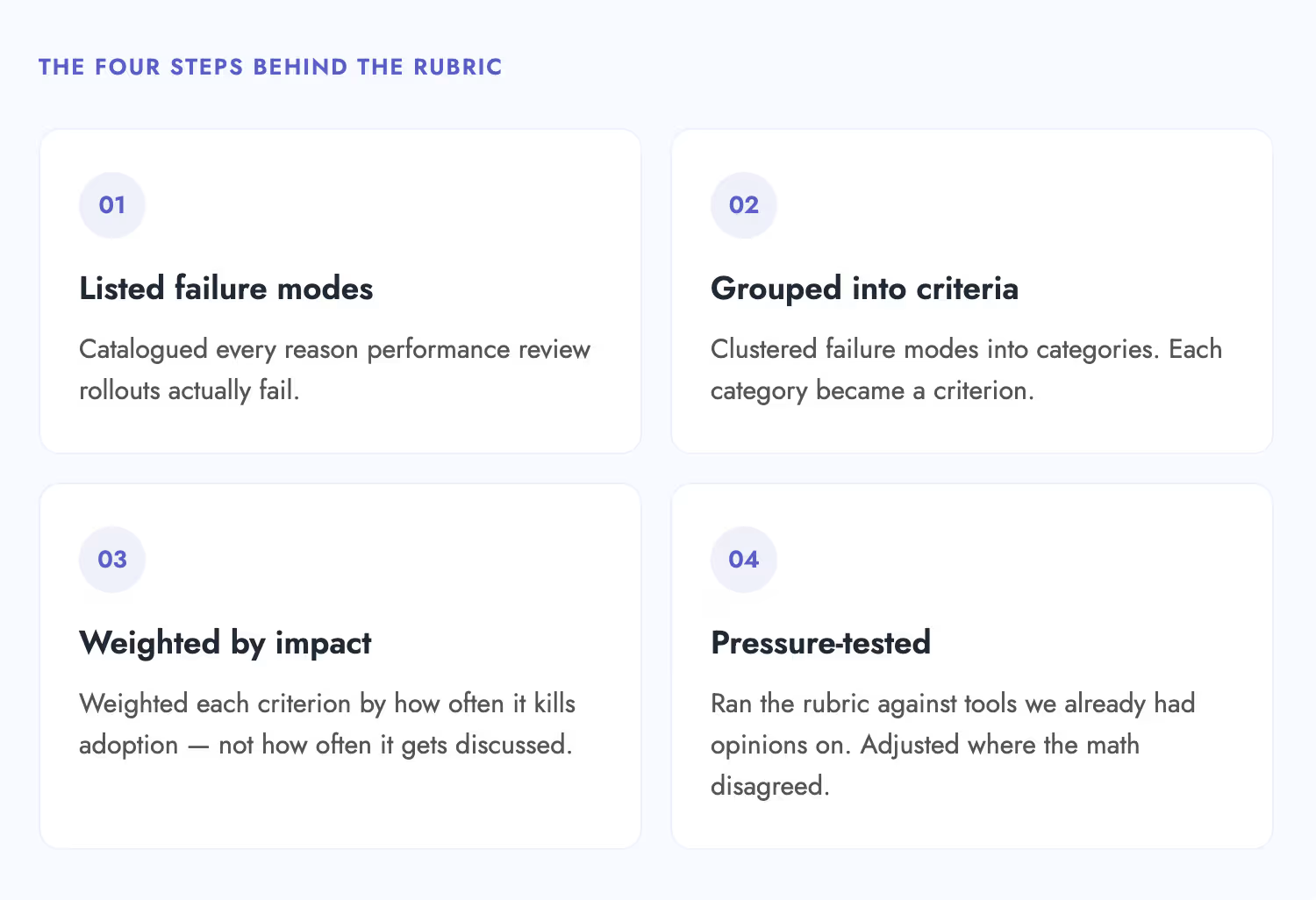
Before Fetican started testing, we sat down and listed every reason we've seen a performance review rollout fail at mid-market and enterprise scale. Those reasons came from two places:
We grouped those reasons into categories. Each category became a criterion.
Some were obvious: workflow flexibility, integrations, manager experience. Others were less obvious until we looked at the pattern of complaints:
Then came the weights.
We assigned each criterion a percentage based on how often that specific failure mode actually kills adoption:
Once we had the weights, we pressure-tested them against tools we already had strong opinions about. When the math disagreed with our gut, we either adjusted the weights or admitted our gut was wrong.
The final rubric is the one that survived that process.
Before we go deep on each one, here's the full rubric in one view.
Weights are our recommendation, and shouldn’t be taken as gospel. We will be showing you how to adjust them for your situation as well.
You might have noticed that these criteria aren't an exact list of features to look for. The top-of-the-line, enterprise-grade performance review software we considered in our evaluation all cover most of the core features organizations can need from a performance review solution. Visit this article to see a list of must-have features for performance review software.
The single biggest predictor of whether HR ends up building workarounds or running the platform as designed.
This criterion measures how well the review builder bends to your actual review philosophy. Can you stack self-assessment, peer review, manager review, and upward feedback inside one cycle, with the right approval chain, the right sign-off rules, and the right mid-cycle flexibility for things like manager changes? Can different departments run different templates simultaneously without breaking the system?
What "good" looks like
Questions to ask the vendor
How to test it yourself
Build a full review cycle from scratch in your trial. Time it. Set up self + peer + manager + upward in one flow, then change one employee's manager mid-cycle and extend a deadline for one specific person.
Whether feedback happens in the flow of work, or in yet-another-tab nobody opens.
This measures how well the platform integrates with the tools your team already lives in, whether that is Slack, Teams, Outlook, Google Workspace, and your HRIS. Ease of access and fit into everyday workflow is one of the most important factors in determining whether a new initiative will stick in the workplace or fall by the wayside. We weighted this at 12% because integration depth is what separates platforms that get used from platforms that get bought.
What "good" looks like
Questions to ask the vendor
How to test it yourself
Install the Teams or Slack app and try to complete a full review without leaving it. Then change an employee's manager in your HRIS sandbox and see how long it takes to propagate. Anything more than a few hours means manual reconciliation work for HR.
The platform only works if managers complete reviews and employees engage. Every point of friction costs adoption.
This criterion measures how the platform feels to the two groups whose behavior actually determines whether the rollout succeeds: managers and individual contributors. A platform can have every feature in the rubric and still fail if managers procrastinate on reviews because the interface is exhausting, or if employees skim through self-assessments because the form feels like a chore.
What "good" looks like
Questions to ask the vendor
How to test it yourself
Pick a manager and an IC on your team who haven't seen the tool. Give them ten minutes each to complete a sample review without any help or walkthrough. Then ask for their feedback on the overall experience.
Reviews disconnected from goals become subjective theater. Cascading goal structure is what makes evaluations feel earned.
This measures how well the platform handles goals and OKRs and, more importantly, how cleanly those goals connect back to the review itself. We weighted it at 11% because we’ve seen first-hand how connecting OKRs to the performance review platform helps organizations achieve high-performance and accountability.
What "good" looks like
Questions to ask the vendor
How to test it yourself
Create three nested OKRs: company, team, and individual, and link the individual one to a review form. Open the review as the manager. If you can see the employee's progress on that goal without leaving the form, the architecture works. If you have to navigate away to check, it doesn't.
Are AI features in there just for the sake of it, or are they providing real insights and productivity boosts?
This measures how useful the platform's AI is in the review workflow, including review drafting, bias detection, summary generation, coaching prompts, and automated nudges. We weighted it at 10% because AI is now widely implemented in this category, but quality varies wildly.
What "good" looks like
Questions to ask the vendor
How to test it yourself
Generate an AI review draft for a real (or realistic) employee profile with goals, feedback, and notes attached. Read it as a manager would. Ask: would I send this with minor edits, or rewrite it from scratch? If it's the latter, the AI isn't saving you time.
Quick note: While we’ve pooled AI & Automation under the same criterion, they can quite easily be separated into criteria of their own, giving more weight to automation scenarios.
Rating normalization across managers is what separates a filing cabinet from a real performance system.
This measures how well the platform helps HR normalize ratings across managers, surfacing distributions, flagging outliers, and supporting collaborative review calibration. We weighted it at 9% because below 100 employees, this matters less, but above that threshold, it does make a difference in ratings being defensible.
What "good" looks like
Questions to ask the vendor
How to test it yourself
Set up a mock cycle with three managers and deliberately skew their ratings, one high, one low, one balanced. Run the calibration view. Can HR see the disparity in seconds and adjust collaboratively, or do they have to override each rating one by one?
Performance management is a continuous process and not just a once-a-year event. This means your performance review software should preferably support a continuous approach
This measures how well the platform supports the work that happens between formal review cycles, such as 1:1 meetings, peer recognition, real-time feedback, and ongoing notes. We weighted it at 9% because the annual review is no longer the center of gravity in performance management.
What "good" looks like
Questions to ask the vendor
Run a mock 1:1 inside the platform, log two pieces of feedback in the weeks after, then open a formal review form. Does the feedback and the 1:1 history appear automatically inside the review, or do you have to go find it?
Hidden pricing, surprise add-ons, and multi-year lock-ins are the #1 reason buyers regret their performance software purchase, according to countless G2 reviews we went through.
This is the simplest criterion in the rubric, and also the one most buyers underweight until it's too late. We scored each platform on whether pricing is published and whether the headline number reflects what you'll actually pay. We weighted it at 8%, just high enough to matter, but low enough to acknowledge that some excellent platforms genuinely require custom quotes.
HR and leadership need evidence, not anecdotes. Dashboards and exports determine whether data actually informs decisions.
This measures whether the platform turns review and goal data into something HR can present to leadership without spending a weekend in Excel. We weighted it at 8% because while reporting matters, most platforms hit a baseline competence here — the gap between the best and the average is smaller than in workflow flexibility or integrations.
What "good" looks like
Questions to ask the vendor
How to test it yourself
Run a small mock cycle, then try to answer one question without help: "Which managers had the lowest review completion rate?" If you can answer it in under a minute from the default dashboard, the reporting works.
The value comes from the tool being used, not bought. Onboarding speed and support quality predict whether the rollout actually lands.
This is the lowest-weighted criterion in the rubric — not because implementation doesn't matter, but because most vendors at this scale are roughly comparable. It measures how the platform gets you from contract to a live review cycle, and what kind of help you get along the way. A bad experience here won't make a great platform fail, but it can delay the rollout long enough for momentum to die.
What "good" looks like
Questions to ask the vendor
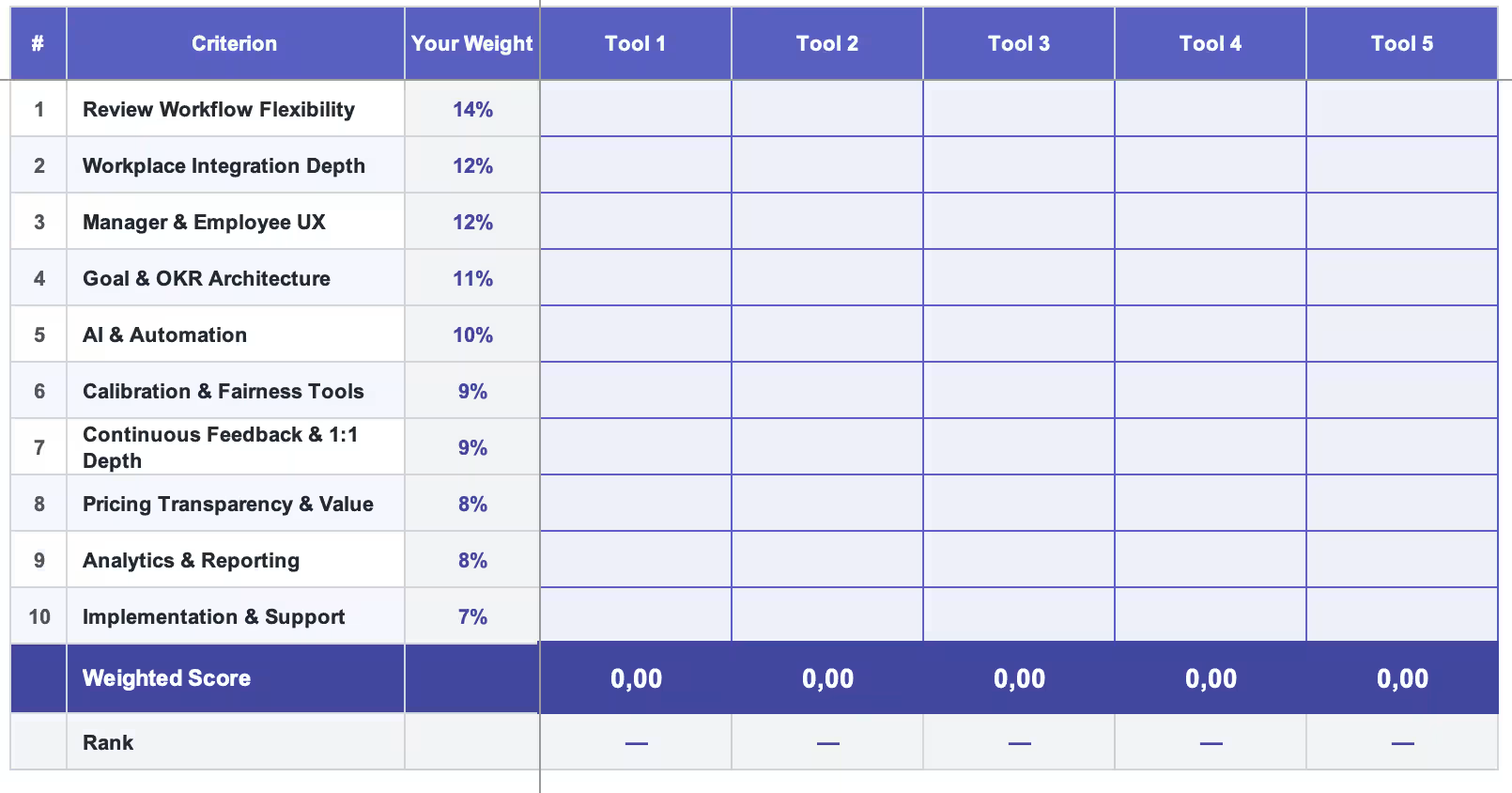
We built the framework above into a free Excel workbook so you don't have to rebuild it yourself.
It's a three-sheet template:
Our weights reflect what predicts adoption for paid performance review software at mid-market and enterprise scale, on average. But "on average" doesn't describe your company. The right way to use this rubric is to start with our weights, then adjust them based on the specific shape of your organization.
Here's how to think about that — six common situations and where we'd push the weights.
If you're a Microsoft 365 shop → bump Workplace Integration Depth from 12% to 16-18%. For Teams-native organizations, the integration is the product. A platform that's "good" at Teams integration but not native will lose adoption fast no matter how strong the rest of the feature set is.
If you're over 500 employees → bump Calibration & Fairness Tools from 9% to 12-14%. Above a few hundred people, rating consistency stops being a nice-to-have. It becomes a legal defensibility issue and a compensation cycle bottleneck. The weight should reflect that.
If you're shifting from annual to continuous reviews → bump Continuous Feedback & 1:1 Depth from 9% to 12-14%. If the whole reason you're switching platforms is to move away from the annual cycle, the year-round infrastructure has to be a top-three criterion, not a middle-of-the-pack one.
If your culture runs on OKRs → bump Goal & OKR Architecture from 11% to 14-16%. For OKR-first organizations, the goal architecture isn't a supporting feature — it's the foundation the review sits on. Misweighting this leads to buying a great review tool with a Goals module bolted on, which won't work for you.
If you're price-sensitive or have a small HR team → bump Pricing Transparency from 8% to 10-12% and Implementation & Support from 7% to 10%+. Small HR teams pay twice for opaque pricing and weak onboarding: once in money, once in time. If you don't have a dedicated HRIS admin, weight implementation higher than the average buyer would.
If you have a globally distributed workforce → bump Calibration & Fairness Tools and Workplace Integration Depth, and pay close attention to multi-country compliance. Global teams need consistent rating across regions and integrations that work across the communication tools different countries actually use. SAP-tier platforms exist for this reason.
If you've made it this far, you have everything you need to evaluate online performance evaluation system properly.
Here's what to do from here:
I hope your performance review software research goes well and that if your organization is in the Microsoft 365 ecosystem, you give Teamflect a try for absolutely free by clicking the link below.
.avif)
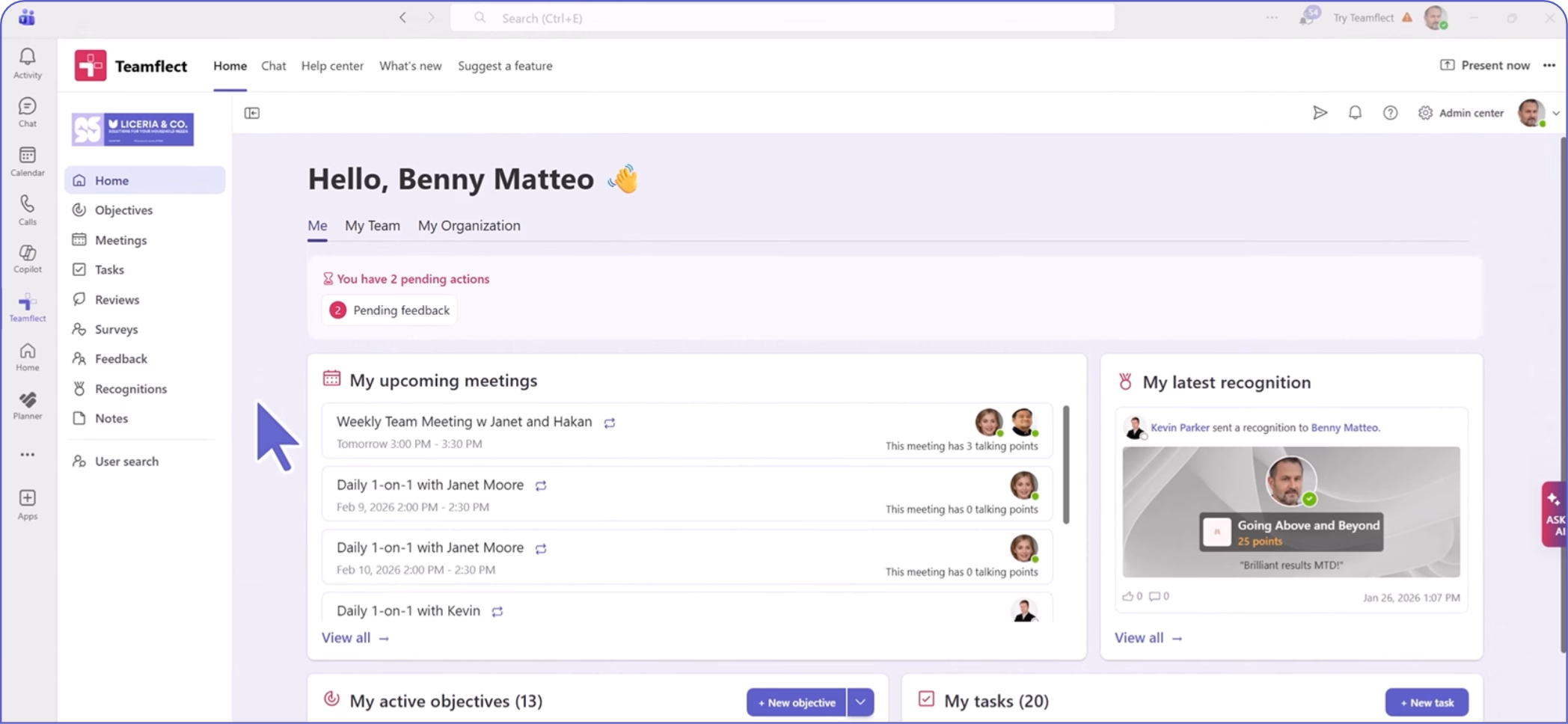
Create high-performing and engaged teams - even when people are remote - with our easy-to-use toolkit built for Microsoft Teams
.svg)