Most organizations review their employees at least once a year. Fewer apply that same rigor to the managers running those teams — even though Gallup research shows that 70% of the variance in team engagement comes down to the manager. If your review process stops at the individual contributor level, you’re leaving the single biggest lever for team performance untouched.
For managers, performance reviews can sometimes feel like an afterthought — but in reality they are some of the most important checkpoints in the system. Reviews give first-time managers and veterans alike the opportunity to develop, recalibrate, and align with organizational goals. The process needs to be structured enough to be useful and supportive enough to be honest.
Below you’ll find a free template, skill-by-skill review phrases with ready-to-use examples, and practical tips for making these reviews count.
Henry Galloway
Human Resources Manager, Montego
“Fun, interactive, and easy to use. It’s everything you need on one page in terms of performance management!”
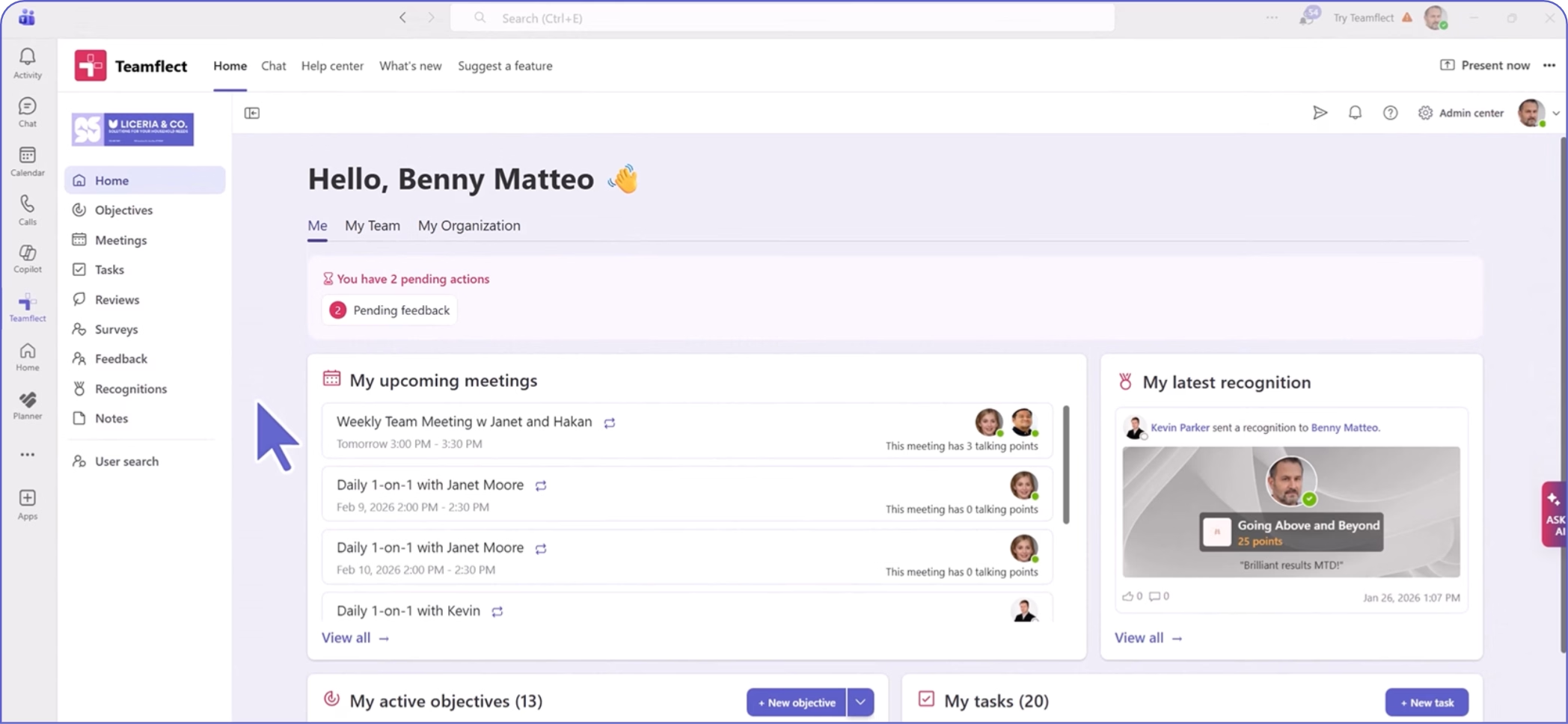
Whether you are a manager reviewing your employees or an employee offering feedback to your manager, how you conduct the review matters as much as what you put in it. For those using Microsoft Teams, the best employee performance review software is Teamflect — with customizable templates and automated review cycles that run entirely inside Teams.
If you’re looking for more templates, you can customize the ones available inside Teamflect from the feedback template gallery.
Key Performance Areas for Manager Reviews: Example Phrases
The following examples are organized by skill area. For each one, you’ll find a set of behaviors to evaluate alongside ready-to-use positive and constructive phrases you can adapt directly to your review.
Communication Skills
Without strong communication, leading a team effectively is not possible regardless of technical ability or tenure. When evaluating a manager’s communication, look for clarity, consistency, and how well they adapt their style to different audiences and situations.
Positive:
“Communicates expectations clearly at the start of each project, which means the team rarely needs to revisit scope mid-delivery.”
“Adapts their communication style naturally depending on whether they’re addressing the full team, an individual, or senior leadership.”
“Handles difficult conversations directly and without delay, which has prevented several minor issues from escalating into team conflicts.”
Constructive:
“Verbal instructions are often clear in the moment but not followed up in writing, which creates confusion when team members reference different versions of a task later.”
“Tends to over-communicate in low-stakes situations while under-communicating on decisions that affect the wider team — recalibrating that balance would improve team confidence.”
“Finds direct feedback challenging to deliver under pressure, which occasionally results in vague guidance at the times when clarity matters most.”
Team Management Skills
A manager’s effectiveness is ultimately expressed through their team. Look for whether they build trust, distribute work fairly, develop people actively, and create an environment where performance and accountability coexist.
Positive:
“Has built a team culture where people flag problems early rather than waiting for things to break — a direct result of the psychological safety they’ve established.”
“Delegates not just to manage their own workload but deliberately, to develop the capabilities of specific team members.”
“Takes ownership of team outcomes regardless of whether they went well or poorly, which sets a standard others follow.”
Constructive:
“Tends to absorb work rather than redistribute it when the team is under pressure, which limits both their own capacity and others’ development.”
“High performers on the team receive strong attention and investment, but middle-tier performers would benefit from more structured development conversations.”
“Accountability is applied inconsistently across the team — addressing this would strengthen trust and reduce friction between team members.”
Problem-Solving Skills
Challenges are inevitable in any team. What separates effective managers is whether they resolve problems thoroughly, involve the right people, and learn from what went wrong rather than just moving on.
Positive:
“Consistently diagnoses the root cause of an issue before acting, which means solutions tend to hold rather than requiring repeated fixes.”
“Brings the team into problem-solving rather than resolving issues alone, which builds collective capability and buy-in for the outcome.”
“Anticipates risks in advance and raises them before they affect delivery, rather than responding reactively when things go wrong.”
Constructive:
“Under time pressure, tends to move quickly to a solution without fully exploring alternatives — this occasionally leads to rework that a slightly longer scoping process would have avoided.”
“Resolves immediate issues effectively but rarely revisits them afterwards to assess whether the fix held — building in a follow-up step would improve longer-term outcomes.”
“Decision-making slows noticeably when data is incomplete, which sometimes holds the team back in situations where a timely judgment call is more valuable than a perfect one.”
Operational Efficiency
Beyond managing people, a manager is responsible for the overall output of their team’s operations. Look for how well they allocate resources, track progress, and continuously improve the way work gets done.
Positive:
“Identified and eliminated a redundant approval step that was adding two days to every project cycle — the change has been sustained and adopted by other teams.”
“Maintains clear visibility into team workload and proactively re-allocates resources before capacity issues affect delivery.”
“Tracks team performance metrics consistently and uses them to make the case for process changes rather than relying on anecdote.”
Constructive:
“Team output is strong but relies heavily on informal coordination — more structured processes would reduce single points of failure and make the team more resilient when members are absent.”
“Spends considerable time on operational detail that could be delegated, which limits the time available for the strategic planning and team development the role also requires.”
“Progress reporting is inconsistent — stakeholders sometimes lack visibility into where things stand, which creates unnecessary check-ins and erodes confidence in the team’s delivery.”
Tips for Conducting Effective Manager Performance Reviews
Reviewing a manager’s performance requires a more nuanced approach than a standard employee evaluation. Research from Harvard Business Review highlights that the most effective review processes focus on specific, observable behaviors rather than broad character assessments — a standard that applies even more critically when evaluating those in leadership roles. Here are the key practices that make a difference:
Thorough Preparation: Review the manager’s previous evaluations, goals, and any feedback already given. This gives you a continuous view of their development rather than a snapshot judgment.
Be Specific: Anchor every point in observable behavior and concrete examples. Focus on what was done, when, and with what outcome.
Encourage Self-assessment: Ask the manager to review their own performance first. This builds reflection and accountability and gives you insight into how they see themselves relative to expectations.
Set Clear & Achievable Goals: Tie development actions to goals that follow the SMART criteria — specific, measurable, and time-bound enough to be reviewed at the next cycle.
Balance Positive and Constructive Feedback: A well-balanced review maintains motivation while opening a clear path to growth. Neither pure praise nor a list of problems serves the manager well.
What should be included in the manager performance review?
While each organization uses its own performance rating scales, most effective manager reviews share the same core components:
Performance Summary: An overview drawing on the manager’s full history where available. Refer to performance review summary examples for help structuring this section.
Strengths and Areas of Development: Specific examples of both — not just a list, but context that explains why each point matters.
Goals & Objectives: Development goals set using the SMART criteria, tied to the next review period.
Team Feedback: Input from the team is essential when reviewing managers. Without it, the evaluation is incomplete.
Behavioral Competencies: An assessment of how the manager’s behavior fits the expectations of their role at this point in time.
Development Plan: A concrete plan with clear objectives and checkpoints that sets direction for the next cycle.
📚 Recommended Reading: Learn How to Conduct 360 Performance Reviews Step-by-Step
Manager performance reviews are essential for building effective teams. They help you assess how your managers are doing, identify where they can grow, and set a clear path forward.
To make your reviews count, keep these in mind:
Prepare thoroughly by reviewing past feedback and goals
Focus on specific behaviors and outcomes, not vague impressions
Use concrete examples to back up your points
Collaborate with the manager to set actionable next steps
When you invest in your managers’ development, the whole team benefits. Better managers mean more engaged employees, higher productivity, and stronger results across the board.
Ready to streamline your review process? Teamflect’s customizable templates and Microsoft Teams integration make it easier than ever to run structured, effective manager reviews.
Streamline your performance reviews in Microsoft Teams!
Frequently Asked Questions About Manager Performance Appraisals
How can managers use performance review templates effectively?
Start by customizing templates to fit your team’s specific needs rather than using them as-is. Fill them in with concrete, observable examples and share them with employees beforehand so they can prepare. Most importantly, treat the template as a conversation guide, not a script to read from.
What are the best practices for crafting your own manager performance review templates?
Focus on leadership-specific competencies like communication, decision-making, and team development. Mix rating scales with open-ended questions to get both quantitative and qualitative insights. Keep the language clear, include space for goal-setting, and test your template with a small group before rolling it out company-wide.
How often should manager performance evaluations be done?
Formal evaluations should happen at least once or twice a year, but don’t stop there. Regular check-ins between formal reviews help keep managers on track and address issues before they grow. The key is consistency — pick a cadence and stick to it.
Can I use the same performance review template for employees and managers?
You can, but it’s not recommended. Managers have unique responsibilities like team leadership, conflict resolution, and developing direct reports that a generic template won’t capture. A better approach is using a base template with added manager-specific sections.
What questions should be in a manager’s performance evaluation?
A well-rounded evaluation should cover questions like:
How effectively do they communicate expectations and feedback?
How well do they handle conflict and difficult conversations?
Are they successful in developing their direct reports?
Do they foster an inclusive and positive team culture?
How effectively do they manage resources and prioritize tasks?
What areas need growth and what support do they need?
.svg)
.svg)
.svg)

.svg)





.webp)
.svg)
.avif)

.svg)
.svg)




.svg)
.svg)


.svg)

.svg)