.svg)
.svg)
How to Review New Hire Performance the Right Way in 2026

Updated on:
January 16, 2026

Prefer Teamflect as your HR source on Google
.svg)

New hire performance reviews are no longer a nice-to-have checkpoint. They're a critical early indicator of whether your latest addition will succeed or become another regrettable statistic in your attrition report.
The difference between a productive employee and an early departure often comes down to how well you measure and support performance during those crucial first months.
In 2026, the traditional distinction between "hiring" and "managing" has collapsed into a single, continuous process of talent validation. Success is no longer measured by simply filling a seat, but by how quickly and effectively a new staff member contributes to the bottom line.
Modern performance tracking provides the data-driven framework necessary to turn a recruitment expense into a long-term competitive advantage.
First-year turnover can cost companies around 33% of an employee's annual salary. Early performance reviews reduce that risk by identifying problems during the critical ramp-up period when intervention still works. Wait six months to discover a bad fit and you've already lost the investment.
According to Gallup, meaningful feedback is the primary driver of employee engagement.
When staff receive clear, consistent communication regarding their progress, they feel more connected to organizational goals. This interaction prevents "role drift," where a lack of clarity leads to frustration and a lack of commitment to the company mission.
Hybrid and remote onboarding adds another layer of complexity. New employees can't learn by osmosis anymore. They need explicit and continuous feedback loops to understand expectations, correct course, and build confidence.
The rise of skills-based hiring means many candidates enter roles based on potential or adjacent certifications rather than direct experience in your specific workflow.
Performance signals act as a real-world validation of those abilities. It allows leadership to see if a hire can apply their knowledge to specific company tasks, ensuring that "on-paper" qualifications translate into tangible results.
The shift toward continuous performance management makes early reviews a natural extension of modern HR practice. Companies tracking performance metrics from day one see better outcomes than those treating new hires as invisible until their six-month mark.
Getting the scope right separates useful new employee assessment from demotivating exercises that judge people before they've had a fair shot.
The goal of a new employee performance review is to measure trajectory, not arrival. You're asking "are they learning at the expected rate?" not "have they already arrived at expert status?"
New employee evaluation should also measure role clarity. If someone doesn't understand what success looks like after 60 days, that's a management problem as much as a performance problem. Your review should surface these gaps so you can fix them.
Adaptability matters more for new hires than for established employees. Someone who can adjust quickly to your systems, take coaching well, and modify their approach based on feedback will succeed even if their initial performance is rough.
Timing determines whether your new employee performance evaluation actually helps or just creates paperwork.
The 30-day mark isn't about performance evaluation in the traditional sense. It's about checking whether onboarding success has been achieved. Does the new hire understand the role? Do they have the resources they need? Are there any immediate red flags in communication or work approach?
By 60 days, you should see measurable skill development. They won't be experts, but you should observe steady progress in core responsibilities. This is when coaching feedback becomes most valuable because they've had enough exposure to understand context.
The 90-day new hire performance review often coincides with the end of a probation period. This is your data-driven decision point. Have they demonstrated the capability to succeed in this role with continued support? The answer should be based on concrete observations, not gut feeling.
Six months represents the transition from "new hire" to "regular employee." At this point, your new employee performance evaluation should start looking more like standard performance reviews, though development goals should still account for their relative newness.
A comprehensive new employee assessment covers multiple dimensions of early performance.
Does the employee grasp what the position requires? This goes beyond just knowing their task list. It includes understanding how their work connects to team goals, who their key stakeholders are, and what quality standards apply. Someone with strong role clarity asks informed questions and makes appropriate judgment calls.
Track progress on the specific capabilities required for the role. If someone needs to master your CRM system, project management tools, or technical processes, measure how quickly they're gaining proficiency. Compare their progress to typical ramp-up periods for similar roles, not to your top performers.
New hires who communicate well integrate faster. Evaluate whether they ask questions when stuck, provide timely updates on their work, and respond appropriately to feedback. Watch how they interact with team members and whether they're building working relationships.
Every company has unique processes and culture. Some new employees adapt quickly while others struggle to let go of "how we did it at my last company." Capability assessment in this area predicts long-term success better than most technical skills.
The best new hires treat feedback as valuable data rather than criticism. They implement suggestions, ask clarifying questions, and show visible improvement after coaching sessions. This quality matters more during onboarding than almost anything else.
While you don't expect new hires to solve complex organizational problems, you do want to see appropriate initiative. Do they try to solve problems before asking for help? Do they come to you with potential solutions, not just questions?
Standard rating scales don't work well for new employee performance reviews because they're calibrated for established employees. You need scales that acknowledge the learning curve while still providing meaningful performance signals.
This scale focuses on trajectory rather than absolute performance. Someone rated "Progressing" at 60 days is doing well, even though they're not yet performing at full capacity.
Learning speed during the early months predicts long-term performance better than initial output quality. Someone who learns quickly will eventually outperform someone who started strong but plateaus.
Independence should grow predictably over the first 90 days. Someone still "Highly Dependent" at day 60 needs immediate attention.
This scale captures one of the most important early performance indicators. New hires who score "Proactive" or higher almost always succeed.
Strong feedback during new employee performance evaluation is specific, growth-oriented, and actionable.
For a new hire performance review template, structure your comments around the key areas above. For each dimension, note what you've observed, compare it to typical ramp-up expectations, and identify what the employee should focus on next.
Even experienced managers make predictable errors when conducting early performance evaluation for new employees.
The comparison trap is particularly common. Managers unconsciously benchmark new hires against their best performers, then express disappointment when someone with two months of tenure doesn't perform like someone with two years. This destroys confidence and provides no useful information.
Waiting until the 90-day mark for any structured feedback is another frequent mistake. Problems that could have been fixed in 30 days become entrenched habits by 90 days. Early check-ins cost less time than remediation or replacement.
Using your standard performance review software templates without modification creates mismatches. If your scale goes from "Below Expectations" to "Exceeds Expectations," what do those labels even mean for someone still learning the job? Create separate criteria for new employee assessment.
New hire performance evaluation done right becomes a retention tool, not just a measurement exercise.
New employees experience significant anxiety about whether they're meeting expectations. Without explicit feedback, they often assume silence means problems.
Regular performance check-ins during the first 90 days replace anxiety with clarity. Employees who know where they stand are far less likely to start job searching out of insecurity.
Scheduled reviews demonstrate that management is invested in employee success. When new hires see that their manager follows through on commitments to meet and provide feedback, trust builds quickly. That trust pays dividends in engagement and retention.
Sometimes new employees struggle not because of capability issues but because of missing resources, unclear processes, or poor onboarding. Early reviews surface these systemic problems when you can still fix them. Addressing blockers shows new hires that the company responds to their needs.
The relationship with the direct manager is the single biggest factor in employee retention. Structured early reviews force managers and new hires to have substantive conversations about performance, development, and goals. These conversations build the relationship foundation that keeps people engaged long-term.
Regular new hire performance reviews also help you spot high performers early. Employees who exceed ramp-up expectations often have higher career ambitions and need accelerated development opportunities. Identifying them quickly lets you provide those opportunities before they start looking elsewhere.
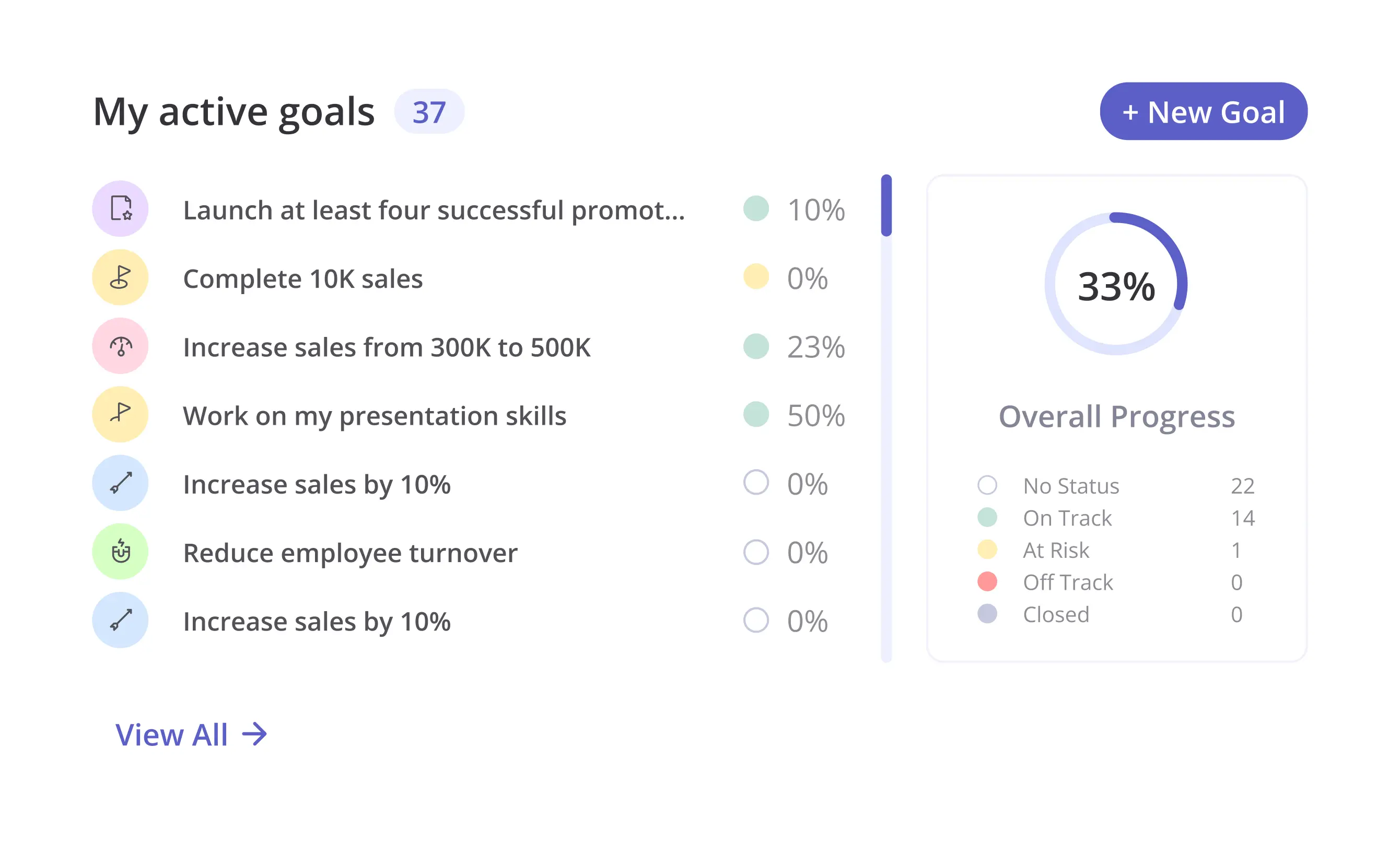
Modern performance management software needs to be built for continuous feedback, not just annual reviews. Teamflect brings structure to new employee evaluation without creating administrative burden.
The platform also supports custom rating scales for new employee performance evaluation, ensuring your review process matches the reality of onboarding rather than forcing new hires into frameworks designed for experienced employees.
Stop losing new employees because of unclear expectations or delayed feedback. Teamflect makes new hire performance reviews simple, consistent, and actually useful for both managers and employees.
The first structured check-in should occur at 30 days. This isn't a formal performance evaluation but rather an onboarding checkpoint to ensure role clarity and address any immediate concerns.
More comprehensive new employee performance reviews should happen at 60 and 90 days when you have enough performance data to assess progress meaningfully.
Yes, but use rating scales calibrated for learning curves rather than standard performance ratings. New hires benefit from knowing where they stand relative to ramp-up expectations.
Avoid rating scales that compare them to experienced employees. Instead, rate their progress toward full capability.
Onboarding feedback focuses on whether the employee has the resources, information, and access they need to do the job. New hire performance evaluation focuses on how well they're developing the capabilities required for the role.
Both are important but serve different purposes. Think of onboarding feedback as inputs and performance reviews as outputs.
Yes, with reasonable accuracy. Early performance signals like learning speed, feedback receptiveness, and role clarity at 60-90 days correlate strongly with long-term performance.
Employees who struggle during the ramp-up period rarely become top performers unless significant interventions occur. However, early struggles don't always predict failure, especially if they're caused by poor onboarding rather than capability gaps.
Dedicated performance management platforms designed for continuous feedback work best.
Look for an employee onboarding software, like Teamflect, that includes customizable review templates, goal tracking, feedback documentation, and Microsoft Teams integration if your organization uses Teams.
Generic HRIS systems often lack the structure needed for effective new employee assessment during the critical first 90 days.

.svg)
.avif)
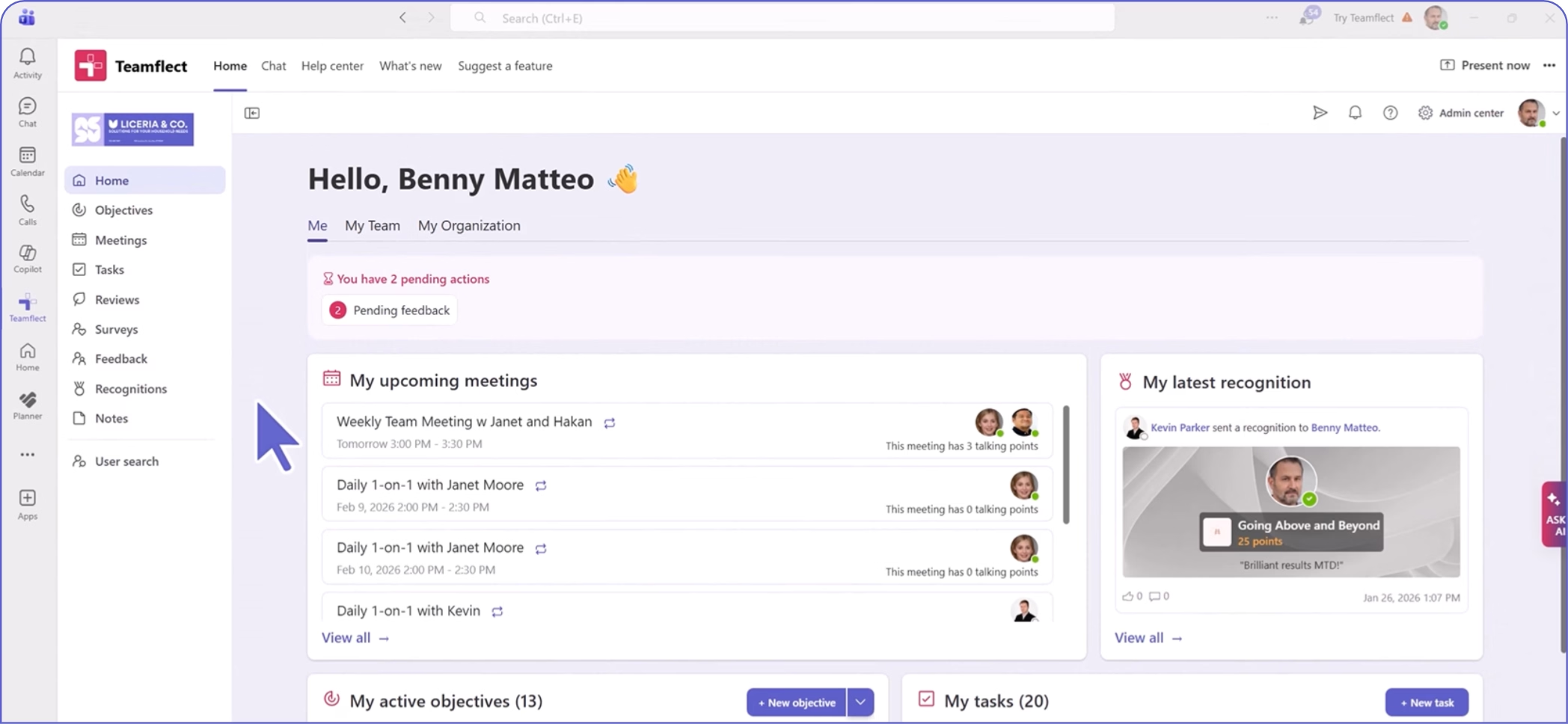
Create high-performing and engaged teams - even when people are remote - with our easy-to-use toolkit built for Microsoft Teams