.svg)
.svg)
SOC 2 Type 2 Certification: What It Actually Means for Enterprise HR Tech

Updated on:
September 18, 2026


Prefer Teamflect as your HR source on Google
.svg)

Somewhere in the last two years, I noticed how the security questionnaire became the real gatekeeper when it comes to enterprise software deals.
It usually shows up as a massive spreadsheet with rows on rows of questions, sent by a porocurement team that won’t meet you if you don’t meet their standards.
That is for good reason. According to PwC's 2026 Global Digital Trust Insights survey, released in October 2025, 78% of organizations are increasing their cybersecurity budgets this year, and 39% of respondents said their most damaging breach in the past three years cost more than $500,000.
With my latest article published in Forbes on security standards in enterprise HR software, alongside Teamflect’s new enterprise plan introducing category-leading security features, I wanted to continue the conversation with a follow-up piece.
This piece is about one specific aspect you will find in any enterprise security questionnaire: SOC 2 Type 2. What it certifies, why buyers ask for it by name, and what changes when the software in question holds your employees' data rather than your customers'.
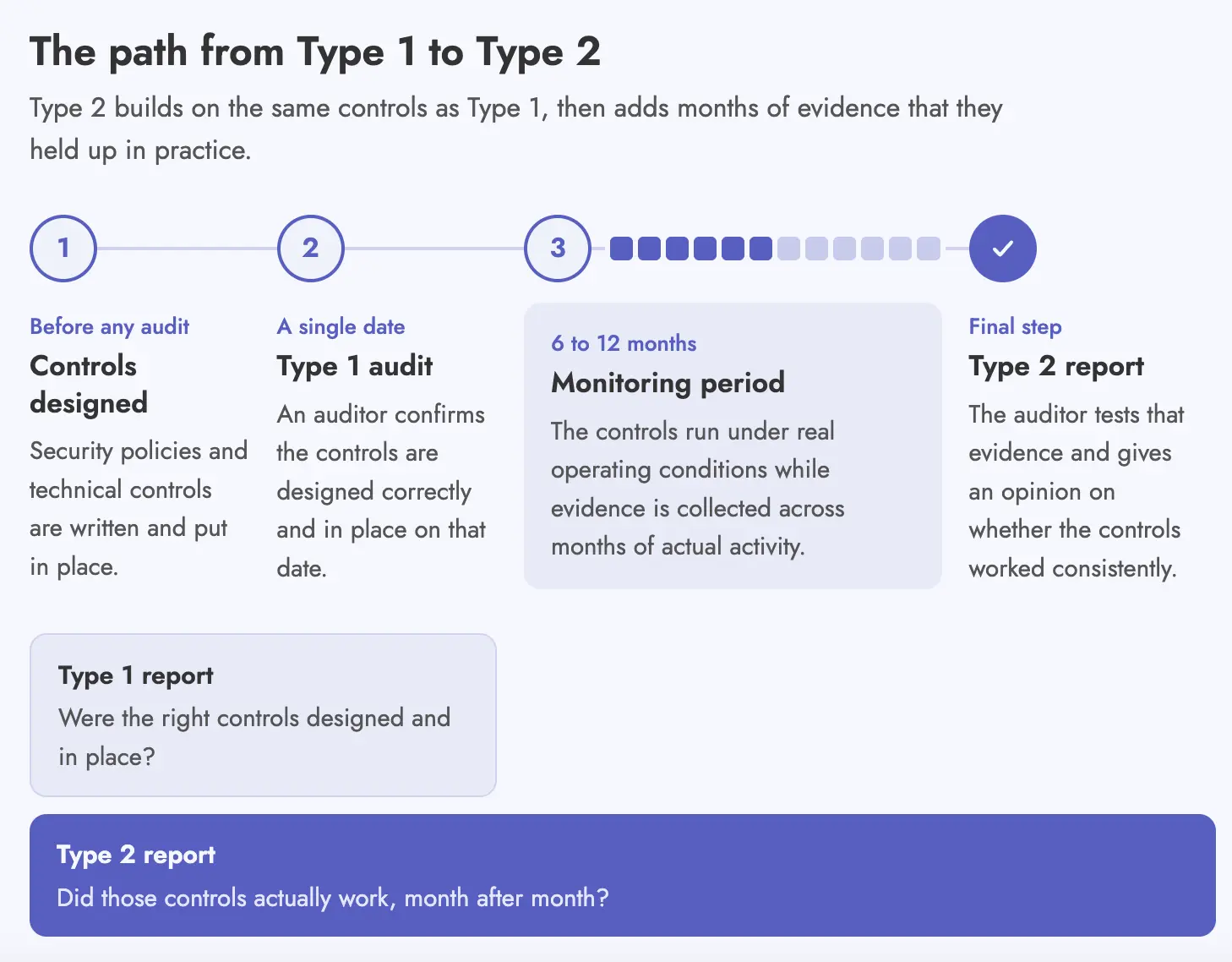
SOC 2 Type 2 involves an independent auditor providing assurance that a company's security controls functioned consistently over a monitoring period ranging from six to twelve months. The importance of this distinction goes well beyond what the name implies. A vendor can draft excellent security policies in just one afternoon, but it takes many months of evidence to show that those policies have worked in real operating conditions.
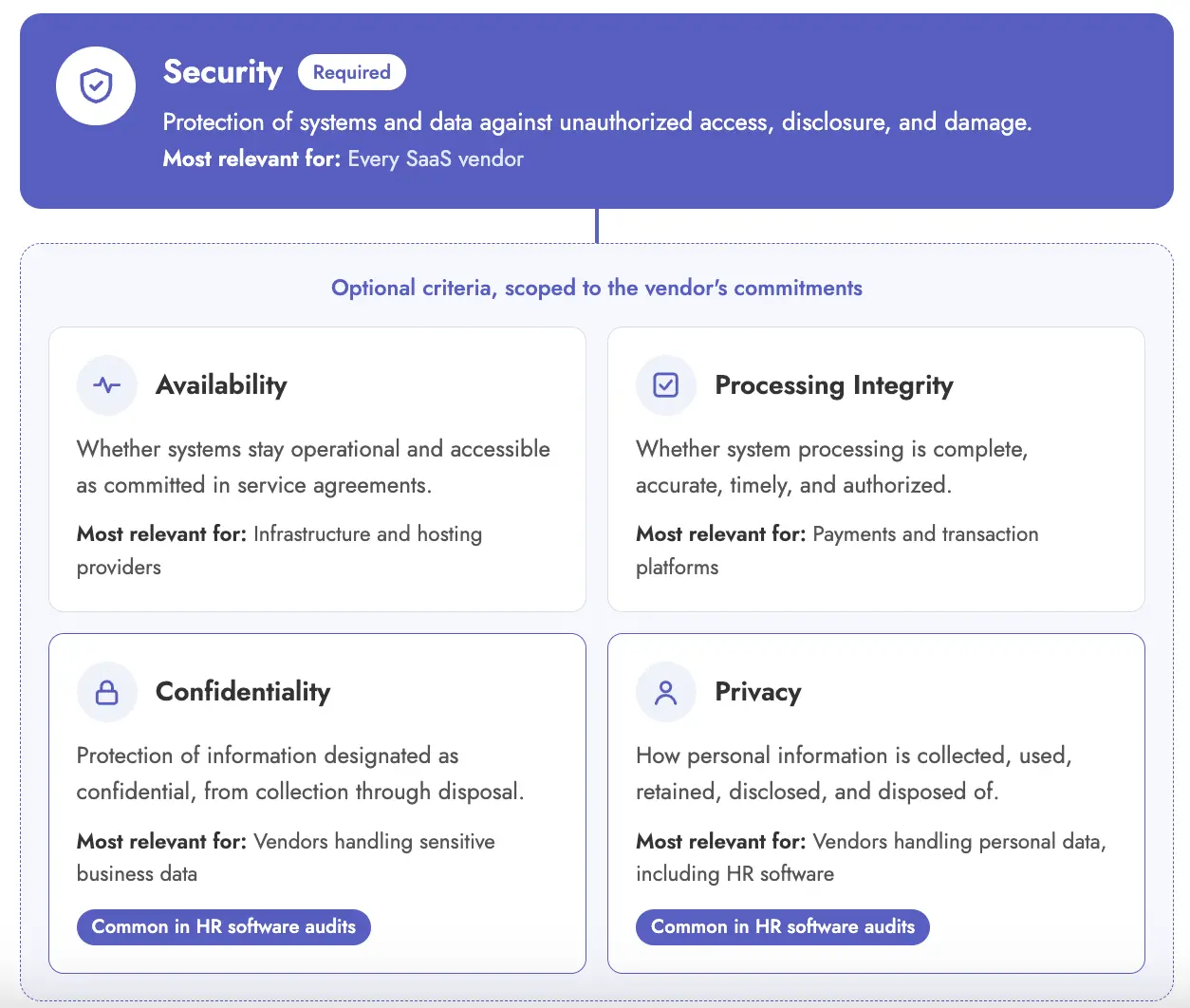
The framework itself comes from the American Institute of Certified Public Accountants, which defines SOC 2 around what it calls the Trust Services Criteria. Security is mandatory for every SOC 2 report. Availability, processing integrity, confidentiality, and privacy are added based on what the vendor actually promises its customers.
Most SaaS vendors selling into the enterprise scope their audit around three or four of these five: security is non-negotiable, and confidentiality and privacy usually follow close behind for any company handling personal data. Availability and processing integrity show up more often in infrastructure and payments companies, where uptime or transaction accuracy is the product itself.
Enterprise buyers push for Type 2 because point-in-time claims are no longer enough. Gartner's April 2026 report on third-party cybersecurity risk found that most security teams still lean heavily on vendor questionnaire answers to make risk decisions, even though those answers only capture what a vendor says at one moment. They say nothing about how its posture holds up afterward.
All of this pressure on third parties and vendors won’t be easing anytime soon. The World Economic Forum's Global Cybersecurity Outlook 2026, published in February, found that 65% of large organizations now name third-party and supply chain risk as their single biggest resilience challenge, up from 54% the year before. This makes perfect sense, since every vendor a company adds to its stack is another door into its systems. While the security review might have been a formality at some point, it is now, and has been for a long time, a genuine gate. Type 2 certifications focus on continuous security is what makes it so important here.
A SOC 2 Type 1 report answers a narrower question: were the right controls designed and in place on a single date? Type 2 asks whether those same controls actually worked, tested against real activity across months. Most companies pursue Type 1 first, largely because it's faster and cheaper, then move to Type 2 once they have the operating history to support it.
If you're weighing HR software against this bar, the calculus is different than it is for most SaaS categories, because the data at stake is different. Performance reviews, compensation history, disciplinary records, and sometimes health or immigration information all pass through HR systems in ways that customer-facing tools rarely touch. A breach here costs more than money. It exposes every employee's private details, on top of whatever customer data the breach also reaches.
Keep that in mind whether you're comparing HRIS platforms, mapping out an ideal HR tech stack, or working through a broader process for choosing HR software. Security credentials belong in the same evaluation round as feature comparisons. Treating them as a separate compliance checkbox, handled by someone else after the decision is basically made, is how gaps slip through.
The auditor's opinion section is worth more attention than the marketing page ever gets. What to look for:
A Forbes Technology Council piece from November 2025 made a point worth sitting with here: the core SOC 2 criteria haven't changed much since 2017, and a report tests whether controls operated as designed, not every configuration choice a vendor makes day to day. The badge tells you a vendor takes security seriously.
Teamflect achieved SOC 2 Type 1 certification in January 2025, and we said then that Type 2 was coming. It has. Getting there meant months of evidence collection across the same controls we'd already put in place for Type 1, and having an independent auditor confirm those controls held up in practice rather than just on the day of the first audit.
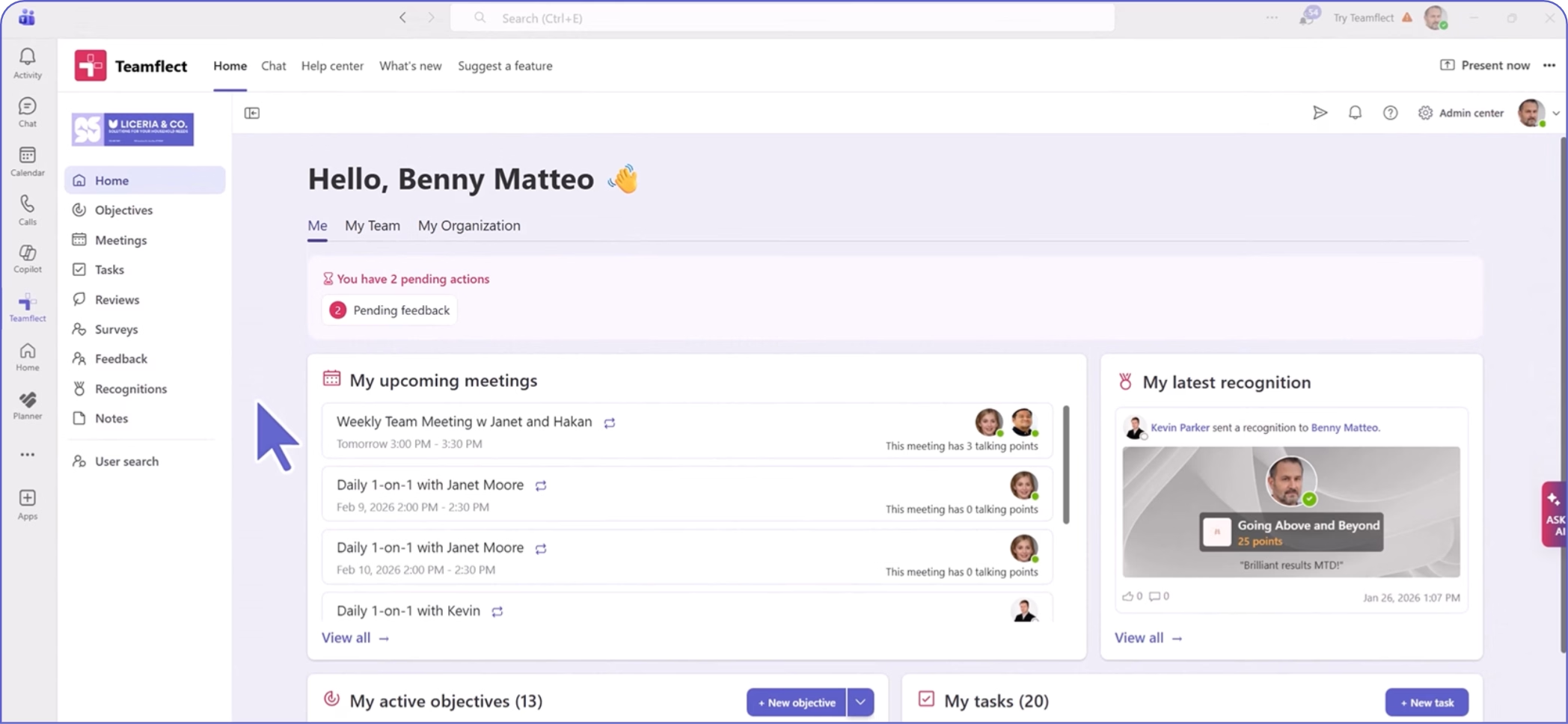
Part of what makes that easier for a Teams-native product is where the data actually sits. Teamflect runs inside Microsoft 365, and customer data lives in Microsoft Azure data centers, in the same region as the rest of an organization's 365 environment, rather than in a separate infrastructure stack. For IT and security teams already comfortable with Microsoft's compliance posture, that's one less unfamiliar system to vet.
It's also part of why remote employee monitoring inside Teams and questions about what employers can see inside Microsoft Teams come up so often in our conversations with security reviewers: their teams already understand the boundaries of that ecosystem. You can learn more about our security practices here: Teamflect Data Security
A SOC 2 Type 2 report has become table stakes for enterprise software. Having one no longer sets a vendor apart from the pack. What separates a serious vendor from one treating compliance as a marketing line is whether they can walk you through what the report actually covers, and what happens when an exception shows up. Teamflect's approach here is incredibly straightforward: build the thing properly, then be willing to show the evidence.
.avif)
Create high-performing and engaged teams - even when people are remote - with our easy-to-use toolkit built for Microsoft Teams
.svg)